
About Rings.Jewelry
Rings.Jewelry was created for people who want more than beautiful ring photos. We help readers understand how rings really work: how diamonds are chosen, how settings protect stones, how metals wear over time, what makes a ring comfortable, what can go wrong, and what buyers should ask before making an important decision.
Our guides cover the full life of a ring — choosing it, buying it, designing it, caring for it, insuring it, selling it, protecting it from loss, and knowing what to do if something goes wrong. A ring is personal, valuable, emotional, technical, and often worn every day. We treat it that way.
Who We Are
Rings.Jewelry is an expert jewelry education resource focused on engagement rings, wedding rings, diamonds, ring settings, metals, gemstones, jewelry care, buying and selling advice, ring insurance, and lost ring recovery guidance.
We are here for readers who want practical answers before they buy, sell, insure, repair, design, or protect a ring. We explain jewelry decisions in a way that feels elegant, clear, and useful — not like a sales pitch, not like vague inspiration, and not like a confusing technical manual.
Jewelry Knowledge, Not Just Jewelry Inspiration
The internet is full of pretty ring inspiration. That can be enjoyable, but inspiration alone does not explain whether a delicate band may bend, whether pavé needs more maintenance, whether a bezel protects a diamond better than prongs, whether platinum is worth the higher price, or why a pre-owned ring may need careful inspection before purchase.
Rings.Jewelry is built around those practical questions. We explain the details buyers often discover too late: setting height, prong strength, diamond shape, metal durability, resizing limits, rhodium plating, appraisal documents, insurance records, cleaning routines, resale expectations, and what to do when a ring is lost.
We look at beauty
Fine jewelry should feel special. We discuss style, proportion, diamond shape, setting design, metal color, personal meaning, and the visual mood of a ring.
We look at real life
A ring also needs to survive daily wear. We explain prongs, bezels, shanks, galleries, band width, setting height, repairs, cleaning, documentation, insurance, and recovery risks.
Beautiful jewelry is not only about sparkle. It is about proportion, durability, craftsmanship, comfort, documentation, protection, and the confidence that the piece was chosen wisely.
The Expertise Behind Rings.Jewelry
Our content is shaped by jewelry knowledge from several professional perspectives. A strong jewelry guide should not sound like a sales page. It should reflect the way real ring decisions are made: at the jeweler’s bench, under magnification, during diamond evaluation, in design planning, during repairs, in resale conversations, through insurance paperwork, and sometimes during the stressful search for a lost ring.
Master Jeweler
A master jeweler brings hands-on knowledge of ring construction, setting work, repairs, resizing, finishing, polishing, soldering, and the small structural details that determine whether a ring wears well over time.
Diamond and Gemstone Specialist
This perspective helps explain cut, clarity, color, carat, shape, brilliance, durability, certification, and the practical differences between natural diamonds, lab-grown diamonds, moissanite, sapphires, and other stones.
Stone-Setting Specialist
A setting specialist understands how stones are secured in prong, bezel, pavé, channel, halo, hidden halo, cathedral, solitaire, and three-stone designs.
Jewelry Designer
A designer focuses on proportion, silhouette, balance, metal color, diamond shape, hand shape, personal style, and whether a ring feels timeless, modern, vintage-inspired, minimal, or statement-making.
Metalwork and Repair Expert
A repair-focused expert helps evaluate how metals age, how bands bend or wear, when prongs need attention, what resizing can or cannot fix, and why some beautiful designs need more maintenance than expected.
Pre-Owned and Resale Advisor
A resale-focused perspective helps explain condition, documentation, realistic pricing, appraisals, market value, repair history, listing presentation, and the risks of buying or selling without proper checks.
Insurance and Documentation Researcher
An insurance-focused researcher helps readers understand appraisals, receipts, photographs, coverage questions, replacement value, claims preparation, and the paperwork that matters after loss, theft, or damage.
Lost Jewelry Recovery Specialist
A lost jewelry recovery specialist shares practical experience on how rings are commonly lost, what to do first, how to search calmly, and how to reduce risks at beaches, pools, hotels, gyms, sinks, gardens, and travel locations.
Editorial Research and Fact-Checking
Our editorial process turns technical jewelry knowledge into clear, readable guides. We check that advice is practical, specific, and useful for real buying, selling, care, insurance, and recovery decisions.
Workshop perspective
Many jewelry mistakes are invisible in product photos. A ring may look delicate and expensive online, but an expert will also ask: Is there enough metal? Are the prongs strong? Can it be resized? Will it catch? Can it be cleaned? Is the paperwork complete? Would it be easy to insure? If it were lost, would the owner have enough information to identify and replace it?
What We Cover
Rings.Jewelry covers the full journey of ring ownership. We write about choosing a ring, comparing styles, understanding diamonds, selecting metals, buying new and pre-owned pieces, selling rings, protecting jewelry with documentation and insurance, maintaining rings, and knowing what to do if a ring is lost.
Engagement Rings
We explain how to choose engagement rings by setting style, diamond shape, metal, lifestyle, hand shape, comfort, durability, and long-term value.
Diamond Education
We help readers understand the 4Cs, diamond shapes, sparkle, certification, lab-grown diamonds, natural diamonds, and where money matters most.
Ring Settings
We compare prong, bezel, solitaire, halo, hidden halo, pavé, cathedral, channel, three-stone, and low-profile settings from both beauty and security perspectives.
Metals and Materials
We explain platinum, white gold, yellow gold, rose gold, 14k gold, 18k gold, rhodium plating, metal sensitivity, durability, patina, and maintenance.
Wedding Rings
We cover wedding bands, matching sets, comfort fit, band width, eternity rings, men’s wedding bands, women’s wedding rings, and daily-wear practicality.
Ring Ownership
We also cover care, repair, resizing, insurance, appraisals, resale, pre-owned buying, documentation, storage, loss prevention, and recovery tips.
Buying and Selling Rings With Confidence
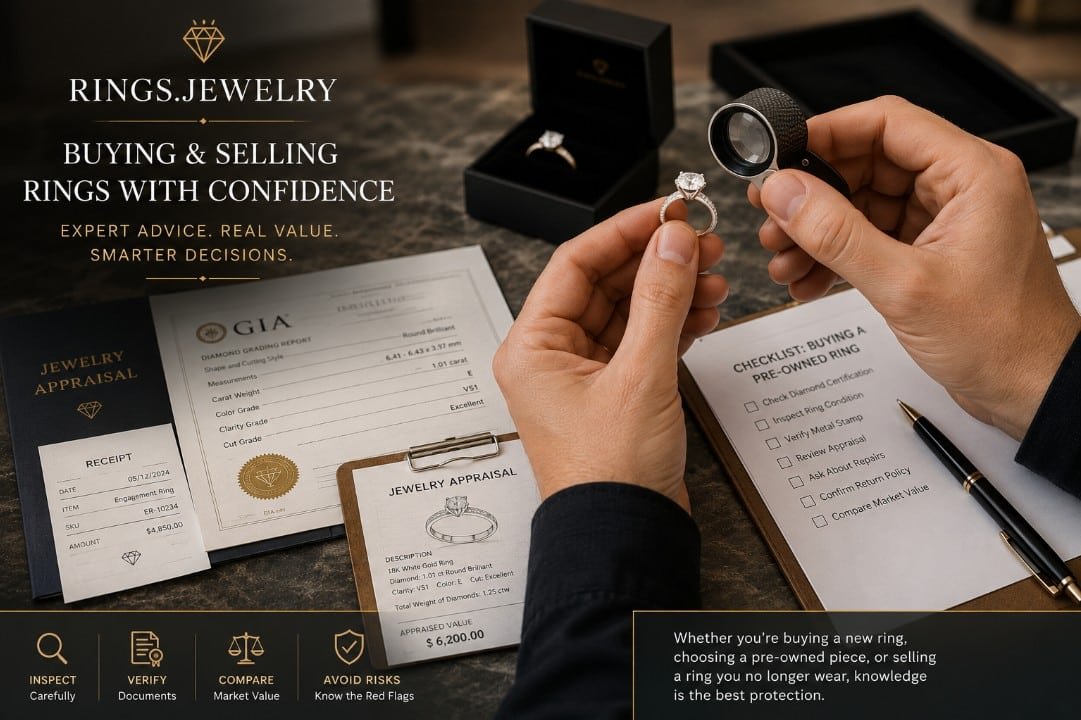
Rings.Jewelry covers the practical side of buying and selling rings because a ring is not only a beautiful object. It also has condition, documentation, market value, repair history, resale limits, and trust risks that buyers and sellers should understand.
We explain what to check before buying a new engagement ring, how to evaluate a pre-owned ring, what documents matter, why appraisals and certificates are not the same thing, how to avoid overpaying, and what sellers should know before listing a ring online or taking it to a jeweler, dealer, auction platform, or private buyer.
What we help buyers and sellers understand
- Condition matters: worn prongs, bent bands, loose stones, missing pavé, weak settings, and resizing history can change value.
- Documentation matters: receipts, diamond reports, appraisals, service records, photographs, and original boxes can support trust.
- Resale value is not retail price: insurance appraisals, store prices, and resale offers can be very different numbers.
- Pre-owned rings need inspection: a ring may look beautiful but still need prong work, cleaning, polishing, resizing, or stone verification.
- Selling safely matters: private sales require care with payment, meeting location, verification, shipping, and buyer communication.
Ring Insurance, Appraisals, and Protection
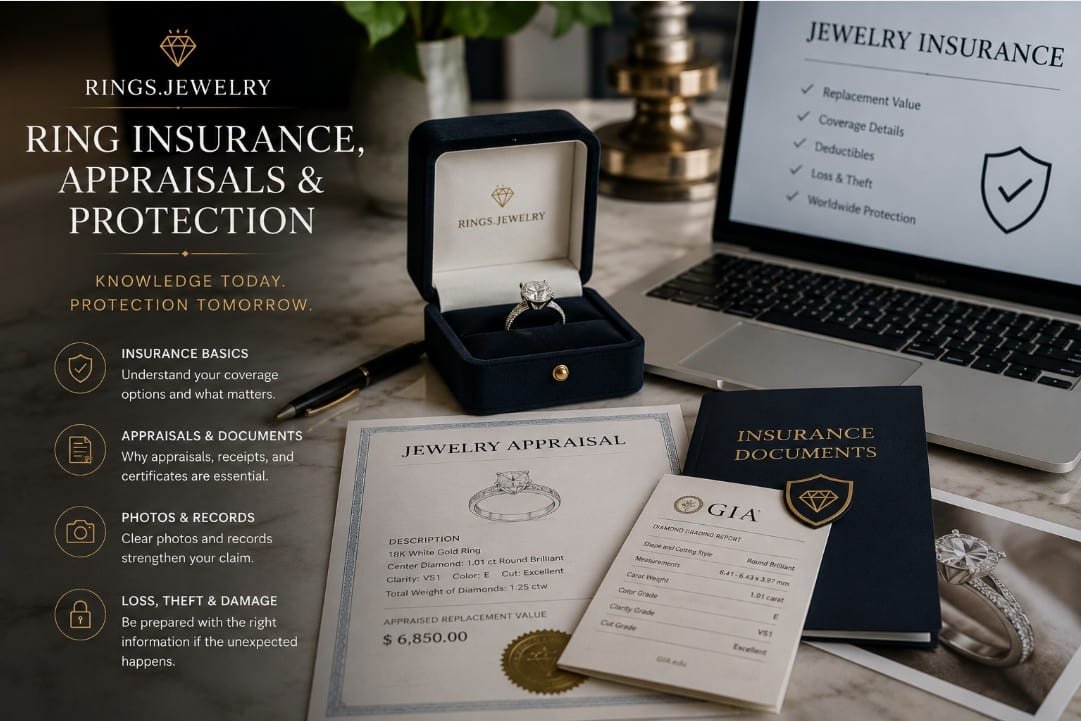
A valuable ring should not only be beautiful. It should be documented, protected, and understood. Rings.Jewelry explains the basics of ring insurance, jewelry appraisals, replacement value, theft, loss, travel risks, damage, and what owners should prepare before something goes wrong.
We are not an insurance provider, and our content is not a replacement for policy advice from a qualified insurance professional. Our role is educational: we help readers understand the questions to ask, the documents to keep, and the situations that often cause confusion during a claim.
Important insurance reminder
Insurance details depend on the provider, country, policy, deductible, coverage limits, exclusions, documentation, and replacement terms. Readers should always confirm coverage directly with their insurer before assuming a ring is protected.
Lost Rings: Prevention, Search Tips, and Recovery Guidance
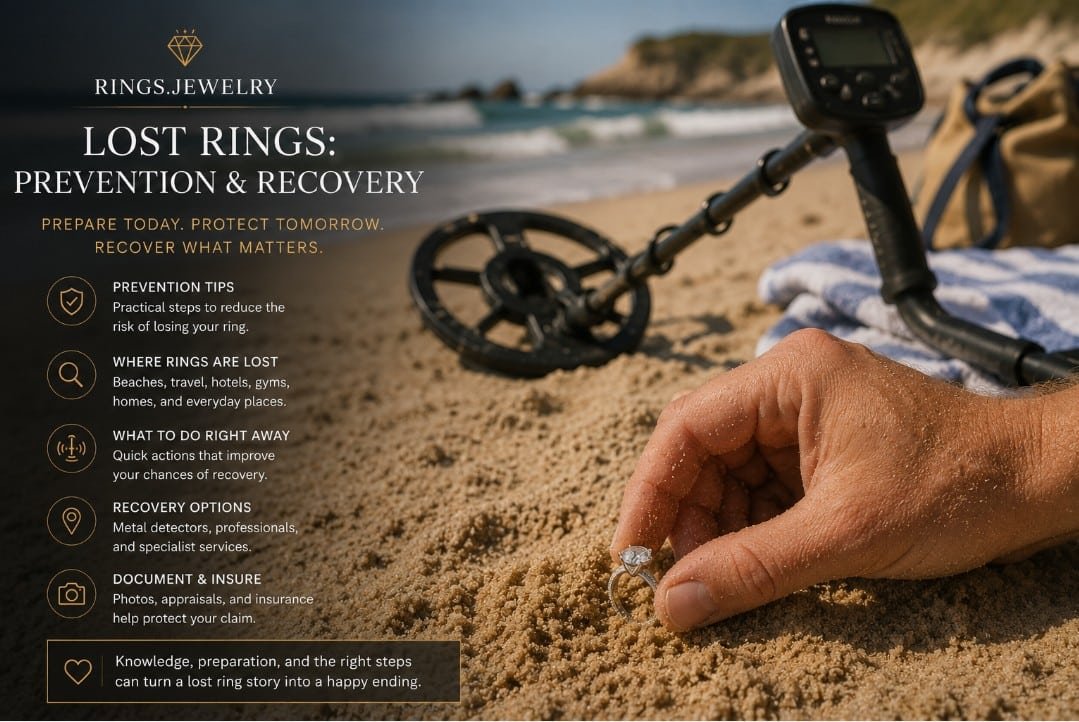
Few jewelry moments feel worse than realizing a ring is missing. Rings can slip off because of cold water, weight changes, loose sizing, sunscreen, soap, gloves, swimming, beach sand, gardening, travel stress, gym lockers, hotel rooms, or simply taking the ring off “just for a second.”
Rings.Jewelry includes lost ring prevention and recovery guidance because this is part of real ring ownership. A ring is not only purchased and admired. It is worn, cleaned, removed, insured, stored, traveled with, sometimes misplaced, and hopefully recovered.
If you notice a ring is missing
- Pause before searching aggressively: identify the last place you clearly remember wearing it.
- Protect the search area: avoid sweeping, vacuuming, shaking fabrics, or disturbing sand and grass too quickly.
- Check common places first: sinks, towels, gloves, coat pockets, bags, bedding, car seats, jewelry dishes, gym lockers, and hotel bathrooms.
- For sand, grass, or outdoor loss: mark the area and consider professional metal-detecting help before the surface changes.
- Use documents and photos: appraisals, inscriptions, certificates, ring measurements, and clear images can help identify the piece.
Ring Care, Repair, and Maintenance
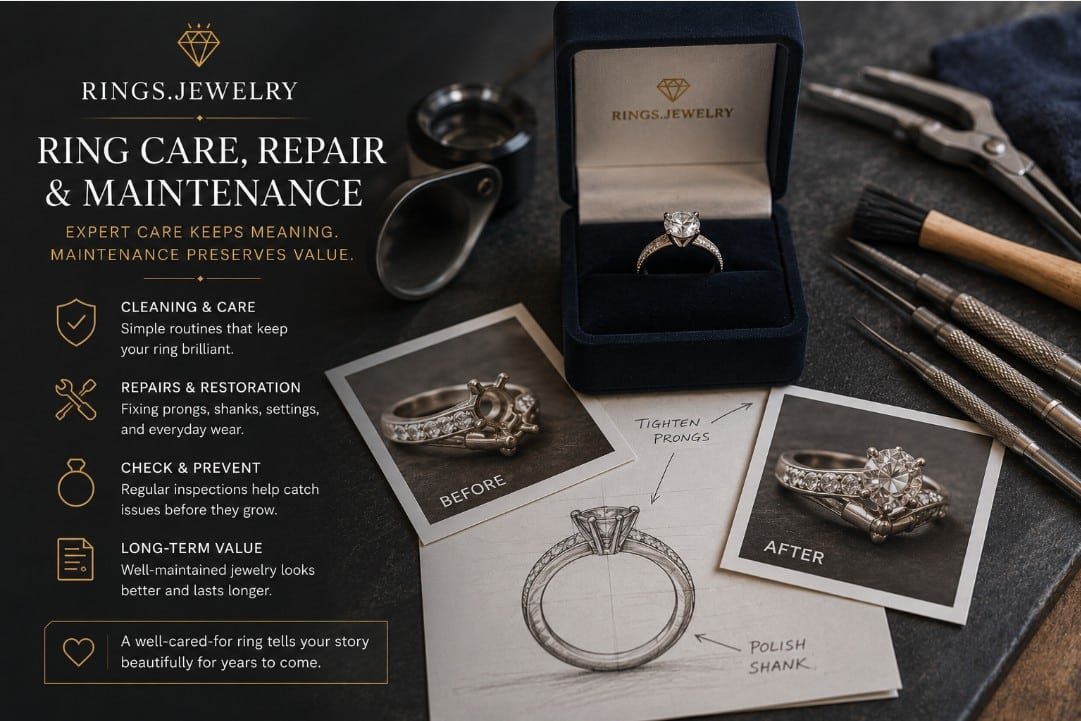
Fine jewelry is made to be worn, but it is not meant to be ignored. Rings.Jewelry explains how to care for engagement rings and wedding bands over time: how to clean them safely, when to remove them, what warning signs to watch for, and when professional service may be needed.
We cover prong checks, loose stones, worn shanks, bent bands, pavé maintenance, polishing, resizing, rhodium replating, storage habits, and everyday decisions that can protect or damage a ring.
Custom and Semi-Custom Ring Guidance
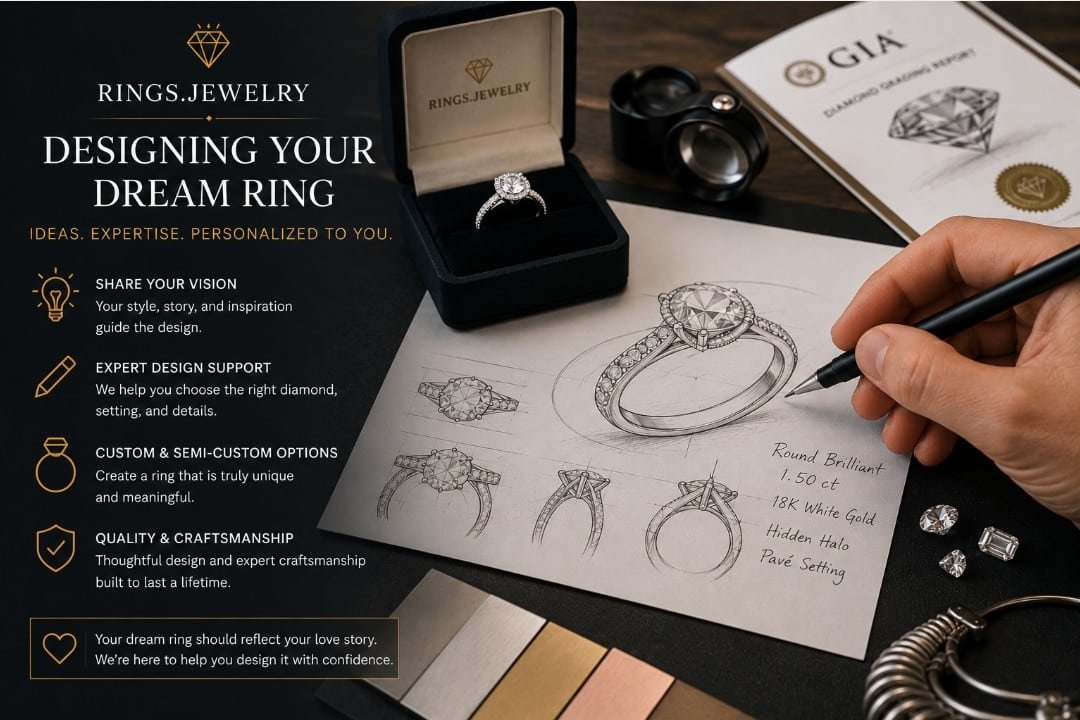
Some readers are not choosing from a display case. They are designing a ring from an idea, a stone, a family piece, a sketch, or a specific vision. Rings.Jewelry helps readers understand custom and semi-custom ring decisions before they begin the process.
We explain how diamond shape affects design, how setting choice changes durability, why metal matters, what details should be confirmed before production, and why a dream ring should be beautiful, wearable, serviceable, and realistic for long-term use.
How We Create Our Guides
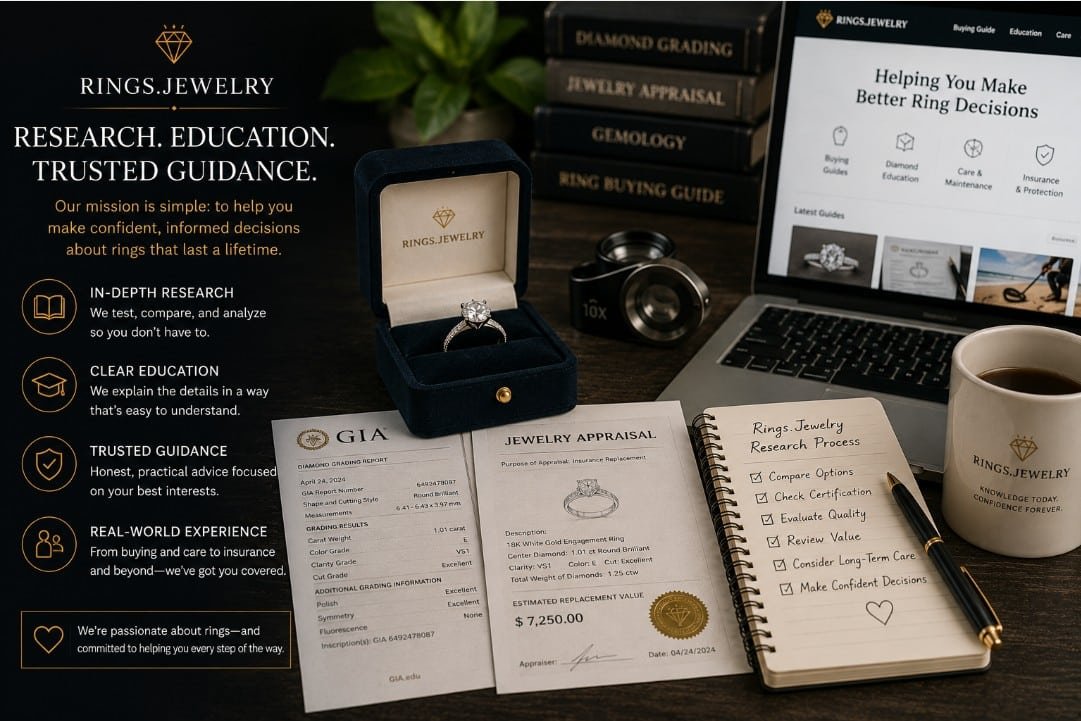
Every Rings.Jewelry guide is written to answer a real reader question. We do not want people to leave with vague inspiration. We want them to understand what to choose, what to avoid, what to ask a jeweler, what paperwork matters, and what trade-offs are worth accepting.
Our editorial process focuses on:
- Clear answers: Each article begins with the practical answer a reader needs first.
- Precise jewelry language: We use terms such as prong setting, bezel setting, pavé, platinum, white gold, diamond cut, clarity, rhodium plating, appraisal, resizing, and stone security.
- Comparison logic: We explain trade-offs instead of pretending one choice is perfect for everyone.
- Real-world ownership: We consider comfort, maintenance, cleaning, repairs, insurance, resale, documentation, travel, and loss risks.
- Buyer mistakes: We point out common problems before they become expensive regrets.
- Readable expertise: Fine jewelry can be technical, but the advice should still feel clear and human.
Our Trust Standards
Trust matters in jewelry because small details can have large consequences. A buyer may spend thousands on a ring, but the wrong setting, weak construction, unsuitable metal, missing documentation, unrealistic resale expectation, or poor maintenance plan can create problems later.
What we avoid
- We do not describe every ring as perfect for everyone.
- We do not hide maintenance issues behind pretty language.
- We do not pretend delicate designs are always practical.
- We do not treat trend value as the same thing as long-term value.
- We do not confuse resale price, retail price, and insurance replacement value.
- We do not give legal or insurance advice as a substitute for qualified professionals.
- We do not recommend a choice without explaining the trade-offs.
What we try to make clear
Every jewelry choice has a trade-off. Platinum is durable but usually costs more. White gold is bright and classic but may need rhodium replating. Prongs show more diamond but need checking. Bezels protect more of the stone but change the visual outline. Pavé adds sparkle but can need more maintenance. Thin bands look delicate but may be less forgiving over years of wear. Pre-owned rings can be excellent, but condition and documentation matter. Insurance can be valuable, but coverage details must be confirmed.
That kind of honesty is part of our editorial standard. Jewelry should feel romantic, but buying advice should stay practical.
The Rings.Jewelry Promise
We believe fine jewelry deserves careful explanation. A ring can mark love, commitment, family, memory, achievement, or personal style. It can also involve craftsmanship, money, documentation, insurance, maintenance, repair, and responsibility.
Our promise is to help readers understand the whole story — not only how a ring sparkles, but how it is made, how it wears, how it should be protected, how to buy or sell it wisely, how to care for it, and what to do if it is ever lost. Rings.Jewelry exists to make ring decisions more confident, more informed, and more beautiful.
FAQ
What is Rings.Jewelry?
Rings.Jewelry is an expert jewelry education website focused on engagement rings, wedding rings, diamonds, ring settings, metals, gemstones, buying and selling advice, insurance, lost ring recovery, jewelry care, and practical ownership guidance.
Who writes the guides on Rings.Jewelry?
Rings.Jewelry content is shaped by several jewelry perspectives, including master jeweler knowledge, diamond and gemstone education, stone-setting expertise, jewelry design, metalwork and repair experience, resale guidance, insurance research, lost jewelry recovery insight, and editorial fact-checking.
Does Rings.Jewelry only cover buying engagement rings?
No. Engagement rings are a major focus, but Rings.Jewelry also covers wedding bands, diamonds, metals, settings, pre-owned rings, selling rings, appraisals, insurance, repairs, maintenance, custom design, and lost ring recovery.
Does Rings.Jewelry help with buying pre-owned rings?
Yes. Rings.Jewelry explains how to evaluate pre-owned rings by condition, documentation, diamond reports, appraisal language, repair history, stone security, resizing potential, and realistic market value.
Does Rings.Jewelry give advice about selling rings?
Rings.Jewelry provides educational guidance on selling rings, including documentation, presentation, condition checks, realistic resale expectations, safe selling practices, and common mistakes to avoid.
Does Rings.Jewelry provide insurance advice?
Rings.Jewelry provides general educational information about ring insurance, appraisals, documentation, loss, theft, and damage preparation. It does not replace advice from a qualified insurance professional or specific policy provider.
What should I do first if I lose a ring?
Stop and identify the last place you clearly remember wearing it. Avoid disturbing the area too much, check common places carefully, protect outdoor search zones, gather photos and documents, and contact relevant locations or your insurer when appropriate.
Why does Rings.Jewelry focus on ring care and maintenance?
Rings are often worn every day, so cleaning, prong checks, resizing, repair warning signs, storage habits, and professional inspections can protect both the beauty and long-term value of the piece.
Can Rings.Jewelry help with custom ring design?
Rings.Jewelry helps readers understand custom and semi-custom ring decisions, including diamond shape, setting structure, metal choice, design proportions, craftsmanship, and long-term wearability.
Why should readers trust Rings.Jewelry?
Rings.Jewelry focuses on practical, expert-style education rather than vague inspiration. The site explains trade-offs, risks, maintenance, documentation, durability, resale, insurance, and real-world ring ownership in clear language.