
Platinum vs White Gold Engagement Rings: Which Metal Is Better?
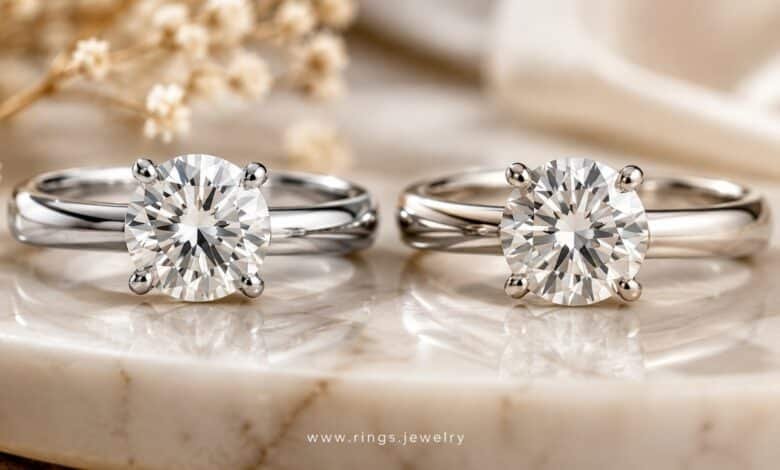
Platinum and white gold can look almost identical at first glance, especially when both are polished and paired with a bright diamond. But they are not the same metal choice. They age differently, feel different on the hand, cost different amounts, and need different kinds of maintenance over time.
If you are choosing an engagement ring for daily wear, the better metal is not simply the one that looks whiter in the showcase. The better choice depends on lifestyle, budget, skin sensitivity, desired weight, long-term maintenance, and whether you prefer a metal that develops character or one that can be refreshed to a bright white finish.
Quick Answer: Platinum vs White Gold Engagement Rings
Platinum is usually better if you want a naturally white, dense, highly durable metal that is excellent for long-term daily wear and sensitive skin. White gold is usually better if you want a bright white look at a lower initial price and do not mind occasional rhodium replating to maintain that crisp color.
Platinum does not need rhodium plating to look white, but it develops a soft patina over time. White gold is an alloy of gold mixed with white metals and usually plated with rhodium for a bright finish. Both can be beautiful for engagement rings, but platinum is generally the stronger low-maintenance choice, while white gold is often the more budget-flexible choice.
What Is Platinum in an Engagement Ring?
Platinum is a naturally white precious metal used in fine jewelry because of its density, durability, and elegant cool tone. In engagement rings, platinum is valued for holding diamonds securely and wearing well over many years.
One of platinum’s biggest advantages is that its color is naturally white. It does not rely on a surface coating to create its white appearance. When platinum wears, it does not turn yellow. Instead, it slowly develops a soft matte finish known as patina.
Why buyers choose platinum
Platinum feels substantial, refined, and serious. It is often chosen for engagement rings that are meant to be worn every day for decades, especially when the setting has delicate prongs, pavé details, or a valuable center stone.
What platinum changes
Platinum is heavier than white gold and usually costs more. Some people love that weight because it feels luxurious. Others prefer a lighter ring and a lower starting price.
Workshop note
Platinum is often excellent for prongs because the metal is dense and durable. That does not mean a platinum ring can be ignored forever, but it is a strong choice when long-term stone security matters.
What Is White Gold in an Engagement Ring?
White gold is not pure white gold from the ground. Gold is naturally yellow, so white gold is created by mixing gold with other metals to make the alloy appear lighter and whiter. Most white gold engagement rings are also coated with rhodium, a bright white metal that gives the ring its crisp, reflective finish.
This rhodium finish is one reason white gold looks so clean and bright when new. But rhodium plating is a surface layer. Over time, it can wear away, especially on areas that receive friction, such as the bottom of the band and edges that touch the skin.
Why buyers choose white gold
White gold gives a bright, diamond-friendly look at a more accessible starting price than platinum. It is widely available, versatile, and works beautifully with many engagement ring styles.
What white gold needs
White gold usually needs rhodium replating from time to time if the buyer wants to keep the ring looking bright white. Without replating, some warmth from the underlying gold alloy may become visible.
Expert jeweler note
White gold is not a bad choice. It simply has a maintenance personality. If you love a crisp white shine and are comfortable refreshing the finish occasionally, white gold can be a very elegant and practical option.
Platinum vs White Gold: Side-by-Side Comparison
The easiest way to compare platinum and white gold is to look beyond the showroom shine. Think about color, maintenance, weight, daily wear, allergies, and long-term service.
Platinum
Best for: buyers who want a naturally white metal that does not need rhodium plating to stay white.
Watch for: a soft patina that develops with wear. Some love it; some prefer a high polish.
White Gold
Best for: buyers who want a bright white look with a lower initial cost than platinum.
Watch for: rhodium plating that can wear over time and may need refreshing.
Platinum Holds Up Beautifully
Platinum is dense and durable, making it excellent for engagement rings that will be worn every day, especially when stone security is a priority.
White Gold Costs Less Upfront
White gold is often chosen because it gives a similar white-metal look at a more approachable starting price, though future replating should be considered.
Which Metal Is More Durable?
Platinum is generally the stronger choice for long-term durability in an engagement ring. It is dense, tough, and excellent for holding stones securely. When platinum is scratched, the metal tends to move rather than disappear in the same way softer surface wear can appear on some jewelry metals.
White gold can also be durable, especially in 14k white gold, which is commonly used for engagement rings because it balances gold content with added strength from alloy metals. However, white gold’s surface appearance depends heavily on rhodium plating if the buyer wants a bright white finish.
Durability decision guide
- Choose platinum for a dense, naturally white metal that is excellent for long-term daily wear.
- Choose 14k white gold if you want a strong, practical gold alloy with a lower starting price.
- Be careful with very delicate designs in either metal. Thin bands and tiny prongs can still create durability issues.
- Do not judge durability by shine alone. A freshly polished ring can look perfect while still needing strong construction underneath.
For settings with very fine prongs or pavé stones, metal choice becomes more important. If the ring design is delicate and the diamond is valuable, platinum is often worth serious consideration.
Which Metal Looks Whiter?
White gold often looks brighter and whiter when it is freshly rhodium plated. That surface finish can give the ring a crisp, mirror-like white look that pairs beautifully with diamonds.
Platinum is naturally white, but its tone can look slightly softer and more subtle than freshly rhodium-plated white gold. Over time, platinum develops patina, which gives the surface a less mirror-bright appearance. This does not mean the metal is lower quality. It is simply how platinum ages.
The simple color rule
If you want a bright white showroom finish, white gold with rhodium plating may look whiter at first. If you want a naturally white metal that does not depend on plating, platinum is the cleaner long-term choice.
Some buyers love platinum patina because it feels soft, quiet, and old-world luxurious. Others prefer to polish platinum periodically to restore a brighter finish. Neither preference is wrong. The key is knowing what kind of aging you actually like.
Which One Needs More Maintenance?
White gold usually needs more visible maintenance if the goal is to keep the ring looking bright white. The rhodium layer can wear away over time, revealing a warmer tone underneath. How quickly this happens depends on the wearer’s skin chemistry, lifestyle, cleaning habits, and how often the ring rubs against surfaces.
Platinum does not need rhodium replating. It can be polished if the owner wants a brighter finish, but it does not become yellow. Its maintenance is more about surface refinement, prong checks, cleaning, and occasional professional service.
Rhodium Refresh
White gold may need replating to restore a bright white finish. This is normal, but buyers should know it before choosing the metal.
Polish or Patina
Platinum can be polished, but many owners allow the patina to develop because it gives the ring a soft, lived-in luxury.
Workshop note
Do not confuse “low maintenance” with “no maintenance.” Any engagement ring worn daily should be cleaned and inspected. Metal choice changes the kind of maintenance, not the need for care entirely.
Which Metal Is Better for Sensitive Skin?
Platinum is often the safer choice for sensitive skin because jewelry-grade platinum alloys are commonly very pure and naturally hypoallergenic for many wearers. This is one reason platinum is frequently recommended for people who react to certain jewelry metals.
White gold can be more complicated because it is an alloy. Some white gold alloys may contain nickel, which can irritate sensitive skin. Not all white gold is the same, so buyers with metal sensitivity should ask exactly what alloy is used.
Ask before you buy
- Is this white gold nickel-free?
- What alloy is used in the ring?
- Is the rhodium plating masking a metal that may irritate skin later?
- Can the jeweler recommend a safer metal for sensitive skin?
If the wearer has known metal allergies, platinum is usually worth the higher upfront cost. Comfort is not a small detail when the ring is meant to be worn every day.
Which Metal Costs More?
Platinum usually costs more than white gold for an engagement ring. The final price depends on metal weight, design, labor, market conditions, and the ring’s construction, but platinum is generally the more expensive option upfront.
White gold usually has a lower initial price, which can be helpful if the buyer wants to spend more of the budget on the diamond, setting design, or other details. But it is important to remember that rhodium replating and future maintenance can add costs over time.
Cost and value filter
- Choose platinum if long-term durability, natural whiteness, and sensitive-skin comfort matter more than the lowest starting price.
- Choose white gold if you want the white-metal look while keeping more flexibility in the initial budget.
- Consider total ownership cost, not only the first purchase price.
- Ask about maintenance pricing before choosing white gold, especially if you want the ring to stay bright white.
If the engagement ring has a simple design, the cost difference may feel easier to manage. If the ring is large, detailed, or heavy, the difference between platinum and white gold can become more noticeable.
Which Metal Fits Your Lifestyle?
The right metal should match the person wearing the ring. Some buyers love the weight and permanence of platinum. Others prefer the lighter feel and accessible price of white gold. A good ring choice considers the hand, the lifestyle, the maintenance routine, and the design.
Choose platinum if you want
- a naturally white metal;
- excellent daily-wear durability;
- a heavier, more substantial feel;
- a strong choice for prongs and delicate details;
- a metal often preferred for sensitive skin;
- less concern about rhodium replating.
Choose white gold if you want
- a bright white finish when rhodium plated;
- a lower upfront price than platinum;
- a lighter feel on the finger;
- a classic diamond-friendly metal color;
- more budget flexibility for the diamond or design;
- a ring you are comfortable replating when needed.
The best metal is not the one that wins a showroom comparison for five minutes. It is the one that still feels right after years of workdays, handwashing, travel, celebrations, and ordinary life.
Which Ring Styles Suit Platinum or White Gold Best?
Platinum is especially strong for engagement rings with important center stones, delicate prongs, pavé, cathedral settings, and heirloom-style designs. Its density gives jewelers a serious metal to work with when stone security matters.
White gold works beautifully for classic solitaires, halo rings, three-stone rings, and modern diamond designs where the buyer wants a white-metal look without the higher platinum budget. It is also a versatile choice if the wearer likes a bright polished finish.
Solitaire rings
Both metals work well. Platinum feels more substantial and long-lasting, while white gold offers a bright classic look with more budget flexibility.
Pavé rings
Platinum is often attractive for pavé because small stones and fine details benefit from strong metal construction. White gold can still work when made well.
Modern minimal rings
White gold gives a crisp shine. Platinum gives a quieter natural white tone that can feel more restrained and architectural over time.
If you are still comparing how the metal will work with the full ring design, the Engagement Ring Settings Explained guide can help you connect metal choice with prong, bezel, halo, pavé, cathedral, and solitaire settings.
Buyer Mistakes to Avoid
Most mistakes happen when buyers compare platinum and white gold only by appearance. When both rings are new, polished, and displayed under perfect lighting, the difference can seem small. The real difference appears over months and years.
Mistake 1: Thinking white gold stays white by itself
White gold usually depends on rhodium plating for its brightest white finish. If the plating wears, the ring may look warmer than expected.
Mistake 2: Assuming platinum never changes
Platinum stays naturally white, but it develops patina. That soft finish is normal, not a defect. The question is whether the wearer likes that look.
Mistake 3: Choosing only by upfront price
White gold often costs less at first, but future replating and maintenance should be part of the real decision.
Mistake 4: Ignoring skin sensitivity
If the wearer reacts to nickel or other metals, the alloy matters. Platinum may be the safer choice, but buyers should always ask about the exact metal composition.
The quiet luxury mistake
Do not choose platinum just because it sounds more expensive, and do not choose white gold just because it saves money. Choose the metal that suits the ring design, the wearer’s skin, the maintenance plan, and the long-term life of the piece.
Platinum vs White Gold Buying Checklist
Before choosing the metal for an engagement ring, ask these questions. They will usually reveal the right answer quickly.
- Does the wearer want a naturally white metal? If yes, platinum has the advantage.
- Is the initial budget limited? White gold may leave more room for the diamond or setting.
- Does the wearer have sensitive skin? Platinum is often the safer choice, but always confirm the alloy.
- Will the ring be worn every day? Platinum is excellent for long-term daily wear, especially in delicate settings.
- Does the wearer like a bright polished finish? White gold with rhodium can deliver that look beautifully.
- Is the buyer comfortable with replating? If not, platinum may be less frustrating long-term.
- Is the ring design delicate? Platinum may be worth considering for prongs, pavé, and fine details.
- Does the wearer like patina? Platinum’s aged surface is part of its character.
So, Should You Choose Platinum or White Gold?
Choose platinum if you want a naturally white metal, excellent durability, a substantial feel, and less concern about maintaining a bright white plated finish. It is especially strong for engagement rings that will be worn daily and for designs where stone security matters.
Choose white gold if you want a bright white diamond-friendly look at a lower initial price. It can be an elegant and practical choice, especially if you are comfortable with rhodium replating and want more flexibility in the budget.
There is no universal winner for every buyer. Platinum is often the more premium long-term metal. White gold is often the more flexible and accessible white-metal option. The right answer depends on how the ring will be worn, how the wearer wants it to age, and what kind of maintenance feels acceptable.
The Jeweler’s Verdict
Platinum is the better choice for buyers who want natural whiteness, strong daily-wear durability, sensitive-skin comfort, and a substantial luxury feel. White gold is the better choice for buyers who want a bright white appearance, a lighter feel, and a lower upfront cost.
If the engagement ring will be worn every day for many years, the metal should be chosen with the same care as the diamond. A beautiful ring is not only about what sparkles on the first day. It is about what still feels secure, comfortable, and right after a lifetime of ordinary wear.
FAQ
Is platinum better than white gold for engagement rings?
Platinum is usually better for buyers who want a naturally white, durable, low-maintenance metal for daily wear. White gold is better for buyers who want a bright white look at a lower initial price and do not mind rhodium replating.
Does white gold turn yellow over time?
White gold can look warmer over time as the rhodium plating wears away. The metal underneath is a gold alloy, so it may not stay as bright white without replating.
Does platinum stay white forever?
Platinum stays naturally white and does not need rhodium plating. It can develop a soft patina with wear, but it does not turn yellow like unplated white gold can appear to do.
Is platinum more durable than white gold?
Platinum is generally denser and highly durable, making it excellent for engagement rings worn every day. White gold can also be durable, especially 14k white gold, but it usually needs more finish maintenance.
Is white gold cheaper than platinum?
White gold usually costs less upfront than platinum. However, buyers should also consider future rhodium replating and maintenance when comparing long-term value.
Which is better for sensitive skin, platinum or white gold?
Platinum is often better for sensitive skin because it is commonly used in very pure jewelry alloys. Some white gold alloys may contain nickel, so buyers with metal allergies should ask about the exact alloy.
Does platinum scratch more than white gold?
Platinum can show surface marks and patina over time, but this is part of how the metal wears. White gold can also scratch, and its rhodium finish may wear away with use.
Is white gold good for an engagement ring?
Yes, white gold can be a beautiful and practical engagement ring metal. It is popular because it offers a bright white look and lower initial cost, but it should be maintained properly.
Which metal is better for prongs, platinum or white gold?
Platinum is often preferred for delicate prongs because it is dense and durable. White gold can also work well when the setting is properly made and maintained.
Should I choose 14k or 18k white gold?
14k white gold is often more practical for daily wear because it is harder than 18k white gold. 18k has higher gold content and a richer feel, but it may be softer depending on the alloy.
