
Low Profile Engagement Rings: Comfort, Style, and Daily Wear
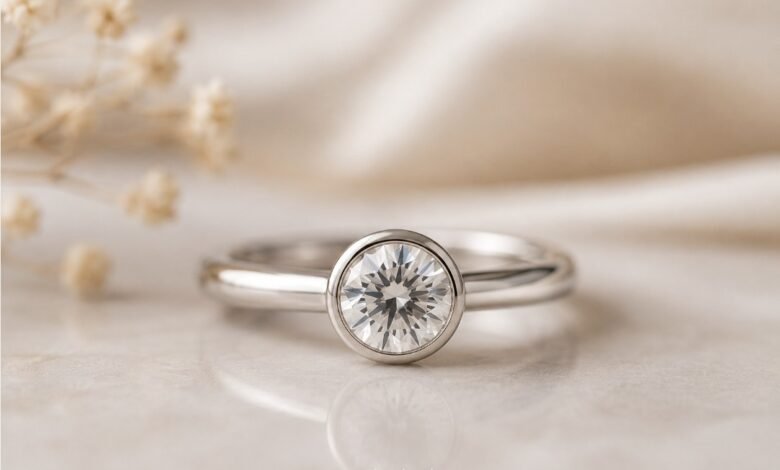
A low profile engagement ring is designed to sit closer to the finger instead of lifting the diamond high above the band. That one detail changes how the ring feels, how often it catches, how secure it seems in daily wear, and how easily it pairs with a wedding band.
For many buyers, the appeal is not only style. A lower setting can feel calmer on the hand, especially if the ring will be worn every day, during travel, at work, around gloves, or by someone who does not want to protect their jewelry every five minutes.
The important part is balance. A low profile ring should not bury the diamond or make the design feel flat. The best versions keep the stone secure, comfortable, and visually elegant without adding unnecessary height.
Quick Answer: Are Low Profile Engagement Rings Better?
Low profile engagement rings are often better for daily wear because the center stone sits closer to the finger, which makes the ring less likely to catch on clothing, gloves, hair, bags, or furniture. They are especially practical for active lifestyles, hands-on work, frequent travel, and buyers who want an engagement ring that feels secure rather than delicate. The trade-off is that some low profile designs may show less of the diamond from the side or may not sit perfectly flush with a straight wedding band. A good low profile ring balances comfort, diamond visibility, setting security, and long-term wearability.
What Is a Low Profile Engagement Ring?
A low profile engagement ring is an engagement ring where the center stone sits relatively close to the finger. The “profile” is the side view of the ring: how high the diamond rises above the band, how much space is under the setting, and how exposed the stone looks when you view the ring from the side.
In a high profile engagement ring, the diamond is lifted higher by prongs, a raised basket, a cathedral structure, or a taller setting. This can make the stone look more dramatic and may help a straight wedding band sit closer to the engagement ring. In a low profile engagement ring, the diamond is set lower into the design, creating a smoother and more grounded feeling on the hand.
This does not mean the ring must look plain. Low profile engagement rings can be solitaire, bezel, east-west, three-stone, vintage-inspired, pavé, oval, emerald cut, round brilliant, cushion cut, or marquise. The defining detail is not the style category. It is how the setting manages height.
Jeweler’s note
When we judge whether a ring is truly low profile, we do not look only at the top of the diamond. We check the whole architecture: prong height, basket depth, gallery shape, band thickness, shoulder support, and whether the diamond’s girdle is exposed to knocks.
A good low profile ring should feel intentional. A poor one can feel cramped, make the diamond look buried, or create problems when pairing a wedding band. The goal is not to push the stone as low as physically possible. The goal is to keep the ring comfortable while still giving the diamond enough space to look beautiful and stay secure.
Why Low Profile Rings Work So Well for Daily Wear
The biggest advantage of a low profile engagement ring is simple: it lives closer to the hand. That matters more than many buyers expect. Engagement rings are not worn only during romantic dinners and perfect photographs. They meet sweaters, handbags, winter gloves, seatbelts, office desks, pets, luggage, kitchen counters, and everyday movement.
A lower setting reduces the leverage that everyday bumps place on the center stone and prongs. If a tall ring hits a hard surface, the impact can act like pressure on a tiny tower. A lower ring usually has less exposed height, which can make the design feel more stable during normal wear.
Best for active hands
Low profile engagement rings are practical for people who use their hands often, work in healthcare, travel frequently, wear gloves, lift bags, or simply do not want to think about their ring every few minutes.
Best for low-maintenance buyers
If the wearer wants a ring that feels beautiful but not fussy, a lower profile can be easier to live with than a high basket, tall prong setting, or very exposed center stone.
This is also why low profile rings often appeal to people who are not used to wearing statement jewelry. A tall diamond ring can feel dramatic on the hand. Some people love that. Others feel like they are constantly protecting it. A low profile ring can feel more like part of the hand rather than something perched above it.
There is another quiet advantage: confidence. A ring that does not snag constantly gets worn more naturally. The owner stops adjusting it, stops removing it unnecessarily, and stops worrying that every sweater thread is about to become a jewelry emergency.
Practical rule
If the person wearing the ring is practical, active, minimalist, or slightly nervous about damaging jewelry, a low profile engagement ring is often a safer starting point than a tall high-profile setting.
The Best Settings for Low Profile Engagement Rings
Some settings naturally work better in a low profile design than others. The right choice depends on how much sparkle, protection, openness, and wedding band compatibility you want.
Bezel setting
Best for: daily wear, active lifestyles, modern minimalism, and diamond edge protection.
A bezel setting surrounds the diamond with a metal rim, which helps protect the edge of the stone. It is one of the most practical choices for a low profile engagement ring, especially when comfort and security matter more than maximum exposed diamond surface.
Low basket prong setting
Best for: buyers who want a traditional diamond look without a very tall ring.
A low basket setting can keep the diamond more open than a bezel while still reducing height. The quality of the prongs matters here: they need to hold the diamond securely without being too thin or exposed.
East-west setting
Best for: oval, emerald cut, marquise, radiant, and elongated cushion diamonds.
An east-west setting turns an elongated diamond horizontally across the finger. This can create a chic, low-slung look with strong finger coverage and less vertical height than many traditional settings.
Low halo setting
Best for: buyers who want more detail without making the center stone sit too high.
A low halo can add visual presence, but it must be designed carefully. If the halo is too bulky or the pavé is too delicate, the ring may need more maintenance over time.
If you are comparing low profile styles, start with the setting architecture before you fall in love with the top view. Many rings look similar from above, but from the side they behave completely differently. One may have a protected basket. Another may expose the diamond girdle. One may allow a straight wedding band to sit close. Another may require a curved or contoured band.
For buyers who want the most secure low profile option, bezel engagement rings are usually worth considering first. For buyers who want more open sparkle, a low prong or low cathedral design may be the better compromise.
Do Low Profile Engagement Rings Sparkle Less?
A low profile engagement ring does not automatically sparkle less. Diamond sparkle depends mainly on cut quality, proportions, polish, symmetry, cleanliness, and how the setting allows light to interact with the stone. A beautifully cut round brilliant diamond in a low setting can still look bright and lively.
However, setting design can influence appearance. A high prong setting may expose more of the diamond from the side, which can make the stone feel more open and elevated. A bezel or very enclosed low setting may visually frame the diamond, making it look sleek and protected but sometimes slightly less open.
The honest trade-off
If your priority is maximum visible diamond surface from every angle, a very low bezel may not be your first choice. If your priority is daily comfort, fewer snags, and edge protection, that same bezel may be exactly the right design.
The diamond shape also matters. Round brilliant, oval, radiant, and cushion cuts often work well in low profile rings because they can still show lively light return from the top. Emerald cuts and Asscher cuts rely less on glitter and more on clean step-cut reflections, so the setting should keep the stone visually crisp and not make it look too boxed in.
Elongated shapes can be especially beautiful in low profile designs. Oval, marquise, emerald cut, and elongated cushion diamonds can give strong finger coverage without needing a very tall profile. That is one reason east-west engagement rings often feel modern and practical at the same time.
Jeweler’s note
Do not judge a low profile ring only by whether the diamond sits low. Look at whether the stone still has visual breathing room. A low setting should frame the diamond, not suffocate it.
The Wedding Band Fit Problem Buyers Forget
One of the most common surprises with low profile engagement rings appears later, when the buyer starts choosing a wedding band. Because the center stone sits closer to the finger, there may not be enough space under the setting for a straight wedding band to sit completely flush.
This is not automatically a flaw. Many beautiful ring sets use a small gap, a curved wedding band, a contoured band, or a custom nesting band. The problem is not the gap itself. The problem is buying the engagement ring without knowing what kind of wedding band will work with it.
Straight band
A straight wedding band may sit flush only if the engagement ring has enough clearance under the center setting. Some low profile rings do not.
Contoured band
A contoured wedding band curves around the engagement ring. It can look elegant, but it is more specific to that ring design.
Open band
An open wedding band leaves space around the center stone. It can solve fit issues, but it needs enough structure to stay durable.
Spacer band
A thin spacer can protect pavé or delicate details from rubbing, especially if the engagement ring and wedding band do not align perfectly.
Before buying a low profile engagement ring, ask whether the setting allows a flush wedding band. If it does not, ask what kind of band is recommended. This is especially important for bezel settings, low baskets, three-stone rings, and rings with wide shoulders.
If you are still comparing the full buying process — diamond shape, metal, setting height, budget, and wedding band pairing — start with our complete engagement ring buying guide before making the final choice.
The Buying Mistakes Jewelers See With Low Profile Rings
Low profile engagement rings are practical, but they are not mistake-proof. The biggest errors usually happen when buyers focus on one benefit — low height — and ignore the rest of the ring’s construction.
Mistake 1: Choosing the lowest possible setting
Lower is not always better. If the diamond is set too low, the ring may look heavy, the stone may lose presence, or the wedding band may not fit comfortably beside it.
Mistake 2: Ignoring prong strength
A low prong setting still needs secure prongs. Very tiny prongs may look delicate in photos, but they need enough metal to hold the diamond safely over years of wear.
Mistake 3: Forgetting about cleaning
Some low profile settings have tight spaces under the diamond where lotion, soap, and dust collect. A ring that is harder to clean may lose brightness faster between professional services.
Mistake 4: Assuming all low profile rings are durable
A low ring can still be fragile if the band is extremely thin, the pavé is delicate, or the center stone is poorly protected. Profile height is only one part of durability.
The best low profile engagement rings are not just low. They are balanced. The diamond is secure, the band has enough structure, the setting works with the wearer’s lifestyle, and the design does not create avoidable maintenance problems.
Who Should Choose a Low Profile Engagement Ring?
A low profile engagement ring is usually a strong choice for someone who wants a beautiful ring that does not feel fragile or demanding. It is especially useful when the wearer has an active lifestyle, works with their hands, travels often, wears gloves, prefers clean modern design, or simply dislikes jewelry that catches on everything.
Choose low profile if…
- You want an engagement ring for daily wear.
- You dislike tall rings that catch on clothing.
- You prefer secure, practical design over dramatic height.
- You are considering bezel, low basket, or east-west settings.
- You want the ring to feel comfortable and close to the hand.
Be careful if…
- You want a perfectly flush straight wedding band.
- You prefer a very tall, dramatic diamond look.
- You want maximum side visibility of the diamond.
- You are choosing a setting that is very enclosed and hard to clean.
- You are pairing the ring with a complex pavé or eternity band.
A low profile ring is not the “safe but boring” option. In many cases, it is the more intelligent design choice. The best examples feel modern, refined, and easy to wear — not compromised.
Low Profile Engagement Ring Buying Checklist
Before buying, use this checklist to make sure the ring is not only pretty from above but also practical from the side.
- Check the side profile. Look at how high the diamond sits above the finger, not just the top view.
- Ask how the stone is protected. Pay attention to prongs, bezel edges, basket structure, and exposed corners.
- Test wedding band compatibility. Ask whether a straight band will sit flush or whether you need a contoured band.
- Consider cleaning access. Make sure the setting does not trap dirt in a way that makes the diamond constantly look dull.
- Match the design to lifestyle. Active wearers usually benefit from lower, smoother, more protective settings.
- Do not make the band too thin. A low profile design still needs enough metal to resist bending over years of daily wear.
- Think about diamond shape. Oval, round, emerald cut, radiant, marquise, and cushion stones can all work, but each needs the right setting support.
- Ask about maintenance. Prongs, pavé stones, bezels, and polished metal all need different long-term care.
Low Profile vs High Profile: The Practical Difference
The simplest way to compare low profile and high profile engagement rings is to ask what problem the ring is solving. A high profile ring often solves for visual drama. It lifts the diamond, shows more of the stone, and may make wedding band stacking easier. A low profile ring solves for comfort, security, and daily wear.
Closer to the finger
Best for: comfort, active lifestyles, reduced snagging, and practical daily wear.
Watch for: wedding band fit, cleaning access, and whether the diamond looks too enclosed.
Raised above the band
Best for: dramatic diamond presentation, more side visibility, and easier flush band pairing in some designs.
Watch for: snagging, impact risk, prong exposure, and comfort for daily wear.
Neither option is automatically better. A tall cathedral setting can be beautifully engineered and secure. A low bezel can be elegant and durable. A poorly made version of either can cause trouble. The right question is not “which is better?” The right question is “which one matches the wearer’s life?”
The Jeweler’s Verdict
Low profile engagement rings are one of the smartest choices for buyers who want a ring that feels beautiful, secure, and realistic for daily wear. They reduce snagging, sit comfortably on the hand, and can protect the diamond better when the setting is well designed.
The key is balance. Do not choose a low profile ring only because it is low. Choose one because the setting supports the diamond properly, the band has enough strength, the wedding band plan makes sense, and the style fits the person who will actually wear it every day.
If the wearer wants glamour above all, a higher profile ring may feel more dramatic. If the wearer wants elegance without constant worry, a low profile engagement ring may be the better long-term companion.
FAQ
What is a low profile engagement ring?
A low profile engagement ring is a ring where the center stone sits closer to the finger instead of being raised high above the band. This can make the ring more comfortable, less likely to snag, and easier to wear every day.
Are low profile engagement rings good for daily wear?
Yes, low profile engagement rings are often excellent for daily wear because they sit lower on the hand and are less exposed to bumps, catching, and twisting. They are especially practical for active lifestyles or people who work with their hands.
Do low profile engagement rings sparkle less?
Not always. Sparkle depends mostly on diamond cut quality, proportions, cleanliness, and setting design. Some very enclosed low profile settings may show less side light, but a well-cut diamond can still look bright in a low setting.
What setting is best for a low profile engagement ring?
Bezel settings, low basket prong settings, east-west settings, and some low halo designs can work well. The best choice depends on whether the buyer wants more protection, more visible sparkle, or easier wedding band pairing.
Can a wedding band sit flush with a low profile engagement ring?
Sometimes, but not always. Because the center stone sits closer to the finger, a straight wedding band may not fit under the setting. Some low profile rings need a curved, contoured, open, or custom wedding band.
Are low profile engagement rings more secure?
They can be more secure in daily wear because the stone is less elevated and less likely to catch. However, security still depends on the quality of the prongs, bezel, basket, band thickness, and overall craftsmanship.
Who should choose a low profile engagement ring?
A low profile engagement ring is a good choice for someone who wants comfort, practicality, reduced snagging, and a ring that feels easy to wear every day. It is also ideal for active people or anyone who prefers a cleaner, less elevated design.
What is the downside of a low profile engagement ring?
The main downsides are possible wedding band fit issues, less side visibility of the diamond, and cleaning challenges in some enclosed settings. A poorly designed low profile ring can also make the diamond look too buried.
