
Thin Band Engagement Rings: Beautiful, But Are They Durable?
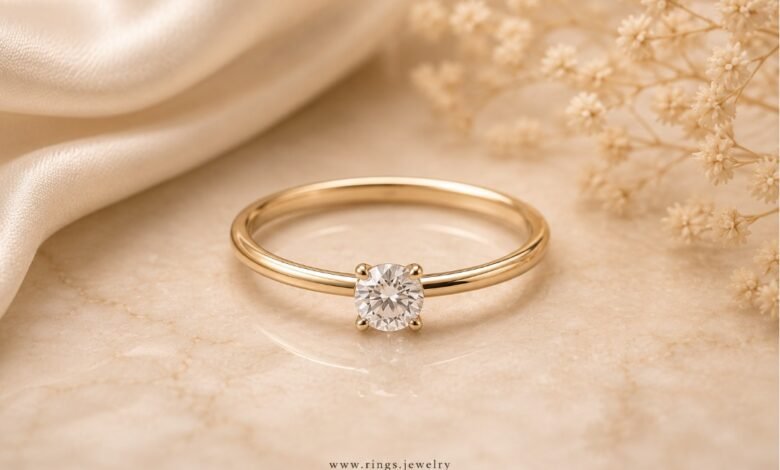
Thin band engagement rings have a very specific magic. They make the diamond look larger, the hand look lighter, and the whole ring feel delicate in that effortless, modern way people love in photos.
But a thin band is not just an aesthetic choice. It is a structural choice. The band is the part of the ring that absorbs bending, pressure, resizing, daily knocks, and years of wear. When there is less metal, every design decision matters more.
A well-made thin band engagement ring can be beautiful and wearable. A poorly made one can bend, lose stones, feel unstable, or become expensive to maintain. The difference is not always obvious from the top view. It usually shows up in the side profile, the shank thickness, the setting support, the metal choice, and the tiny construction details buyers rarely ask about until something goes wrong.
The Short Verdict on Thin Band Engagement Rings
Thin band engagement rings can be durable enough for daily wear when they are properly engineered, but extremely thin bands carry more risk than standard-width bands. The thinner the shank, the less metal there is to resist bending, twisting, and long-term wear. A thin band is safest when it has enough thickness, a secure center setting, a practical metal choice, and a design that does not rely on fragile pavé or overly delicate prongs. If the ring will be worn every day, the goal should be refined and slender — not dangerously minimal.
Why Thin Bands Became So Irresistible
Thin bands do something very flattering: they let the diamond take the spotlight. A narrow shank creates contrast. The center stone appears more prominent because there is less metal competing with it. On the hand, the ring feels lighter, cleaner, and more modern.
This is why thin band engagement rings photograph beautifully. They have that quiet “barely there” elegance — a fine gold or platinum line, a bright diamond, and not much else. For buyers who want a graceful solitaire, a delicate pavé ring, or a minimalist engagement ring, the appeal is obvious.
The problem is that jewelry photos do not show daily pressure.
A photograph does not show the ring being pulled off with lotion on the hand. It does not show a suitcase handle, a gym bag, a steering wheel, a winter glove, or the slow effect of years of tiny impacts. Thin bands are romantic in the showroom. The workshop asks a less romantic question: how much metal is actually doing the work?
The photo-to-real-life gap
A very thin band can make a diamond look larger in pictures, but the ring still has to survive as a piece of jewelry. If the band is too narrow and too shallow, it may not have enough strength for years of daily wear.
This does not mean you should avoid thin bands. It means you should choose them with the same seriousness you would bring to diamond cut, setting security, or metal quality. Delicate style is best when it is backed by solid construction.
The Point Where “Delicate” Starts Becoming Risky
There is no single magic number that makes every ring safe or unsafe, because durability depends on both width and thickness. A band can look thin from the top but still have enough depth to resist bending. Another band can look elegant in photos but be shallow, light, and vulnerable from the side.
That side profile matters. A thin, flat, underbuilt shank is usually more concerning than a narrow band with thoughtful thickness and good support. The ring needs enough metal in the right places.
Slender but supported
A thin band can work well when the shank has enough depth, the shoulders support the center setting, and the metal is chosen for everyday wear.
Ultra-thin and shallow
The riskiest designs are not just narrow. They are narrow, shallow, pavé-heavy, and supporting a center stone that deserves more structure.
Think of the band like architecture. A bridge can look elegant and still be strong, but it cannot be made of air. A ring band works the same way. If the design removes too much metal for the sake of delicacy, the remaining structure has to carry more stress.
The workshop warning sign
If a thin band flexes easily, feels extremely light, has tiny pavé stones across the shank, and holds a large center diamond, that is not “dainty” anymore. That is a maintenance conversation waiting to happen.
Metal Choice Changes the Thin Band Conversation
Metal matters more when the band is thin. A wider ring gives the material more room to work. A thinner ring gives the metal less forgiveness.
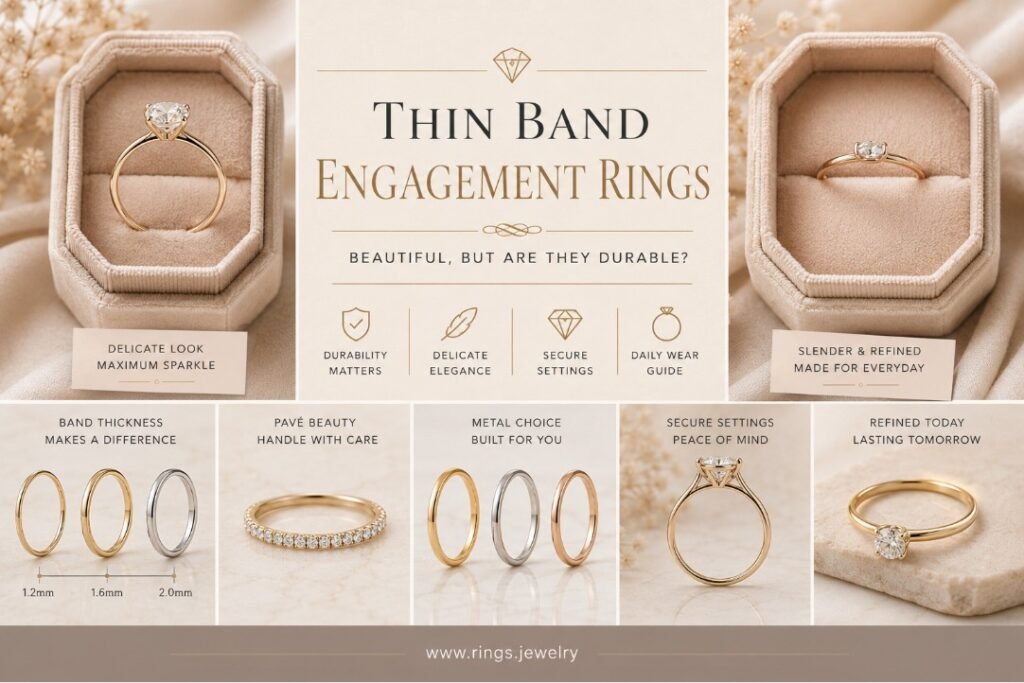
Gold and platinum behave differently. 14k gold is often practical for everyday wear because it is harder than higher-karat gold. 18k gold has a richer color and a more luxurious feel, but it can be softer, especially in thin designs. Platinum is dense and excellent for holding stones, but it develops a patina and can bend rather than snap under pressure. That is not always bad; it is just different.
How metals behave in thin bands
- 14k gold: often a practical choice for thin engagement rings because it balances color, strength, and daily wear.
- 18k gold: warmer and richer in yellow gold, but usually less forgiving in very delicate structures.
- Platinum: dense and secure for stone setting, but it can show patina and may feel heavier even in a slender design.
- White gold: can be practical, but rhodium plating and long-term maintenance should be considered.
If you love a warm gold look, a thin yellow gold engagement ring can be beautiful. Just do not choose thinness, softness, and a large center stone without checking the structure. A graceful ring still needs enough shank to protect its shape.
If you are deciding between gold purity levels for a delicate ring, our guide to 14k and 18k gold for engagement rings is the natural next read because karat choice becomes more important as the band gets slimmer.
The Center Stone Needs More Support Than the Band Suggests
A thin band makes the center diamond look larger. That is part of the charm. But the larger the diamond appears, the more important the setting becomes.
The center stone should not feel like it is floating on a thread. Prongs, basket, shoulders, gallery, and shank all work together. If the band is very narrow, the setting needs to compensate with smart support. Cathedral shoulders can help. A well-built basket can help. A bezel or partial bezel can help. Strong prongs absolutely help.
This is where the ring’s top view can be misleading. From above, a thin solitaire may look perfect. From the side, you might see a tall head attached to a very fine shank with little support. That can make the ring feel top-heavy and more vulnerable to twisting.
Look at the shoulders
The shoulders are the parts of the band that rise toward the center setting. In a thin band engagement ring, strong shoulders can help stabilize the center stone and make the ring feel less like a diamond sitting on a wire.
This is also why setting type matters. A low, secure setting can make a thin band more wearable, especially for someone who wants a delicate ring but does not want constant snagging. If comfort and everyday practicality matter, compare the band structure with our guide to lower-set engagement rings for daily wear.
Thin Pavé Bands: Gorgeous, Sparkly, and Not Always Innocent
Thin pavé engagement rings are beautiful in a very specific way. They give you a fine glitter line around the finger, often making the center diamond feel brighter without adding a heavy band.
They are also more demanding than plain thin bands.
Pavé means small diamonds are set into the band. Those small stones need metal around them. If the band is very thin, there is less metal available to hold each tiny stone securely. Add everyday bending, resizing pressure, and normal wear, and the design becomes more maintenance-sensitive.
Where pavé gets expensive
The issue is rarely one dramatic disaster. It is usually small maintenance: a tiny stone loosens, a bead wears down, the shank bends slightly, a resizing affects the pattern, or cleaning becomes more annoying because dirt collects around the small stones.
A thin pavé band can still be a good choice. The better versions have enough metal, secure setting work, sensible stone size, and realistic expectations. The risky versions are ultra-thin, heavily pavéd, and treated like they will behave exactly like a plain solid band. They will not.
If you want a very delicate pavé engagement ring, ask how the stones are set, whether the band can be resized, and how often the ring should be inspected. Also ask what happens if one small stone becomes loose. A good jeweler will not act offended by that question.
Resizing a Thin Band Is Not Always Simple
Resizing is where many delicate rings reveal their limitations.
A plain thin band is usually easier to resize than a thin pavé band, but it still requires care. If the ring is already very narrow, repeated resizing can affect shape and strength. If the band has diamonds along the shank, resizing becomes more complicated because the jeweler must protect the small stones and the setting pattern.
Eternity-style thin bands are even more restrictive. When diamonds go all the way around the band, resizing can be difficult, limited, or sometimes not recommended. This is important if the buyer is guessing the size, planning a surprise proposal, or choosing a very delicate design online.
Plain thin band
A plain slender shank is generally easier to adjust, though extremely thin designs still need careful work to preserve shape and strength.
Thin pavé band
Pavé adds small stones and setting work into the resizing zone. That can limit how much the ring can be adjusted safely.
Before buying, ask how much the ring can realistically be resized. Not “can rings be resized?” Ask about this ring, in this metal, with this band width, with this setting.
Four Buyers, Four Very Different Thin Band Choices
This is where the answer becomes more personal. A thin band is not automatically good or bad. It depends on who will wear it.
The minimalist who wears jewelry carefully
A plain thin solitaire may be a lovely choice. Keep the band slender but not extreme, choose a secure center setting, and avoid making every detail as tiny as possible. Minimal should still feel intentional.
The active wearer who forgets the ring is on
This person needs more structure. A slightly thicker shank, low profile setting, bezel or protected prongs, and fewer delicate pavé details will usually age better than an ultra-fine design.
The sparkle lover who wants pavé everywhere
Choose pavé with discipline. A thin pavé band can be elegant, but the ring needs enough metal to hold the small diamonds securely. If the design looks like glitter stitched onto a thread, pause.
The buyer choosing a large center diamond
A big diamond on a very thin band can look stunning, but the setting must be engineered carefully. The ring needs balance, shoulder support, and enough band strength to avoid feeling top-heavy.
The best thin band engagement ring is not the thinnest one you can find. It is the one that gives the delicate look without asking the ring to do impossible work.
How Thin Is Too Thin?
This is the question buyers ask because they want a number. A number would be convenient. Jewelry is not always that polite.
Band durability depends on width, thickness, metal, stone size, setting height, hand size, lifestyle, and whether the design includes pavé. A thin band that works for one person may be too delicate for another. Someone who wears the ring only outside of work may have a different risk profile than someone who wears it while carrying equipment, lifting bags, or constantly using their hands.
As a practical buying mindset, avoid chasing the most delicate possible version. If the ring will be worn daily, ask for the minimum recommended band width and thickness for that design. A responsible answer should consider the center stone size, the metal, the setting, and whether the ring has side stones.
A better question than “how thin?”
Ask: “Is this band proportioned safely for this diamond and this wearer’s lifestyle?” That question is much more useful than asking for the thinnest band available.
The Thin Band Bench Checklist
Before buying a thin band engagement ring, run through the same questions a careful jeweler would ask before approving the design.
- Check band width and thickness. Do not judge durability from the top view alone.
- Look at the shoulders. The center setting should not feel unsupported by the shank.
- Match metal to lifestyle. Very delicate designs need a practical metal choice, not just a pretty color.
- Be cautious with pavé. Thin pavé bands can be beautiful, but they need enough metal to hold small stones securely.
- Ask about resizing limits. This is especially important for pavé, eternity, and very delicate shanks.
- Check whether the ring feels top-heavy. A large diamond on a tiny band may spin or feel unstable.
- Consider setting height. A tall setting on a very thin band can increase snagging and leverage.
- Plan maintenance. Thin bands, pavé details, and delicate prongs should be inspected regularly.
The Design Sweet Spot: Slender, Not Starved
The best thin band engagement rings have restraint. They are slender enough to look elegant but not so thin that the ring feels underbuilt. They let the diamond shine without pretending the band does not matter.
A refined thin band should have clean proportions, smooth finishing, comfortable edges, and enough structure under the beauty. The diamond should feel secure. The band should not look like it would bend if you looked at it sternly. The setting should belong to the shank, not sit on top of it like an afterthought.
If you are comparing setting safety as well as band delicacy, the article on choosing between prong and bezel settings can help you decide how much stone exposure and protection makes sense for the final design.
Final Call from the Workshop
Thin band engagement rings are beautiful for a reason. They make the diamond feel important, the hand look graceful, and the design feel modern. When they are made well, they can be elegant, wearable, and absolutely worth choosing.
But thinness should not be treated like a competition. The most delicate ring is not automatically the most refined one. A ring that bends, drops small stones, spins constantly, or cannot be resized easily is not doing the wearer any favors.
Choose a thin band if you love the look, but choose it with structure: enough metal, a sensible setting, realistic pavé, a metal that fits daily wear, and a jeweler who is honest about maintenance. The goal is not fragile beauty. The goal is beauty that stays beautiful.
FAQ
Are thin band engagement rings durable?
They can be durable if the ring is properly made. The band needs enough width, thickness, metal strength, and setting support for daily wear.
Do thin band engagement rings bend easily?
Very thin bands can bend more easily than wider bands because there is less metal resisting pressure. This is especially true if the band is shallow, heavily pavéd, or paired with a large center diamond.
What is the problem with very thin engagement rings?
The main problem is reduced structure. A very thin band may be more vulnerable to bending, twisting, stone loosening, and resizing limitations. The ring may look delicate and beautiful, but it has less metal to absorb daily wear.
Are thin pavé engagement rings a bad idea?
Not automatically. A thin pavé band can be beautiful, but it needs careful construction. The smaller diamonds require secure setting work and enough metal around them. If the band is too thin, pavé can become more maintenance-sensitive over time.
Can a thin band engagement ring be resized?
A plain thin band is usually easier to resize than a thin pavé or eternity-style band. However, very delicate rings still need careful work because resizing can affect shape, strength, and stone security.
Is 14k or 18k gold better for a thin engagement ring?
14k gold is often more practical for thin engagement rings because it is generally harder and more resistant to everyday wear than 18k gold. 18k gold has a richer color, especially in yellow gold, but it may be softer in very delicate designs.
Do thin bands make diamonds look bigger?
Yes, visually they often do. A narrow band creates contrast and makes the center diamond appear more prominent. That is one of the reasons thin band engagement rings are so popular.
Should I choose a thin band for a large diamond?
You can, but the setting needs to be designed carefully. A large diamond on a very thin band may feel top-heavy or put more stress on the shank. Strong shoulders, secure prongs, and enough metal thickness become especially important.
How do I make a thin band engagement ring safer for daily wear?
Choose a band that is slender but not extreme, avoid overly fragile pavé, use a practical metal, check the side profile, and make sure the center setting is well supported. Regular inspections also help catch small issues before they become expensive repairs.
Who should avoid an ultra-thin engagement ring?
Someone who works heavily with their hands, wears the ring during active tasks, wants very low maintenance, or plans a large center stone may be better with a slightly stronger band. The look can still be delicate without going ultra-thin.
