
Oval Engagement Rings
Diamond Shape Guide
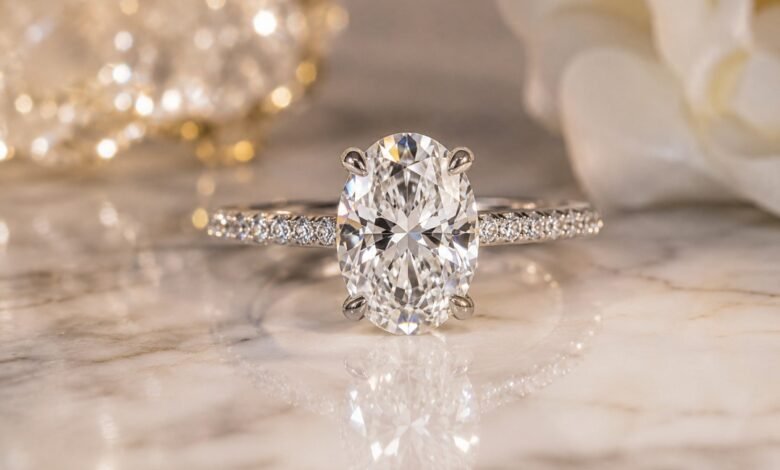
Oval engagement rings have an unusual talent: they can look classic, glamorous, delicate, dramatic, modern, vintage, minimal, or unapologetically large depending on how they are set. That flexibility is exactly why the oval diamond has become one of the most requested engagement ring shapes.
An oval diamond gives the sparkle family resemblance of a round brilliant, but with an elongated silhouette that can make the finger look longer and the stone look visually larger than its carat weight might suggest. It has softness without being plain, presence without being square, and enough familiarity that it rarely feels too experimental.
But oval engagement rings are not automatically easy to buy. The shape has its own traps: bow-tie shadows, awkward length-to-width ratios, shallow stones with weak light return, overly thin settings, and oval solitaires that look beautiful in photos but sit too high for real life. A good oval ring is not just “an oval diamond on a band.” It is a set of proportion decisions.
Why Oval Engagement Rings Are Popular
Oval engagement rings are popular because they solve several buyer desires at once. They look elegant. They create strong finger coverage. They feel softer than emerald cuts and less expected than round brilliants. They can be styled as traditional bridal jewelry or as something more fashion-aware. That is a rare combination.
The oval diamond also benefits from visual spread. Compared with many round diamonds of similar carat weight, an oval often appears larger from the top because the weight is distributed over a longer outline. This does not mean every oval is well-cut or visually impressive, but it does mean the shape can give a lot of presence for the budget.
There is also a flattering effect. The elongated shape can make the finger appear longer, especially when the oval is set north-south. This is one reason oval diamond rings photograph so beautifully on the hand. The shape has movement. It leads the eye.
An oval diamond is the extrovert of classic diamond shapes: familiar enough to be graceful, elongated enough to make an entrance.
Celebrity influence has certainly helped. Oval diamonds have appeared in many high-profile engagement rings, from refined solitaires to large statement stones. But celebrity popularity alone does not explain why the shape endures. Ovals are practical from a design perspective: they work with solitaires, halos, three-stone rings, bezels, hidden halos, east-west settings, yellow gold, platinum, vintage details, and clean modern bands.
The shape is also emotionally versatile. A round brilliant can feel very classic. An emerald cut can feel very composed. A marquise can feel bold. An oval sits in the middle: romantic, graceful, and adaptable. That makes it easy for many people to imagine wearing one every day.
Oval Diamond Proportions
Proportion is everything in an oval diamond. Two ovals with the same carat weight can look completely different on the hand. One may look balanced and lively. Another may look too narrow, too short, too flat, too deep, or strangely stretched.
The most important proportion is the length-to-width ratio. This ratio tells you how elongated the oval appears. A shorter oval can look soft and almost rounded. A longer oval can look elegant and dramatic. There is no single perfect number, because personal taste and finger shape matter, but many buyers prefer ovals that feel clearly elongated without becoming skinny.
A softly classic oval often sits around a balanced middle range. A more elongated oval can be beautiful for someone who wants finger-lengthening drama. A shorter oval can look charming and antique-inspired, especially in a bezel or vintage setting. The wrong oval is not simply “too long” or “too short.” It is the oval whose proportions do not suit the hand, setting, or design mood.
Expert note: Do not buy an oval by carat weight alone. Always compare the actual millimeter measurements. The face-up size, length-to-width ratio, depth, and visual performance matter more than the number on the invoice.
Depth is another important factor. A very deep oval may carry weight underneath where you cannot see it, making the diamond appear smaller from the top. A very shallow oval may show poor light return, windowing, or a watery center. The goal is not the flattest diamond or the deepest diamond. The goal is a stone that looks bright, balanced, and alive in normal light.
Symmetry also matters. Ovals should have even shoulders, graceful curves, and balanced ends. If one side bulges differently from the other, the eye may notice, especially once the diamond is set. A slightly imperfect outline can be charming in antique-style stones, but in a modern oval brilliant, awkward symmetry usually looks like a mistake rather than character.
Bow-Tie Effect in Oval Diamonds
The bow-tie effect is one of the most important things to understand before buying an oval diamond. It appears as a darker shadow across the center of the stone, shaped somewhat like a bow tie. Many oval diamonds show some bow-tie effect because of how elongated brilliant-cut stones handle light.
A mild bow tie is not always a problem. In fact, some contrast helps a diamond look lively. A diamond with no contrast at all can look flat. The issue is a heavy bow tie: a dark, dead-looking band across the center that remains obvious as the stone moves.
Certificates do not grade bow-tie severity in a simple way, so you need visual evidence. Look at videos. See the diamond in different lighting. Rotate it. If buying in person, move away from the perfect jewelry-store spotlight and check the diamond under softer light. A stone that only performs under aggressive lighting may disappoint in daily life.
Buying warning: A beautiful oval should have movement and contrast, not a permanent dark stripe through the center. Never assume a higher price or larger carat automatically means a better bow-tie pattern.
Bow tie is influenced by proportions, facet structure, and cut quality. Two ovals with similar color, clarity, and carat can behave differently. This is why oval diamonds require more visual judgment than many buyers expect. A grading report tells part of the story. Your eyes tell the part that matters on the hand.
Setting style can also affect how the bow tie is perceived. A bezel can frame the oval strongly and draw attention to the outline. A halo adds sparkle around the stone, which may distract from center darkness but can also make a weak center more noticeable by comparison. A solitaire leaves the oval exposed, which is honest and elegant when the diamond is good.
Best Settings for Oval Engagement Rings
Oval diamonds are unusually flexible, but the setting should respect the shape. The oval has no corners, so it can feel soft. It also has length, so it can feel dramatic. A good setting decides which side of the oval’s personality to emphasize.
A classic prong setting keeps the diamond open and bright. Four prongs can look minimal, but six prongs can add security and a more traditional outline. Claw prongs make an oval look refined and slightly sharper. Rounded prongs feel softer and more classic. Double claw prongs can be beautiful on larger ovals, but they need excellent finishing to avoid looking busy.
A cathedral setting lifts the oval and gives the ring more structure. This can make the ring feel more formal and may help with wedding band pairing, depending on the design. A low basket setting feels more understated and wearable, but may not allow a straight wedding band to sit flush.
Hidden halos are common with oval engagement rings. They add sparkle from the side and can make the ring feel more detailed without changing the top view too much. The risk is maintenance. Tiny stones under the center can collect dirt, loosen over time, and complicate repair. Hidden halos should be chosen for design, not because a product page needed one more feature.
Oval solitaire with clean prongs and a balanced band. Elegant, adaptable, and easy to pair with many wedding band styles.
Oval bezel or east-west oval. Smooth, graphic, secure, and less predictable than a traditional prong solitaire.
Oval with tapered side stones, antique details, or a delicate halo. Beautiful when proportions stay refined.
Three-stone oval rings can be excellent when the side stones are chosen carefully. Tapered baguettes create a clean, elegant look. Pear side stones add softness and width. Round side stones feel classic. Trapezoids or half-moons can look more custom and architectural. The danger is side stones that compete with the oval instead of supporting it.
Pavé bands are popular with oval diamonds, but they should be made well. Cheap pavé can look glittery at first and annoying later. Tiny stones require secure setting, proper bead work, and enough metal to hold them. A plain band is often more timeless and practical than a weak pavé band pretending to be luxury.
Oval Solitaire Engagement Rings
An oval solitaire engagement ring is popular because it gives maximum attention to the shape. No halo. No side stones. No decorative arguments. Just the oval diamond and the metal holding it.
This simplicity can be magnificent. It can also be unforgiving. In a solitaire, the oval’s bow tie, outline, symmetry, color, and size are all visible. If the diamond is excellent, the ring looks effortless. If the diamond is poorly chosen, the setting has nowhere to hide the problem.
Band width is one of the key design choices. A very thin band can make the oval look larger, but it may not be ideal for long-term wear, especially with a larger center stone. A slightly more substantial band can give the ring balance and durability. Many buyers are surprised that a tiny increase in band width can make a ring look more expensive, not less delicate.
Workshop detail: With oval solitaires, check whether the stone sits straight from every angle. Because the shape is elongated, even a slight tilt can be visually obvious.
Prong placement matters. North-south prongs at the tips can protect the ends visually and structurally. Four-prong settings show more of the diamond’s sides. Six-prong settings create more security and can make the outline feel balanced. The best choice depends on the stone size, setting height, and wearer’s taste.
Oval solitaires are especially good for people who want a ring that can evolve. A plain wedding band keeps the look clean. A diamond band adds sparkle. A curved band can soften the shape. A wider anniversary band later can make the stack more substantial. The oval solitaire is not plain; it is flexible.
Oval Bezel Engagement Rings
Oval bezel engagement rings are one of the strongest modern versions of the oval trend. The bezel frames the stone with a smooth rim of metal, making the oval outline clear and giving the ring a more designed, less conventional look.
A bezel can also make an oval feel more secure. It protects the edge of the stone and reduces snagging compared with many prong settings. This is useful for daily wear, especially if the wearer has an active lifestyle or dislikes the feeling of exposed prongs catching on fabric.
The challenge is refinement. An oval bezel should not look thick, uneven, or heavy unless the design intentionally calls for a bold sculptural frame. A fine bezel can make the diamond look elegant and smooth. A poorly made bezel can make it look trapped.
Yellow gold oval bezels are particularly popular because the warm metal makes the ring feel romantic and vintage-modern. Platinum oval bezels feel cooler and more architectural. Rose gold can look soft and feminine, though it should suit the wearer’s existing jewelry.
Choose an oval bezel if:
You want smooth wear, a modern outline, stronger edge protection, and a ring that feels like fine jewelry rather than a standard bridal setting.
Be cautious if:
You want maximum visible diamond edge, a very airy look, or the most traditional prong-set oval solitaire style.
Low-profile oval bezels can be excellent, but always check wedding band fit. Some sit too low for a straight band to fit flush. That may be fine if the wearer likes a gap or wants a curved band. It is less fine when discovered two weeks before the wedding.
Oval Rings with Side Stones
Side stones can make an oval engagement ring feel more luxurious, more balanced, or more custom. The key is choosing side stones that support the oval rather than stealing its voice.
Tapered baguettes are one of the most elegant choices. They create a clean line from the center oval into the band and make the ring feel refined without adding excessive sparkle. This combination works especially well in platinum or yellow gold.
Pear-shaped side stones create a softer, more romantic three-stone design. They can make the center oval feel larger and add graceful width across the finger. The proportions must be carefully matched. Side pears that are too large can make the ring look crowded; too small and they may feel like decorative afterthoughts.
Half-moon side stones can be beautiful with ovals, creating a smooth curve around the center. Trapezoids add more geometry. Round side stones create a classic three-stone look. Small oval side stones can work, though they may make the ring feel wider and more ornate.
Proportion rule: Side stones should frame the oval, not compete with it. If your eye cannot decide where to look first, the ring may be overbuilt.
Three-stone rings also require more attention to height and comfort. The side stones should not rub neighboring fingers. The setting should not become too wide for the hand. A ring can look spectacular in a tray and feel awkward once worn for a full day.
Side stones also change the budget. They are not free sparkle. Quality matching, secure setting, and extra labor all matter. A simple oval solitaire with a better center stone may be wiser than a three-stone ring with mediocre stones everywhere.
Best Metals for Oval Engagement Rings
Oval engagement rings change personality dramatically depending on metal. The same oval diamond can look crisp in platinum, warm in yellow gold, romantic in rose gold, or classic in white gold.
Platinum is excellent for oval engagement rings when the wearer wants a cool, durable, prestigious metal. It works beautifully with icy diamonds, clean solitaires, and refined three-stone settings. Platinum is dense and strong, but it develops patina over time. Some people love that soft finish; others prefer regular polishing.
Yellow gold is one of the most current choices for oval diamond rings. It adds warmth and can make the ring feel more personal, vintage-inspired, or fashion-aware. Yellow gold also pairs well with slightly warmer diamond colors, which can be useful when balancing budget and beauty.
White gold gives a bright bridal look at a lower cost than platinum, but most white gold is rhodium plated. Over time, that bright white surface may need replating. White gold works well for buyers who love a cool diamond look but want to manage the budget.
Rose gold softens the oval and can look romantic, especially with vintage or floral-inspired settings. It is less universally chosen than yellow or white metal, so it should match the wearer’s daily jewelry style. Rose gold chosen because it looks pretty in one photo may not be the best everyday choice if the wearer never wears warm pink tones.
For oval rings, metal also affects perceived diamond color. A very white metal can make warmth more visible. Yellow gold can make a warmer diamond look more intentional. This does not mean you can ignore diamond color, especially in larger ovals, but it gives you room to choose intelligently.
Natural vs Lab-Grown Oval Diamonds
Oval diamonds are extremely popular in both natural and lab-grown categories. The choice depends on what the buyer values most: natural origin and rarity, or larger size and visible value for the budget.
A natural oval diamond may appeal to someone who cares about geological rarity, tradition, and heirloom meaning. Natural diamonds can be beautiful, but larger high-quality natural ovals can become expensive quickly. This is where proportion discipline matters. A slightly smaller natural oval with excellent life may be a better ring than a larger one with a heavy bow tie.
A lab-grown oval diamond can allow a larger center stone or higher visible specs for the same budget. This is appealing for buyers who want the elongated finger coverage and glamour of an oval without paying natural diamond pricing. However, lab-grown does not automatically mean well-cut. Bow tie, proportions, color, and transparency still matter.
Because ovals are fancy shapes, the certificate cannot tell the whole story. Whether natural or lab-grown, you need clear videos, measurements, and ideally comparison stones. Do not buy the first oval that fits the carat number. Ovals require selection.
Best for buyers who value rarity, tradition, natural origin, and heirloom symbolism. Choose carefully to avoid paying more for a weak cut.
Best for buyers who want more size, strong visible impact, and budget flexibility. Still inspect bow tie, cut quality, and transparency.
The best choice is not ideological. It is personal. A superb lab-grown oval can look spectacular. A natural oval with beautiful cut and character can feel deeply meaningful. A poor oval in either category is simply a poor oval with paperwork.
How to Buy an Oval Engagement Ring
Buying an oval engagement ring should begin with the hand, not the spreadsheet. Think about finger size, daily jewelry style, preferred metal, lifestyle, and whether the wearer likes classic or modern design. Then choose the diamond and setting together.
Start with shape preference. Does the wearer want a softly rounded oval, a longer elegant oval, or a dramatic elongated stone? Look at real rings on hands, not only loose diamonds. The same stone can feel different once set.
Next, inspect bow tie. Do not avoid every oval with contrast, but avoid stones with a dark center that does not move. A good oval should have lively light return across the stone. The center should not look dead.
Then compare measurements. Carat weight alone is not enough. Look at length, width, depth, and face-up appearance. A 1.50 ct oval can look smaller than expected if too much weight is hidden in depth. A slightly lower carat oval with better spread and cut can look more impressive.
After that, choose the setting. A solitaire emphasizes the stone. A bezel adds smoothness and modernity. Side stones create presence. A halo increases sparkle but may feel less current if not designed carefully. An east-west setting makes the oval fashion-forward. A yellow gold setting warms it. A platinum setting sharpens it.
Common buying mistake: choosing the largest oval in budget without checking bow tie, measurements, setting height, or wedding band fit. Size is seductive. Bad proportions are expensive.
If you are still comparing styles, diamond shapes, metals, and budgets, start with our complete engagement ring buying guide. It walks you through the full decision process before you choose a final design.
Finally, check the practical details. Is the shank strong enough? Are the prongs even? Does the oval sit straight? Will the ring snag? Can it be resized? Will the wedding band sit flush or intentionally have a gap? Is the setting too high for the wearer’s lifestyle? These details are not boring. They are the difference between a ring that is loved daily and a ring that lives in a box because it is inconvenient.
The best oval engagement ring is not simply the biggest oval or the most expensive oval. It is the oval with the right outline, lively light, balanced setting, comfortable profile, and a design that feels like the person who will wear it.
Final expert judgment
Choose an oval engagement ring if you want elegance, finger coverage, sparkle, and design flexibility. Be strict about bow tie, proportions, and setting quality. A beautiful oval can be romantic in a solitaire, modern in a bezel, glamorous with side stones, or fashion-forward east-west. The shape is popular for a reason — but popularity is not the same as quality. Buy the oval that performs beautifully on the hand, not the one that only looks good on the certificate.
FAQ
Are oval engagement rings popular?
Yes. Oval engagement rings are very popular because they look elegant, elongate the finger, offer strong visual size, and work with many settings, including solitaires, bezels, halos, and three-stone rings.
Do oval diamonds look bigger than round diamonds?
Oval diamonds often look larger from the top than round diamonds of similar carat weight because their elongated shape gives more finger coverage. Actual appearance depends on measurements and proportions.
What is the bow-tie effect in an oval diamond?
The bow-tie effect is a darker shadow across the center of an oval diamond. A mild bow tie can be normal, but a heavy dark bow tie can make the diamond look dull or split.
What is the best setting for an oval engagement ring?
The best setting depends on style and lifestyle. Solitaires are classic, bezels are modern and secure, side-stone rings add luxury, and east-west settings feel more fashion-forward.
Are oval bezel engagement rings a good choice?
Yes. Oval bezel engagement rings are a strong choice for buyers who want a smooth, secure, modern ring with a clean outline and less snagging than many prong settings.
What metal is best for an oval engagement ring?
Platinum, yellow gold, white gold, and rose gold can all work. Platinum feels crisp and durable, yellow gold adds warmth, white gold gives a bright bridal look, and rose gold feels softer and romantic.
Is a natural or lab-grown oval diamond better?
Neither is automatically better. Natural ovals offer rarity and tradition, while lab-grown ovals can offer larger size for the budget. In both cases, inspect bow tie, proportions, and light performance.
What length-to-width ratio is best for an oval diamond?
There is no single perfect ratio, but many buyers prefer an oval that looks clearly elongated without being too narrow. The best ratio depends on hand shape, setting style, and personal taste.
Are oval engagement rings timeless or trendy?
Oval engagement rings are both popular and classic. A well-proportioned oval in a simple solitaire, bezel, or three-stone setting can age beautifully beyond the current trend cycle.
Can oval engagement rings sit flush with a wedding band?
Some oval rings can sit flush, especially higher settings. Low baskets and bezels may leave a gap. Always check the side profile before buying if a flush wedding band matters.
