
Bezel Engagement Rings
Setting Guide
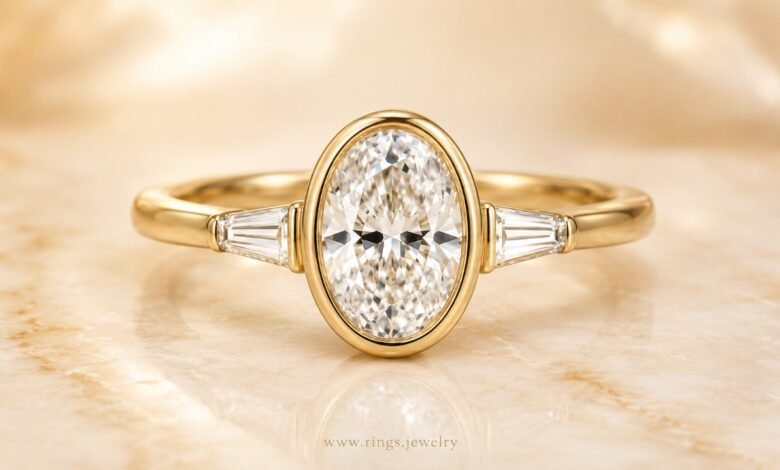
Bezel engagement rings have a particular kind of confidence. They do not flutter around the diamond with tiny decorative promises. They frame it. They protect it. They give the ring a clean outline and a sense of purpose.
For years, many shoppers thought of bezel settings as practical rather than romantic. That was never quite fair. A well-made bezel can be one of the most elegant settings in jewelry: smooth, modern, secure, and beautifully architectural. The problem was never the bezel itself. The problem was heavy bezels, clumsy bezels, and bezels made without enough refinement.
Now the bezel is back in a much better form. It appears around oval diamonds, emerald cuts, antique cushions, marquise stones, east-west diamonds, colored gemstones, and low-profile rings made for real daily wear. The best versions feel less like a safety device and more like a design decision made by someone with taste.
What Is a Bezel Engagement Ring?
A bezel engagement ring is a ring where the center stone is held by a rim of metal that wraps around all or part of the stone’s edge. In a full bezel, the metal surrounds the entire perimeter of the diamond or gemstone. In a partial bezel or half-bezel, the metal secures selected sides while leaving other parts of the stone more open.
This is different from a prong setting, where small metal claws grip the stone at several points. Prongs expose more of the diamond’s outline. A bezel creates a continuous border. That border changes both the look and the function of the ring.
Visually, a bezel gives the stone a clean frame. It can make a diamond look more defined, more modern, and sometimes slightly larger from the top because the metal outline extends the visual footprint. Practically, it helps protect the edge of the stone and reduces snagging compared with many prong settings.
There are several bezel styles. A full bezel is the most protective and has the strongest outline. A half-bezel feels lighter and can show more of the stone. A low-profile bezel sits close to the finger and is excellent for daily wear. An east-west bezel turns an elongated stone sideways for a modern, fashion-forward silhouette. A vintage bezel may include milgrain, engraving, or antique-inspired metalwork.
Expert note: A bezel should look deliberate, not thick by accident. The metal rim must be even, clean, and shaped to the stone. A refined bezel protects the diamond without swallowing it.
The bezel is one of those settings where millimeters matter. A slightly too-heavy rim can make a delicate oval look blunt. A poorly finished edge can make an expensive emerald cut feel ordinary. A beautifully executed bezel, however, can make even a simple ring look calm, expensive, and intelligently designed.
Why Bezel Settings Are Popular
Bezel settings are popular now because they answer several modern engagement ring desires at once. Buyers want rings that feel stylish, secure, low-maintenance, and less predictable than the standard prong solitaire. A bezel can do all of that without needing extra pavé, hidden halos, or complicated decoration.
There is also a broader jewelry shift happening. Engagement rings are moving closer to fine jewelry and less toward one narrow bridal formula. People want rings they would wear even if the word “engagement” were not attached. Bezels fit that mood beautifully. They feel intentional. They look designed. They work with minimalist wardrobes, vintage wardrobes, architectural jewelry, yellow gold stacks, and modern everyday styling.
Another reason is lifestyle. Many people do not want a ring that catches on sweaters, gloves, hair, pockets, towels, or every knit fabric within a three-foot radius. Prongs can be beautiful, but they are exposed. A bezel has a smoother edge, which makes it appealing for people who use their hands often.
A bezel is not the shy setting. It is the composed one. It says: the diamond is important, so we built it a proper frame.
Bezel engagement rings also photograph well when the proportions are right. The metal rim creates a strong outline around the center stone, which helps the shape read clearly. This is why bezels are especially striking with ovals, emerald cuts, cushions, pears, marquise diamonds, and colored gemstones.
The trend toward yellow gold has helped bezels too. A yellow gold bezel around an oval or emerald cut diamond can look warm, sculptural, and slightly vintage without looking old-fashioned. Platinum bezels feel cooler and more architectural. Rose gold bezels feel soft and romantic. The same setting construction can take on a completely different personality depending on the metal.
Bezel Engagement Ring Pros
The biggest advantage of a bezel engagement ring is protection. The metal rim shields the stone’s edge from direct impact better than many prong settings. This is especially useful for shapes with vulnerable edges or points, such as marquise, pear, emerald cut, princess cut, and some elongated cushions.
The second advantage is smooth wear. Bezel settings usually snag less than prongs. This makes them practical for nurses, designers, stylists, chefs, parents, frequent travelers, people who wear gloves, and anyone who simply does not want to think about their ring every time they put on a sweater.
Another benefit is visual definition. A bezel outlines the stone, making the shape more obvious. A bezel-set oval looks very much like an oval. A bezel-set emerald cut becomes more graphic. A bezel-set pear becomes more sculptural. For smaller diamonds, this outline can also add presence without using a halo.
The metal rim protects the stone’s edge and can be especially useful for pointed or step-cut diamond shapes.
A bezel usually creates a smoother profile with less snagging than many prong settings.
The setting gives the diamond a strong outline, making the ring look intentional, modern, and finished.
Bezel rings can also be excellent for lower-profile designs. A low bezel keeps the stone closer to the finger, which many people prefer for daily wear. Not every low setting allows a straight wedding band to sit flush, but the comfort can be worth it if planned properly.
Finally, a bezel can be wonderfully versatile. It can look minimalist in platinum, warm in yellow gold, romantic in rose gold, antique with milgrain, bold on a wide band, or delicate around a petite diamond. The setting is not one fixed style. It is a construction method with many personalities.
Possible Drawbacks of Bezel Engagement Rings
A bezel engagement ring is not perfect for everyone. The most common concern is that a bezel covers more of the stone than prongs do. This can make the diamond feel slightly less open, especially if the bezel is thick or poorly designed.
Some buyers worry that bezels reduce sparkle. The truth is more nuanced. A well-cut diamond returns light mainly through the top of the stone, so a bezel does not automatically make a diamond dull. But a heavy setting, poor proportions, or a badly chosen stone can make the ring feel less lively. If the diamond already has weak light performance, the bezel will not rescue it.
Another drawback is visual weight. A bezel adds metal around the stone. For some people, that outline is the whole appeal. For others, it can feel too bold, too modern, or not delicate enough. A very fine prong setting may feel airier and more traditional.
Buying warning: Bezel does not automatically mean better. A badly made bezel can look bulky, uneven, or cheap. The quality of the rim, polish, stone fit, and side profile matters enormously.
Resizing and repair can also be more complex depending on the design. A simple bezel solitaire is usually straightforward for a skilled jeweler, but a bezel integrated into a wide band, full eternity design, or sculptural setting may require more planning. If the ring is custom, ask about future resizing before approving the design.
Wedding band fit is another point to check. Some bezel rings sit low and wide, which can prevent a straight wedding band from sitting flush. This is not a defect if the wearer likes a gap, wants a curved band, or plans a custom wedding band. It is only a problem when no one thinks about it until later.
The final drawback is personal taste. Some people simply love prongs. They love seeing more diamond edge, more lightness, more classic bridal detail. That is perfectly valid. A bezel is refined when it matches the wearer. It is not refined when it is forced onto someone who really wanted a classic solitaire.
Best Diamond Shapes for Bezel Rings
Bezel settings can work with many diamond shapes, but they are especially powerful when the shape has a strong outline. The bezel acts like a frame, so the silhouette matters.
Oval diamonds are among the best choices for bezel engagement rings. A bezel-set oval feels modern, soft, and flattering. It can look beautiful in yellow gold, platinum, or rose gold. The bezel also protects the oval’s edge and gives the stone a clean outline. For buyers who want an oval engagement ring that feels less predictable than a prong solitaire, this is one of the strongest options.
Emerald cut diamonds are excellent in bezels because the setting enhances their geometry. A bezel-set emerald cut engagement ring can look calm, architectural, and quietly expensive. Since emerald cuts reveal clarity and windowing more easily, the diamond must be chosen carefully. The bezel will frame the stone; it will not hide a dead center.
Cushion cuts can look soft and romantic in bezels, especially antique cushions and old mine-inspired stones. The bezel gives the cushion a clearer outline and can make the ring feel vintage-modern rather than overly sweet. This is especially effective in yellow gold.
Marquise diamonds benefit from bezels because the pointed ends need protection. A bezel-set marquise can look sleek and dramatic, especially in an east-west setting. The challenge is avoiding a bezel that becomes too heavy at the points. The metal should protect without making the diamond look like a decorative leaf trapped in armor.
Pear-shaped diamonds also benefit from edge protection. A bezel can shield the tip and make the asymmetrical shape look more intentional. Pear bezels can feel artistic and unusual, but they should be balanced carefully so the ring does not look visually lopsided on the hand.
Round diamonds remain classic in bezel settings. A round bezel can look minimalist, vintage, or slightly signet-inspired depending on the band. It is a good choice for someone who wants the practicality of a bezel while keeping the diamond shape timeless.
Best modern choices:
Oval, emerald cut, elongated cushion, marquise, and east-west shapes. These diamonds let the bezel become part of the design, not just a protective rim.
Safest classic choice:
Round brilliant in a clean full bezel or delicate half-bezel. It keeps the ring timeless while making it smoother and more practical.
Whatever shape you choose, inspect the stone before falling in love with the setting. The bezel can improve outline and protection, but it cannot create excellent cut quality. A dull diamond in a beautiful bezel is still a dull diamond wearing a very nice coat.
Bezel Rings by Metal
The metal changes a bezel ring dramatically because the bezel is visually prominent. In a prong setting, metal appears in small points. In a bezel, metal becomes a frame. That makes color, karat, finish, and thickness especially important.
Yellow gold bezel engagement rings are warm, current, and often the most romantic version of the style. Yellow gold works beautifully with oval diamonds, antique cushions, emerald cuts, and vintage-inspired designs. It can also make slightly warmer diamond colors feel more harmonious. A yellow gold bezel has a rich outline that looks intentional rather than merely functional.
Platinum bezel rings feel cooler, heavier, and more architectural. Platinum is excellent for durability and prestige, though it is more expensive and denser than gold. A platinum bezel around an emerald cut or oval diamond can look very clean and gallery-like. It is a strong choice for someone who wants a modern ring with a serious, permanent feel.
White gold bezels create a bright look at a lower cost than platinum, but most white gold rings are rhodium plated. Over time, that plating may need maintenance to preserve the bright white finish. White gold bezels can be beautiful, especially for buyers who want a crisp diamond look without platinum pricing.
Rose gold bezels bring softness. They can make a bezel setting feel less severe and more romantic. Rose gold works well with warm diamonds, champagne tones, morganite, and some colored gemstones, but it is not everyone’s daily metal. Check the wearer’s existing jewelry before choosing it.
Brushed, satin, or matte finishes can make bezel rings feel even more modern, but they show wear differently than high polish. A polished bezel reflects light and looks crisp. A satin bezel feels quieter and more contemporary. Both can work; the choice should match the overall design.
If you are still comparing styles, diamond shapes, metals, and budgets, start with our complete engagement ring buying guide. It walks you through the full decision process before you choose a final design.
Bezel Rings and Daily Wear
Bezel engagement rings are often excellent for daily wear, but daily wear does not mean indestructible. A bezel protects the stone’s edge better than many settings, yet the ring still needs sensible care. Gold can scratch. Platinum can develop patina. Stones can chip if hit hard enough. The bezel is strong, not magical.
The daily-wear advantage is mainly smoothness. A bezel has fewer exposed catching points than prongs. This makes the ring easier to live with for people who are active, practical, or simply impatient with fragile jewelry. If someone wants a ring they can wear without constantly turning it inward or removing it for small tasks, bezel is worth serious consideration.
Low-profile bezel rings can be especially comfortable. The center stone sits closer to the finger, reducing height and snagging. This is ideal for people who dislike tall rings. However, low settings can create wedding band fit issues. If a flush band matters, ask about the profile before buying.
Workshop detail: A good bezel should be tight enough to secure the stone, but not so heavy that it looks crude. Check the rim under magnification if possible. Uneven metal around the stone is a sign to slow down.
Cleaning is important. Dirt, lotion, soap, and daily residue can collect around the bezel edge and under the stone depending on the gallery design. A bezel ring may look smooth from above, but it still needs regular cleaning. An open-back bezel or a setting with thoughtful access points can make maintenance easier.
For people who travel often, a bezel can be reassuring. It reduces snagging and protects vulnerable edges. For people who work in healthcare, design, food, beauty, childcare, or hands-on environments, the smoother profile can be more comfortable. Still, any engagement ring should be removed for heavy lifting, gym equipment, harsh chemicals, gardening, and tasks that could bend metal or damage the stone.
Bezel rings also pair well with modern ring stacks. A plain band beside a bezel solitaire can look very clean. A curved band can follow the shape if the bezel is low. A diamond band can add sparkle without making the engagement ring itself more delicate. Think of the wedding band as part of the daily-wear system, not an afterthought.
How to Buy a Bezel Engagement Ring
Buying a bezel engagement ring requires a slightly different eye than buying a prong-set ring. You still need to evaluate the diamond or gemstone carefully, but you also need to judge how the metal frame interacts with the stone.
First, check the bezel thickness. The rim should look proportional to the stone. A tiny diamond can benefit from a slightly more visible frame, but a large diamond may need a finer bezel to avoid looking heavy. If the bezel dominates the stone, the ring may feel more like metalwork than diamond jewelry.
Second, look at symmetry. The bezel should follow the stone evenly. Around an oval, both sides should feel balanced. Around an emerald cut, the corners should be clean. Around a pear or marquise, the point protection should look elegant, not bulky.
Third, inspect the side profile. Many rings look beautiful from above and awkward from the side. Check how high the stone sits, how the band meets the setting, whether the gallery is clean, and whether the underside allows cleaning. A bezel that looks like a smooth saucer from the side may not be the most elegant option.
Fourth, ask about resizing. This matters especially for wide bands, eternity details, sculptural settings, and rings with side stones. A simple bezel solitaire may be easy to resize. A complex custom bezel may not be. Know before you buy.
Fifth, consider whether the ring should be full bezel, half-bezel, or partial bezel. A full bezel is more protective and gives the strongest outline. A half-bezel can feel lighter and show more of the diamond. A partial bezel can be beautiful, but it must still secure the stone properly.
Common buying mistake: choosing a bezel only because it is trending, then ignoring the side view, wedding band fit, or bezel thickness. The top view sells the ring; the side view tells you how it will live.
Finally, match the bezel to the wearer’s style. A bezel is not one aesthetic. A yellow gold oval bezel is warm and romantic. A platinum emerald cut bezel is crisp and architectural. A rose gold pear bezel is soft and artistic. A chunky gold bezel band is fashion-forward. The setting method is only the beginning.
Who Should Choose a Bezel Ring?
A bezel engagement ring is ideal for someone who wants a ring that feels secure, modern, and easy to wear. It suits people who love clean lines, low-profile jewelry, smooth settings, and pieces that feel designed rather than decorated.
It is especially good for someone with an active lifestyle. If the wearer works with their hands, travels often, wears gloves, has children, handles fabrics, or dislikes snagging, a bezel can be a smart choice. It does not make the ring invincible, but it makes daily wear calmer.
Bezel settings also suit people who like modern heirloom style. They can look contemporary without feeling cold. They can look vintage without becoming fussy. They can make a diamond ring feel like a piece of personal jewelry rather than a standard bridal purchase.
Who should avoid bezel? Someone who wants maximum visible diamond edge, a very airy look, or the most classic prong-set sparkle may prefer another setting. Someone who loves delicate claw prongs may find a bezel too structured. Someone who wants a perfectly flush straight wedding band should confirm the profile before committing.
The best bezel engagement rings are not chosen only for protection. They are chosen because the frame improves the design. The metal rim should make the diamond look more intentional, more wearable, and more like the ring belongs to a real person with a real life.
Final expert judgment
A bezel engagement ring is one of the best choices for someone who wants beauty with structure. It protects the stone, reduces snagging, gives the ring a strong outline, and can look exceptionally refined when made well. Choose it for oval, emerald cut, cushion, marquise, pear, or round diamonds if the wearer loves clean design and practical elegance. Avoid heavy, uneven bezels and always inspect the side profile. A great bezel should feel smooth, secure, and intentional — never like the diamond was wrapped in metal because no one trusted the prongs.
FAQ
What is a bezel engagement ring?
A bezel engagement ring holds the center stone with a rim of metal around all or part of the stone’s edge. It creates a smooth, secure frame instead of using exposed prongs.
Are bezel engagement rings popular?
Yes. Bezel engagement rings are popular because they feel modern, secure, low-profile, and practical for daily wear while still looking elegant and refined.
Are bezel engagement rings more secure than prong rings?
In many cases, yes. A bezel protects more of the stone’s edge than prongs, which can be helpful for diamonds with points or corners such as pear, marquise, emerald cut, and princess cut stones.
Do bezel settings make diamonds look smaller?
A heavy bezel can make a diamond look smaller, but a refined bezel can define the stone’s outline and sometimes make it appear more visually substantial from the top.
Do bezel engagement rings sparkle less?
A bezel does not automatically reduce sparkle. A well-cut diamond returns most light through the top. However, a poorly cut stone or overly heavy setting can make the ring look less lively.
What diamond shapes are best for bezel engagement rings?
Oval, emerald cut, cushion, marquise, pear, round, and elongated radiant diamonds can all work beautifully in bezel settings. Ovals and emerald cuts are especially popular.
Are bezel rings good for everyday wear?
Yes. Bezel rings are often excellent for everyday wear because they have smoother edges, protect the stone, and usually snag less than many prong settings.
Can a bezel engagement ring look delicate?
Yes. A bezel can look delicate if the metal rim is fine, even, and proportional to the stone. Half-bezels and slim full bezels can feel especially light.
Is yellow gold good for bezel engagement rings?
Yes. Yellow gold is excellent for bezel engagement rings because it creates a warm, rich frame around the stone and works especially well with oval, cushion, emerald cut, and vintage-inspired designs.
Can a bezel ring sit flush with a wedding band?
Some bezel rings can sit flush, but many low-profile or wide bezel settings may leave a small gap. Always check the side profile before buying if a flush wedding band is important.
What is the difference between a full bezel and half-bezel?
A full bezel surrounds the entire stone edge with metal. A half-bezel secures only part of the stone, leaving more of the diamond open while still offering some protection.
Who should choose a bezel engagement ring?
A bezel engagement ring is ideal for someone who wants a secure, smooth, modern, and practical ring with clean lines and strong everyday wearability.
