How Much Should You Spend on a Promise Ring?
A promise ring budget should not feel like a tiny engagement-ring budget. That is where many buyers get nervous, spend too much, or choose the wrong ring for the moment.
The right amount to spend on a promise ring depends on the meaning of the promise, the age and stage of the relationship, the wearer’s lifestyle, the material, the gemstone, and whether the ring is meant to be a casual symbol or a long-term piece of jewelry. A simple sterling silver ring can be meaningful. A solid gold birthstone ring can be a beautiful middle ground. A small diamond or custom engraved promise ring can make sense when the promise is serious and the piece is meant to last.
This is a budget guide, but not the cold spreadsheet kind. Jewelry is emotional. Money is emotional. Promise rings sit right in the middle. The goal is not to spend the most. The goal is to spend enough that the ring feels intentional, well made, and appropriate for the promise behind it.
The Realistic Price Answer
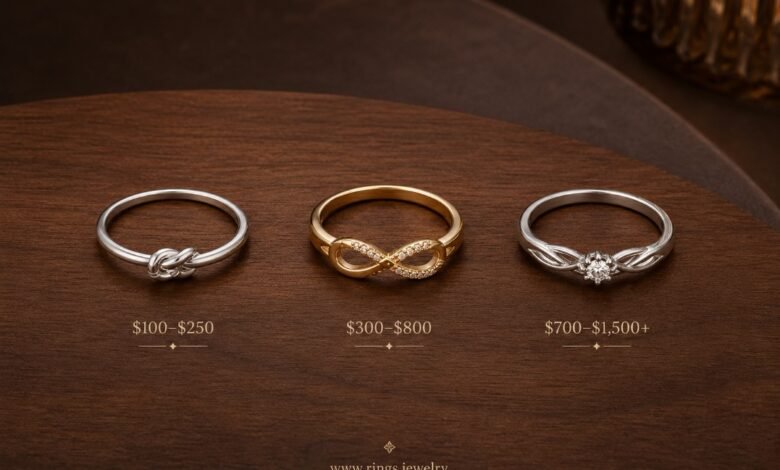
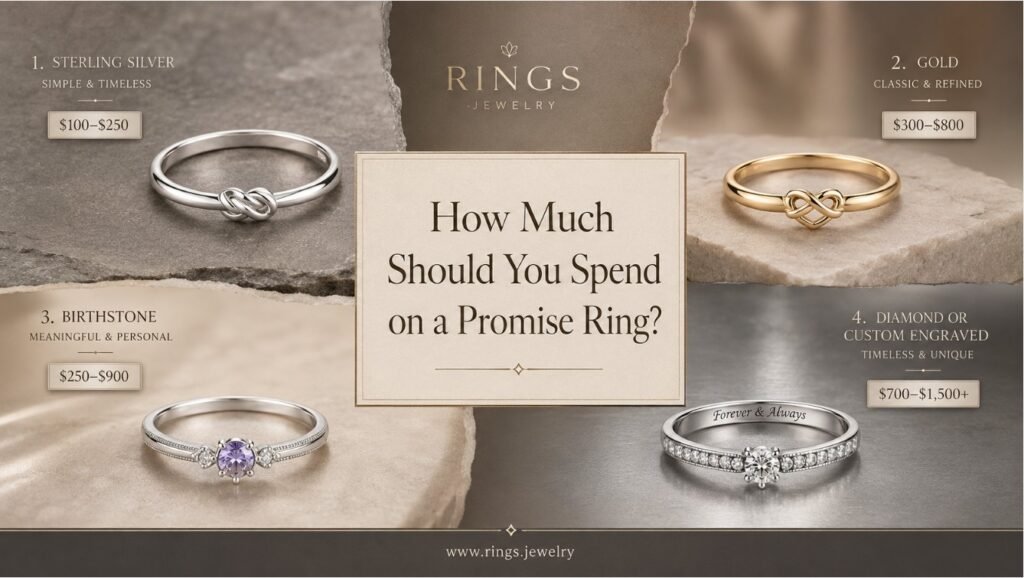
Most promise rings cost somewhere between $100 and $1,500, but many good choices sit in the $300 to $800 range. Lower budgets usually work for sterling silver, simple symbolic designs, or gold-plated pieces. Mid-range budgets can cover solid gold, birthstones, engraving, and small gemstone rings. Higher budgets make sense for small diamonds, platinum, custom work, or a promise ring intended to become a long-term keepsake.
A promise ring should cost enough to feel thoughtful and durable, but not so much that it creates engagement-level pressure unless that is truly the intention. For many buyers, a solid gold ring with engraving, a birthstone, or a subtle diamond accent gives the best balance of meaning, quality, and price.
First, Decide What the Money Is Supposed to Say
Before choosing a number, decide what the ring is supposed to communicate.
A promise ring can say, “I am serious about us.” It can say, “I am thinking about our future.” It can say, “Distance is hard, but I am still here.” It can say, “This friendship matters.” It can say, “I am making this promise to myself.”
Those are not the same purchase.
If the ring is a sweet relationship symbol for a young couple, spending a few hundred dollars may be more appropriate than stretching into luxury territory. If the promise ring marks a serious future together, a custom design or fine metal may make sense. If the ring is a self-promise after a major life chapter, the budget might be more personal: not about impressing anyone, but about choosing something the wearer will actually keep.
The budget should match the promise
A promise ring budget should feel proportional to the meaning. Too little can make the ring feel disposable. Too much can make it feel like an engagement ring in disguise. The strongest choice is usually the ring that feels intentional, wearable, and emotionally honest.
This is where buyers often make the first mistake: they search for “average promise ring cost” and treat the number like a rule. There is no universal rule. A student, a long-distance couple, a partner planning a future engagement, and someone buying a self-promise ring after a difficult year should not all follow the same budget.
Jewelry has two prices: the price on the receipt and the emotional price of what the ring appears to mean. Promise rings need both to be balanced.
Promise Ring Price Ranges That Actually Make Sense
Instead of forcing one “correct” amount, it is better to think in ranges. Each range has a different job. The important question is not only “Can I afford this?” but also “Will this ring still feel right six months from now?”
Simple symbolic rings
What it usually buys: Simple sterling silver, plated rings, and very minimal symbolic designs.
Best for: Young couples, casual promises, friendship rings, and first meaningful jewelry gifts.
Watch carefully: Plating wear, very thin bands, unclear metal quality, and settings that may not hold up to daily use.
Better silver, small gold, and birthstone options
What it usually buys: Better sterling silver, simple 10k gold, small birthstone rings, and engraved bands.
Best for: Meaningful but modest promise rings where the emotion matters more than luxury materials.
Watch carefully: Stone durability, band thickness, ring finish, and whether the design is strong enough for regular wear.
The strongest middle budget
What it usually buys: Solid 14k gold, good birthstone rings, small diamonds, and quality engraving.
Best for: Most buyers who want durable value without creating proposal-level pressure.
Watch carefully: Overly delicate designs, tiny pavé stones, and rings that look too much like engagement rings.
Premium promise ring territory
What it usually buys: Fine gold, small diamond center stones, sapphire or ruby rings, and refined custom details.
Best for: Serious romantic promises, long-term keepsakes, and premium gifts.
Watch carefully: Whether the ring starts to feel like an engagement ring before the relationship is ready for that message.
Heirloom-level promise rings
What it usually buys: Platinum, custom work, higher-quality diamonds, designer craftsmanship, and more complex jewelry construction.
Best for: Future-focused promises, luxury keepsakes, and rings meant to become part of a long-term jewelry story.
Watch carefully: Emotional pressure, mixed signals, and spending more than the relationship stage actually supports.
There is nothing wrong with any of these ranges. The problem is choosing the wrong range for the wrong reason.
A $120 silver ring can be perfect if the promise is sweet, early, personal, or friendship-based. A $900 gold and sapphire ring can be perfect if the promise is serious and the wearer loves color. A $2,000 custom diamond ring can be perfect if both people understand that it is not a proposal today but is deeply connected to a future together.
The ring should not feel like financial theater. It should feel chosen.
Silver Promise Rings: Affordable, Sentimental, but Not Invincible
Sterling silver is often the entry point for promise rings. It is affordable, bright, pretty, and easy to personalize. For many people, especially younger couples or friendship promise rings, silver is completely appropriate.
A silver promise ring works best when the meaning is sentimental and the wearer understands the material. Sterling silver can tarnish. It can scratch. It is softer than gold or platinum. That does not make it bad. It simply means the ring may need polishing and gentler wear.
Silver is a good choice when the budget is modest, the promise is early, or the ring is not expected to survive decades of daily wear. It is also useful for engraved bands, simple heart details, infinity rings, and small symbolic designs.
Bench note on silver
Silver can be meaningful, but very thin silver bands are not ideal for rough daily wear. If the ring will be worn every day, choose a stronger band profile and avoid settings that hold tiny stones too delicately.
The danger in the lowest price range is not silver itself. It is poor construction. A ring can look charming online and arrive with a band that is too thin, stones that are glued or poorly secured, plating that wears quickly, or metal that irritates sensitive skin. A promise ring does not need to be expensive, but it should not feel disposable if the promise is serious.
If the buyer can only spend under $150, the best move is to keep the design simple. A clean sterling silver band with a small engraving is often smarter than a dramatic ring with many fragile details.
Gold Promise Rings: The Sweet Spot for Everyday Meaning
For many buyers, gold is the best middle ground. It feels more permanent than silver, but it does not have to enter engagement-ring budget territory. It can be warm, romantic, refined, and durable enough for regular wear.
14k gold is often the practical choice. It has enough gold content to feel precious, but enough alloy strength to handle daily life better than softer high-karat gold. It works well for promise rings because these rings are often worn often, touched often, and carried through ordinary days.
10k gold may be more affordable and stronger in some ways, but it has a lower gold content and a slightly different color. 18k gold has richer color, especially in yellow gold, but it is softer and usually more expensive. Platinum is beautiful and strong, but often unnecessary unless the promise ring is meant to be a premium lifelong piece.
Gold budget logic
- 10k gold: useful for tighter budgets, but less rich in color.
- 14k gold: usually the best balance for daily promise rings.
- 18k gold: richer and more luxurious, but softer and pricier.
- Rose gold: romantic and warm, but copper sensitivity can matter for some wearers.
- White gold: bright and polished, but may need rhodium maintenance over time.
- Yellow gold: classic, warm, and forgiving with many gemstones.
A gold promise ring in the $300–$800 range can feel like a strong choice without becoming too formal. This range can cover a simple solid band, a small birthstone, a tiny diamond accent, a delicate engraved design, or a refined symbolic motif.
If you are choosing gold because the ring will be worn daily, spend less energy chasing the most decorative design and more energy checking construction. Band thickness, stone security, smooth edges, and resizing options matter. A slightly stronger gold band will age better than a fragile ring that looks impressive for the first week and bends after real wear.
Birthstone Promise Rings: Personal Value Without Diamond Pressure
Birthstone promise rings are one of the smartest budget choices because they feel personal without needing to be expensive. They can represent the wearer, the giver, a shared month, an anniversary, a child, a memory, or a season of life.
A birthstone ring often says “I thought about you specifically,” which is exactly what many promise rings need.
Some birthstones are more durable than others. Sapphire and ruby are excellent for daily wear. Garnet, amethyst, topaz, aquamarine, and citrine can work well with reasonable care. Emerald is beautiful but more delicate because inclusions and treatments can affect durability. Opal and pearl are lovely but softer and less forgiving for daily wear.
Birthstone value rule
A birthstone promise ring is often a better emotional value than a small low-quality diamond. If the stone connects to the person or promise, it can feel more intentional and less like a miniature engagement ring.
Budget depends on the gemstone, metal, size, and setting. A sterling silver birthstone ring may sit under $200. A solid 14k gold birthstone ring may land between $300 and $800. A fine sapphire, ruby, or custom birthstone design can move higher.
For promise rings, the stone does not need to be large. In fact, smaller stones often feel more wearable. A low-profile birthstone, flush-set gem, tiny hidden stone, or simple bezel setting can carry meaning without being flashy.
Birthstones are also useful when the promise is not purely romantic. Friendship promise rings, self-promise rings, family rings, and milestone rings often benefit from a gemstone that feels personal rather than bridal.
Small Diamond Promise Rings: When Sparkle Makes Sense
A promise ring can have a diamond. The question is not whether diamonds are allowed. The question is whether the diamond sends the right message.
A small diamond accent can symbolize strength, clarity, and seriousness. It can make the ring feel elevated without turning it into an engagement ring. A tiny diamond set into a gold band, a flush-set diamond, a small diamond heart detail, or a delicate diamond station ring can work beautifully.
The risk begins when the ring looks too much like a proposal ring. A large solitaire diamond, especially on the left ring finger, can create engagement expectations. If the giver does not intend a proposal, the design may cause confusion.
Diamond caution
Spend carefully on diamonds for promise rings. A small, well-set diamond accent can be perfect. A large center diamond may make the ring feel like an engagement ring, even if that is not the intention.
Diamond promise rings can range widely. A tiny diamond accent in sterling silver or 10k gold may be affordable. A 14k gold diamond band may cost several hundred dollars. A custom diamond promise ring can move past $1,000 quickly depending on stone quality and design.
Lab-grown diamonds can offer more sparkle for the money, but the same meaning rule applies: more diamond is not always better for a promise ring. A larger stone can increase not only the price, but also the emotional expectation.
For buyers who are actually moving toward a proposal and comparing diamond shapes, settings, metals, and long-term bridal wear, the engagement ring buying guide is the better place to continue. Promise ring budgeting and engagement ring budgeting should not be treated as the same decision.
Engraving and Custom Details: The Best Money Is Often Hidden Inside the Ring
Engraving is one of the highest-value upgrades for a promise ring because it increases meaning without necessarily increasing price dramatically.
A plain ring can become deeply personal with a date, initials, coordinates, a short phrase, a private symbol, or a word only two people understand. This is why an engraved $400 gold band can feel more valuable than a more decorative ring that has no personal connection.
Custom does not always mean extravagant. A custom promise ring may be as simple as choosing a birthstone, adding a hidden gem, engraving the inside, adjusting the band shape, or selecting a metal that matches the wearer’s daily jewelry. True custom design with CAD, special stone sourcing, and a new setting will cost more, but small custom details can be budget-friendly.
Personalization worth paying for
- Inside engraving: strong emotional value for a modest cost.
- Birthstone detail: personal without looking too bridal.
- Hidden stone: private meaning, especially for couples or self-promise rings.
- Coordinates: good for long-distance relationships or meaningful places.
- Matching detail: useful for couple or friendship promise rings without making both rings identical.
There is a limit. Over-customizing can make the ring harder to wear, harder to resize, or too specific for the wearer’s taste. A promise ring should feel personal, not overloaded. One meaningful detail is often stronger than five competing symbols.
If budget is limited, engraving is usually a smarter upgrade than adding low-quality tiny stones everywhere. It makes the ring more specific to the promise, which is the entire point.
When a Promise Ring Budget Starts Sending the Wrong Message
Overspending on a promise ring is not only a financial issue. It can become a communication issue.
If the ring costs so much that it looks and feels like an engagement ring, the recipient may reasonably wonder whether the relationship meaning has changed. That can be wonderful if both people understand the ring as a future-engagement promise. It can be painful if one person reads it as a proposal and the other does not.
Promise rings become risky when the budget is used to avoid clarity. A very expensive ring with vague wording can create pressure. A luxury ring given instead of a long-awaited proposal can feel like a beautiful delay. A ring that stretches the buyer financially can turn a meaningful gesture into stress.
Spending check
If the price makes you nervous because it might be mistaken for an engagement ring, listen to that instinct. Either clarify the message, choose a less bridal design, or save the larger budget for the proposal ring later.
There are good reasons to spend more: better metal, durable construction, a meaningful gemstone, skilled engraving, or custom work that truly belongs to the promise. There are weaker reasons: trying to prove seriousness with price, competing with social media, copying engagement-ring expectations, or buying sparkle because the conversation feels awkward.
Promise rings do not need to shout.
When Cheap Becomes Expensive
Spending too little can also be a problem — not because love needs a high price, but because jewelry has construction realities.
A ring worn every day needs enough metal to resist bending. Stones need proper setting. Plating can wear. Very thin bands can warp. Poorly finished edges can irritate the finger. Unknown alloys can cause skin reactions. A ring that breaks quickly can make the promise feel careless, even if the intention was sincere.
This is especially important if the ring will be worn by someone active: someone who types all day, works with their hands, travels often, exercises, wears gloves, plays instruments, lifts objects, or forgets to remove jewelry before daily tasks.
Construction over decoration
At lower budgets, choose fewer details and better structure. A plain ring made well is better than a flashy ring with weak plating, fragile stones, and a band too thin for daily wear.
The smartest low-budget promise rings are often simple. A clean silver band. A small birthstone. A modest gold ring. A smooth signet. A plain ring with engraving. These designs do not rely on cheap sparkle to feel meaningful.
If the ring is meant to last for years, try to avoid the absolute cheapest version of a complicated design. Complexity costs money. If the price is very low but the ring has many stones, heavy detail, and dramatic promises in the product description, something has probably been compromised.
Budget by Situation: What Feels Right for This Promise?
The best budget is easier to find when you look at the situation, not just the ring style. A promise ring is not a universal transaction. It is a piece of jewelry carrying a message, and the price should make that message clearer, not louder.
Young relationship or first promise
A modest budget usually makes sense. Sterling silver, a simple band, or a small birthstone ring can feel sincere without creating too much pressure.
Long-distance relationship
Spend on personalization: coordinates, engraving, matching details, or a stone connected to a shared place. The emotional connection matters more than size.
Future engagement someday
A higher-quality gold ring or small gemstone can work, but avoid a design that looks like the actual proposal ring unless both people understand the message.
Friendship promise
Matching bands, engraved silver, signet styles, or birthstones often make more sense than diamonds. The budget should feel warm, not romantic by accident.
Self-promise ring
The budget is deeply personal. Some people want a small daily reminder. Others want a fine piece to mark a major turning point. The right amount is the one that feels respectful to the moment without causing regret.
For a romantic promise ring, consider how the recipient will interpret the price. A ring that is too casual may not match a serious promise. A ring that is too expensive may feel like an engagement ring with the proposal removed. The middle is often where promise rings work best.
For more context on meaning before budget, the guide to what a promise ring can mean explains commitment, love, future engagement, friendship, distance, and personal vows. Budget should follow meaning, not replace it.
The Number Should Feel Calm
A good promise ring budget should feel calm after you choose it.
Not cheap in a careless way. Not expensive in a pressured way. Calm. Appropriate. Thoughtful. Strong enough to last if the ring will be worn often. Personal enough to feel chosen. Clear enough that the ring does not accidentally become an engagement ring unless that is truly the promise.
For many buyers, the best range is $300 to $800 because it can cover solid materials, meaningful details, and daily wear quality without creating proposal-level pressure. Under that range can still work beautifully if the design is simple and honest. Above that range can make sense for custom, diamond, platinum, or serious future-focused promises, but the meaning must be clear.
Spend for the promise, not for the performance.
That is the best promise ring budget.
FAQ
How much should you spend on a promise ring?
Many promise rings cost between $100 and $1,500, but a strong practical range for many buyers is $300 to $800. That range can often cover solid gold, engraving, birthstones, small gemstones, or subtle diamond details without creating engagement-ring pressure.
Is $100 enough for a promise ring?
It can be enough if the ring is simple and the meaning is modest or personal. At this budget, sterling silver or a minimal design is usually better than a complicated ring with weak stones or plating.
Is $500 a good budget for a promise ring?
Yes. Around $500 can be a very good promise ring budget because it may allow for solid 14k gold, a small birthstone, engraving, or a simple diamond accent, depending on the design.
Should a promise ring be expensive?
No. A promise ring does not need to be expensive to be meaningful. It should feel thoughtful, well chosen, and appropriate for the promise. Spending too much can sometimes create confusion with an engagement ring.
What is too much to spend on a promise ring?
It may be too much if the price creates financial stress or makes the ring feel like a proposal when that is not the intention. Higher budgets are fine for custom or heirloom-quality rings, but the meaning should be clear.
Are silver promise rings okay?
Yes, sterling silver promise rings can be a good choice for affordable, sentimental, or friendship-based rings. Silver does scratch and tarnish more easily than gold, so it is best for careful wear or simpler designs.
Is gold better than silver for a promise ring?
Gold is usually better for long-term daily wear, especially 14k gold. Silver is more affordable, but gold is generally more durable and feels more permanent.
Can a promise ring have a diamond?
Yes. Small diamond accents or subtle diamond bands can work well for promise rings. A large solitaire diamond may be mistaken for an engagement ring if the meaning is not clearly explained.
Are birthstone promise rings worth it?
Birthstone promise rings are often a strong value because they feel personal without needing a large budget. They are especially good for romantic promises, friendship rings, family meaning, or self-promise rings.
Should I buy a custom promise ring?
A custom promise ring makes sense if the design includes a meaningful detail such as engraving, birthstones, coordinates, a hidden stone, or a symbol connected to the promise. Full custom work costs more, so the design should stay wearable and not overcomplicated.
Is engraving worth paying for?
Usually, yes. Engraving is one of the best-value upgrades for a promise ring because it makes the piece personal without necessarily adding a large cost.
Should a promise ring cost less than an engagement ring?
Usually yes. A promise ring generally represents commitment, not a formal proposal, so it often has a lower budget than an engagement ring. The exact amount depends on meaning, materials, and how long the ring is meant to last.