What Finger Do You Wear a Promise Ring On?
There is no single finger that every promise ring must be worn on. That is the honest answer — and probably the reason this question causes so much confusion.
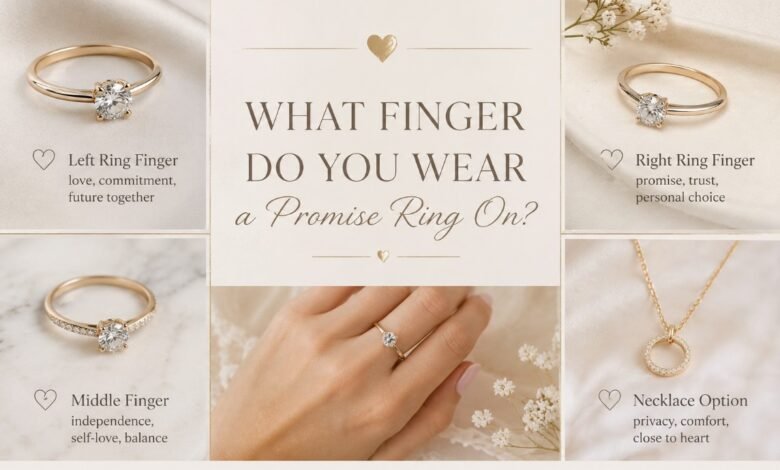
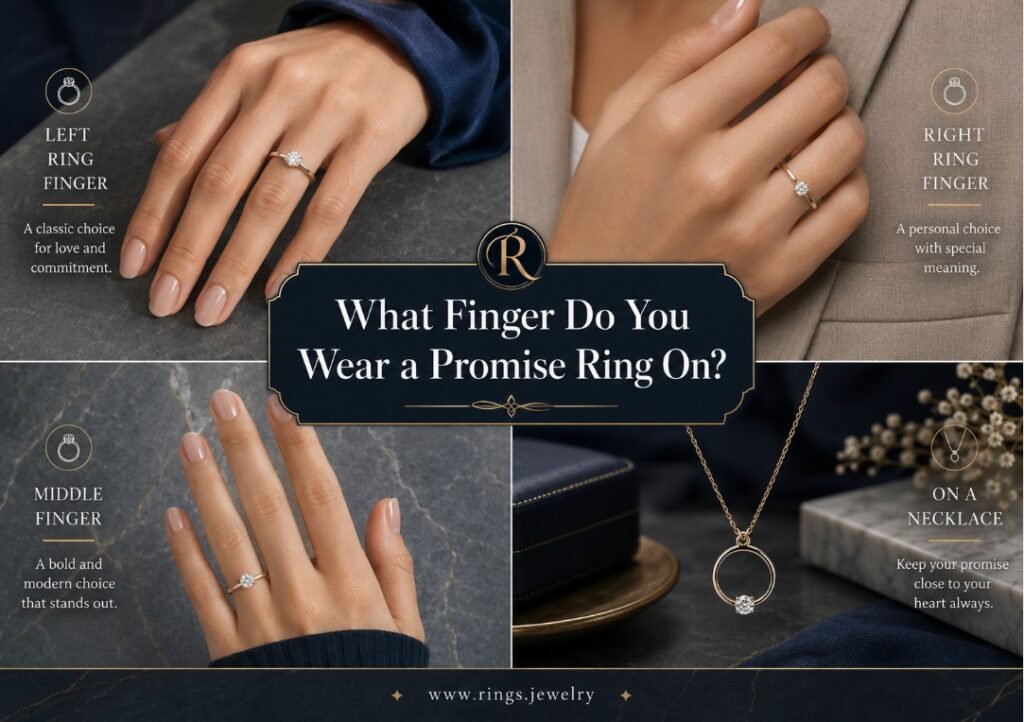
A promise ring can be worn on the left ring finger, right ring finger, middle finger, another finger that feels comfortable, or even on a chain around the neck. The best choice depends on what the promise means. A romantic promise, a future engagement promise, a friendship ring, a personal vow, and a long-distance relationship ring do not always belong in the same place.
The finger matters because rings have social language. A ring on the left ring finger can look like engagement. A ring on the right hand can feel romantic but less bridal. A middle-finger ring can feel more personal or fashion-forward. A promise ring worn as a necklace can be practical for work, sports, travel, or people who do not wear rings daily.
This guide explains the placement clearly — not as a stiff etiquette rule, but as a jeweler’s map of meaning, comfort, culture, and real life.
The Placement Answer in One Paragraph
A promise ring is most often worn on the ring finger of either hand. The left ring finger can work when the ring represents romantic commitment or a future engagement, but it may be mistaken for an engagement ring. The right ring finger is usually the clearest choice when the ring means love, loyalty, friendship, or personal commitment without a proposal. Some people wear a promise ring on the middle finger for a more personal or fashion-focused meaning, and others wear it on a necklace when wearing rings is not practical.
Before Choosing the Finger, Decide What the Ring Is Saying
Promise ring placement should begin with meaning, not tradition. The same ring can send a different signal depending on where it is worn. A small diamond ring on the left ring finger may look like an engagement ring. That same ring on the right hand may read as a commitment ring or meaningful gift. A plain engraved band on the middle finger may feel like a personal vow rather than a romantic symbol.
This is why the first question is not “Which finger is correct?” The first question is: what promise does the ring represent?
The placement principle
Wear a promise ring where the meaning feels clear. If the ring is meant to suggest future engagement, the left ring finger may make sense. If the ring is not a proposal, the right hand often avoids confusion. If the ring is personal, choose the finger that feels natural and comfortable.
There are several common meanings behind promise rings. A romantic partner may give one to represent loyalty. A couple may use one as a pre-engagement symbol. Friends may exchange promise rings as a sign of lasting connection. Someone may wear one as a self-promise after a difficult season. A long-distance couple may use the ring as a daily reminder that the relationship still matters when life is inconvenient.
Those meanings do not all need the same finger.
If the ring is about love but not engagement, the right ring finger can keep the tone warm without making everyone ask about a proposal. If the ring is a clear “someday engagement” promise, the left ring finger may feel emotionally right. If the ring is about friendship or personal growth, the middle finger or right hand may fit better. If the ring cannot be worn safely at work, on a chain may be the smartest answer.
The ring should not make the wearer constantly explain something they do not want to explain.
Wearing a Promise Ring on the Left Ring Finger
The left ring finger is the most emotionally loaded option. In many places, that finger is associated with engagement and marriage. That does not mean a promise ring can never be worn there. It means the choice carries a stronger romantic signal.
A promise ring on the left ring finger usually says one of three things: serious romantic commitment, a future engagement intention, or a private couple tradition. It can be sweet and meaningful when both people understand what it means. It can also create confusion when one person thinks it is a promise and everyone else thinks it is a proposal.
This is especially true if the ring has a diamond center stone, solitaire setting, halo design, or other bridal-style details. A small gemstone band may not cause many questions. A diamond solitaire on the left ring finger probably will.
Bench-side reading
When a promise ring has a center diamond and is worn on the left ring finger, it enters engagement-ring territory visually. If the intention is not a proposal, the giver should explain the meaning clearly and the wearer should be comfortable with possible questions.
The left ring finger works best when the promise is romantic and future-focused. For example, a couple may not be ready to get engaged because of school, distance, money, timing, family circumstances, or age, but they still want a ring that says the relationship is serious. In that case, wearing the promise ring on the left ring finger can feel appropriate.
Still, clear words matter. If the ring means “I see a future with you, but this is not an engagement ring yet,” say that. Jewelry should support the message, not force the recipient to decode it.
After an engagement ring arrives later, many people move the promise ring to the right hand, wear it on another finger, keep it as a sentimental piece, or wear it on a chain. The promise ring does not lose meaning just because another ring takes over the left ring finger.
Why the Right Ring Finger Is Often the Clearest Choice
The right ring finger is the quiet genius of promise ring placement.
It still feels romantic. It still looks intentional. It still lets the wearer see the ring every day. But it usually avoids the automatic “Are you engaged?” reaction that often comes with the left ring finger.
For most promise rings that are not formal engagement promises, the right ring finger is the safest and most flexible placement. It works for romantic commitment, friendship rings, personal vows, long-distance relationships, family promise rings, and meaningful gifts that are serious but not bridal.
The right-hand promise works well when
- The ring means commitment but not a proposal.
- The wearer wants to avoid engagement questions.
- The design includes a diamond or romantic detail but should not look bridal.
- The promise is personal, friendship-based, spiritual, or connected to a life milestone.
- The ring may later be worn alongside engagement or wedding jewelry without competing for the same finger.
Right-hand placement also gives more design freedom. A heart ring, infinity ring, birthstone ring, small diamond band, signet ring, or engraved ring can all sit comfortably on the right hand without being judged against engagement-ring expectations. The ring can be beautiful without becoming a public relationship announcement.
For many wearers, this is exactly the balance they want: meaningful, visible, but not constantly misunderstood.
The Middle Finger: More Personal, Less Traditional
The middle finger is a good choice when the promise ring is less about traditional romance and more about identity, style, or a personal vow. It feels deliberate. A little stronger. Less bridal. More “this belongs to me.”
That makes it useful for self-promise rings, friendship rings, fashion-forward promise rings, signet rings, and rings that mark a life chapter rather than a relationship status.
A middle-finger promise ring may mean:
- a personal standard the wearer wants to remember;
- a recovery or healing milestone;
- a friendship or chosen-family promise;
- a private vow that is not romantic;
- a style choice that still carries meaning.
The middle finger is not always the most comfortable place for every ring. Because it sits between two fingers, width and shape matter. A thick band can rub. A high setting can feel awkward. A ring that is slightly too loose may spin more noticeably. If the wearer types often, works with their hands, wears gloves, or stacks rings, comfort should be checked carefully.
Fit note for middle-finger rings
A ring that feels perfect on the ring finger may not feel the same on the middle finger. The middle finger often needs a different size, and wider bands can feel tighter than thin bands even when the measurement looks correct.
For design, smoother profiles usually work best. A signet ring, plain gold band, low-set gemstone, flush-set stone, or softly rounded band tends to be easier to wear than a tall prong setting. If the promise ring is meant to be touched throughout the day as a reminder, the ring should feel comfortable enough to become part of the hand.
Wearing a Promise Ring on a Necklace
Not every promise ring has to be worn on a finger.
Wearing a promise ring on a chain can be practical, sentimental, and sometimes more comfortable. This option is especially useful for people who cannot wear rings at work, people with active lifestyles, musicians, healthcare workers, athletes, mechanics, artists, frequent travelers, or anyone who removes rings often and worries about losing them.
A promise ring on a necklace can also feel private. The ring stays close to the body but does not invite the same public interpretation as a ring on the left hand. For long-distance relationships, it can feel intimate: close enough to touch, easy to keep, less exposed to daily knocks.
When a chain makes sense
Wearing a promise ring on a necklace is a good option when finger wear is unsafe, uncomfortable, impractical, or too easily misread. It keeps the ring meaningful without forcing it into traditional placement rules.
There are a few jewelry details to consider. A ring with tall prongs or sharp edges may catch on fabric. A very delicate chain may not be strong enough for daily wear. A heavier ring needs a chain that can support it. If the ring has stones, the setting should be secure enough to handle movement against clothing.
For necklace wear, simpler rings often perform better: plain bands, engraved bands, signet rings, low-profile gemstone rings, and smooth promise rings without delicate raised details. The ring can still be beautiful. It just needs to survive a different kind of wear.
Cultural Nuance: Why There Is No Universal Rule
Ring traditions are not identical everywhere. In some cultures, the left ring finger is strongly associated with engagement and marriage. In others, engagement or wedding rings may be worn on the right hand. Some families treat promise rings as romantic. Others see them as religious, friendship-based, or personal. Some people do not follow ring traditions at all.
This is why a promise ring does not have one globally correct finger.
The meaning should be read through the wearer’s culture, relationship, personal comfort, and social environment. A right-hand promise ring may feel obvious in one place and unusual in another. A left-hand promise ring may be sweet to one couple and confusing to another. A ring worn on a chain may look practical to one person and deeply sentimental to someone else.
Etiquette without stiffness
If tradition matters to the wearer or their family, respect it. If personal meaning matters more, choose the placement that fits the promise. Promise rings are flexible by nature; clarity is more important than copying someone else’s rule.
There is also a modern style reality: many people wear rings for fashion, not relationship status. Stacks, signets, right-hand rings, gemstone rings, and mixed metals are common. That gives promise rings more freedom. But if the ring has a strong romantic design, people may still ask questions. The wearer should choose placement based on how much explanation they want to give.
What Happens to a Promise Ring After Engagement?
A promise ring does not become meaningless when an engagement ring arrives. It simply changes role.
Some people move the promise ring to the right hand. Some wear it on another finger. Some keep it on a necklace. Some save it in a jewelry box as the ring that marked an earlier chapter. Some stack it with other rings if the shape allows it. There is no need to retire it unless the wearer wants to.
However, practical fit matters. Not every promise ring is designed to sit beside an engagement ring or wedding band. A tall setting, curved band, signet shape, wide shank, or gemstone detail may not stack comfortably. If stacking is a possibility, think about that before buying the promise ring.
For readers who are already moving from promise ring symbolism into proposal research, our promise ring and engagement ring comparison explains the difference between commitment and proposal more directly.
The promise ring may become part of the relationship archive. Not every important piece has to stay on the same finger forever. Some jewelry marks a moment. Some jewelry moves with the wearer. That is still meaning.
Comfort, Sizing, and Daily Wear Matter More Than People Think
A ring can have the perfect meaning and still be annoying to wear if the fit is wrong.
Promise rings are often worn daily, so comfort matters. The finger you choose affects size, movement, pressure, and how the ring behaves during normal tasks. A ring that works beautifully on the right ring finger may feel too tight on the middle finger. A wide band may need a slightly different size than a slim band. A ring worn on the dominant hand may get more knocks than one worn on the non-dominant hand.
| Placement | Best for | Possible issue | Jeweler’s advice |
|---|---|---|---|
| Left ring finger | Romantic promise, future engagement intention | May be mistaken for engagement | Use clear wording if it is not a proposal |
| Right ring finger | Commitment without proposal confusion | May feel less traditional for some couples | Good default choice for many promise rings |
| Middle finger | Self-promise, friendship, personal style | Fit and comfort can be trickier | Check width, profile, and daily movement |
| Necklace | Work, travel, sports, private meaning | Chain strength and setting safety matter | Choose a smooth ring and a strong chain |
Hands also change. Temperature, salt, travel, hormones, activity, and time of day can affect finger size. If the ring will be worn every day, it should not be sized for the hand at its smallest moment only. A slightly too-tight promise ring turns symbolism into irritation very quickly.
One more detail: if the ring has stones around the band, resizing may be harder. Full eternity styles, intricate engraving, alternative metals, and delicate pavé can limit adjustment options. If the wearer is unsure which finger they will use long-term, choose a design that can be resized more easily.
A Practical Placement Map
This is the part to use if you need an answer quickly.
Choose the placement by meaning
- Future engagement promise: left ring finger can work, but explain that it is not the engagement ring yet.
- Romantic commitment without proposal: right ring finger is usually clearer.
- Long-distance relationship: right ring finger, left ring finger, or necklace can all work depending on how public the couple wants the meaning to be.
- Friendship promise: right hand, middle finger, matching bands, or necklace usually avoids romantic confusion.
- Self-promise or personal vow: middle finger, right hand, signet style, or necklace can feel more personal.
- Faith or spiritual promise: choose the finger that fits the tradition or personal practice behind the ring.
- Work or active lifestyle: necklace or low-profile right-hand ring may be more practical.
The best answer may also depend on the ring design. A heart ring on the left ring finger looks romantic. A signet ring on the right hand looks personal. A diamond solitaire on the left hand looks bridal. An engraved band on a chain looks private. Placement and design work together.
If you are still deciding what the ring itself should mean, the guide to what a promise ring really means explains commitment, love, friendship, future engagement, distance, and personal vows in more depth.
Placement Mistakes That Create Confusion
Most promise ring placement mistakes happen when the ring sends one signal and the giver means another.
The classic example: a diamond ring on the left ring finger, given in a dramatic way, with vague words about forever. That looks like a proposal. If it is not a proposal, the moment can become awkward quickly.
Another common mistake is ignoring comfort. A ring chosen for symbolism but worn on the wrong finger may spin, pinch, catch, or get removed constantly. Then the ring stops being a daily reminder and becomes a beautiful inconvenience.
The confusion test
Before choosing the finger, ask: “If someone saw this ring on this hand, what would they assume?” If the assumption does not match the promise, change the placement, change the design, or explain the meaning clearly.
A smaller mistake, but still real: copying someone else’s rule. Your friend may wear her promise ring on the left ring finger. Someone online may wear one on the middle finger. Another person may wear it as a necklace. None of that creates a universal law. Promise rings are meaning-driven jewelry. Borrow ideas, not confusion.
Finally, do not ignore the wearer’s habits. A nurse, barista, artist, athlete, mechanic, pianist, or frequent traveler may need a different placement than someone who wears delicate rings comfortably every day. The ring should fit the life, not just the sentiment.
Before the Ring Goes On
Wear a promise ring on the finger that tells the truth most clearly.
If the promise is romantic and future-focused, the left ring finger can feel right. If the promise is commitment without engagement, the right ring finger is often the cleanest choice. If the ring is about friendship, self-respect, faith, healing, or a private milestone, the middle finger, right hand, or necklace may feel more natural.
The real rule is not about left or right. It is about clarity.
A promise ring should not make the wearer uncomfortable, physically or emotionally. It should not create a proposal if there is no proposal. It should not hide the meaning behind vague tradition. It should sit where the wearer can live with it, touch it, remember it, and understand it.
That is the best finger for a promise ring: the one that matches the promise.
FAQ
What finger do you wear a promise ring on?
A promise ring is most commonly worn on the ring finger of either hand. The left ring finger can suggest romantic commitment or future engagement, while the right ring finger usually avoids engagement-ring confusion.
Can you wear a promise ring on your left ring finger?
Yes. You can wear a promise ring on the left ring finger, especially if it represents romantic commitment or a future engagement. Just remember that many people may assume it is an engagement ring.
Is the right ring finger better for a promise ring?
For many people, yes. The right ring finger is often the clearest choice when the ring means commitment, love, friendship, or personal promise without being a proposal.
Can a promise ring be worn on the middle finger?
Yes. The middle finger works well for self-promise rings, friendship rings, signet rings, or promise rings that feel more personal than traditional. Comfort and sizing matter more on this finger
Can you wear a promise ring on a necklace?
Yes. Wearing a promise ring on a necklace is practical if you cannot wear rings at work, during sports, while traveling, or during hands-on activities. It can also make the ring feel more private.
Does wearing a promise ring on the left hand mean engagement?
Not automatically. It can mean serious romantic commitment, but because the left ring finger is often associated with engagement, the meaning should be explained clearly.
Where should you wear a promise ring if you do not want people to think you are engaged?
The right ring finger is usually the best option. A middle finger or necklace can also work depending on the style and meaning of the ring.
What hand should a man wear a promise ring on?
A man can wear a promise ring on either hand. Many men choose the right ring finger, middle finger, or a signet-style ring because those placements feel less bridal and more personal.
Do couples have to wear promise rings on the same finger?
No. Couples can wear promise rings on different fingers if that feels more comfortable or natural. Matching meaning matters more than matching placement.
What happens to a promise ring after engagement?
Many people move it to the right hand, wear it on another finger, place it on a necklace, or keep it as a sentimental piece. It does not lose meaning just because an engagement ring takes the left ring finger.
Should a promise ring fit like an engagement ring?
It should fit securely and comfortably, but the exact fit depends on the finger and band width. Wider bands may need slightly different sizing than thin rings.
Can a promise ring be resized if I change fingers?
Sometimes. Simple gold or platinum bands are usually easier to resize than full eternity rings, intricate designs, or rings with stones around the entire band.