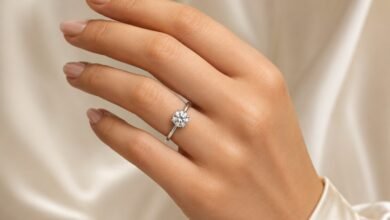
Diamond Fluorescence in Engagement Rings: Good, Bad, or Overhyped?
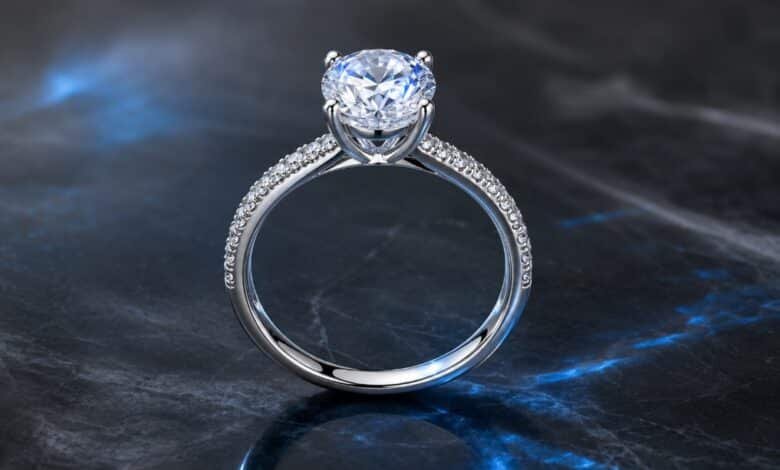
Diamond fluorescence sounds like something that should either be magical or suspicious. A diamond that glows under ultraviolet light? Very glamorous. Also slightly “science lab after midnight.”
In real engagement ring shopping, fluorescence is usually less dramatic than buyers fear. Many fluorescent diamonds look completely normal in everyday lighting. Some can even be smart purchases. A faint or medium blue fluorescence may have no visible downside at all, and in some warmer diamonds it can make the stone appear a little whiter in certain lighting.
But fluorescence is not automatically harmless either. Strong or very strong fluorescence can sometimes make a diamond look hazy, oily, milky, or sleepy, especially if other clarity or transparency issues are present. The key word is sometimes. This is not a rule to panic over. It is a feature to inspect.
This guide is the jeweler’s UV-window test: what fluorescence means, how it affects beauty and price, when it is worth considering, and when to put the diamond back in the tray with a polite little smile.
The Honest Answer: Fluorescence Is Not Automatically Good or Bad
Diamond fluorescence is the visible glow some diamonds show under ultraviolet light. In many diamonds, especially those with faint or medium fluorescence, it has little to no visible effect in normal wear. Blue fluorescence can sometimes make a slightly warmer diamond appear whiter, but strong or very strong fluorescence should be checked carefully because a small number of diamonds may look hazy, milky, or less transparent. The best approach is not to reject fluorescence automatically, but to inspect the actual diamond in different lighting and compare its beauty, transparency, color, and price.
What Diamond Fluorescence Actually Means
Fluorescence is a diamond’s reaction to ultraviolet light. When exposed to UV, some diamonds emit a visible glow. The most common fluorescence color is blue, though other colors can occur. In everyday life, UV light can appear in sunlight, certain lamps, clubs, salons, and other environments where ultraviolet exposure is present.
Most of the time, nobody is walking around inspecting engagement rings with a UV lamp at brunch. The real question is not “Does it glow?” The real question is whether that fluorescence changes how the diamond looks in normal conditions.
The part buyers overthink
A diamond can have fluorescence listed on the report and still look bright, clean, and beautiful in real life. The report gives you a clue. It does not replace looking at the stone.
Fluorescence is not the same as sparkle. It is not the same as fire. It is not a secret extra light source inside the diamond. Sparkle comes from cut quality and light performance. Fluorescence is a separate optical response under UV exposure.
This is why a fluorescent diamond can be gorgeous, average, or disappointing — just like a non-fluorescent diamond. The fluorescence line on the certificate is only one piece of the decision.
The Fluorescence Grades: None, Faint, Medium, Strong, Very Strong
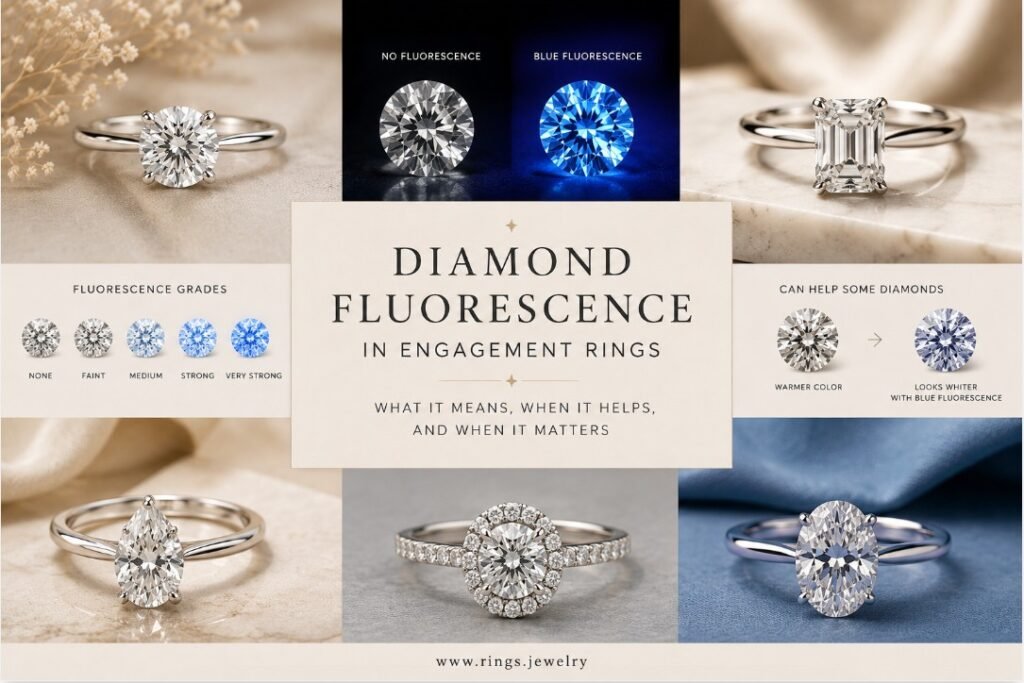
Diamond reports usually describe fluorescence strength with words like none, faint, medium, strong, or very strong. These labels tell you how much the diamond reacts under UV light. They do not automatically tell you whether the diamond is beautiful.
That distinction matters.
How to read the grade without panicking
None
No noticeable fluorescence reaction. Simple, easy to understand, and often preferred by buyers who do not want one more detail to evaluate.
Faint
Usually not a concern. In many diamonds, faint fluorescence has no meaningful visual effect in normal wear.
Medium
Often still perfectly fine, especially if the diamond looks bright and transparent. Worth checking, not worth hysteria.
Strong / Very Strong
Needs closer inspection. Some diamonds look beautiful; others may show haze, milkiness, or reduced transparency.
The grade alone does not tell the full story because fluorescence interacts with the individual diamond. Cut, color, clarity, transparency, inclusion type, and body color all affect how the stone appears.
A strong blue fluorescent diamond that looks crisp and bright can be a smart value. A strong fluorescent diamond that looks cloudy is not a bargain. It is a warning with a discount attached.
Blue Fluorescence: The Famous Glow Everyone Argues About
Blue fluorescence gets the most attention because it is common and because it can interact with diamond color in interesting ways. Since blue is opposite yellow on the color impression spectrum, blue fluorescence can sometimes make a warmer diamond appear a little whiter in certain lighting.
This is why some buyers deliberately consider medium blue fluorescence in near-colorless or slightly warmer diamonds. It can be a value opportunity when the stone still looks transparent, lively, and clean.
Where blue fluorescence can help
In some G, H, I, or J color diamonds, blue fluorescence may soften the appearance of warmth. It should never be treated as a guarantee, but it can be useful when the actual diamond looks good and the price is attractive.
In very high color diamonds, especially D, E, and F, fluorescence may be less desirable to some buyers because the stone is already colorless. The market often prefers top-color diamonds without strong fluorescence, even when the visual effect is minimal.
This is where emotion and pricing enter the room. Some buyers simply want a clean report with no fluorescence. Others care only about the ring’s real appearance and are happy to use fluorescence as a value advantage. Both positions can be reasonable if the buyer understands the trade-off.
Color Grade Changes the Fluorescence Conversation
Fluorescence is not judged in isolation. It becomes more or less important depending on the diamond’s color grade.
In colorless diamonds, strong fluorescence may lower market preference because buyers shopping D–F often want the cleanest possible profile on paper. In near-colorless diamonds, fluorescence can sometimes be neutral or helpful. In warmer diamonds, it may improve face-up appearance in certain lighting, but it cannot turn a poor diamond into a luxury diamond.
The color-fluorescence pairing
- D–F color: fluorescence is often less desired by the market, especially if strong.
- G–H color: faint or medium fluorescence may have little visible downside and can sometimes be good value.
- I–J color: blue fluorescence may help reduce visible warmth in some diamonds.
- K and below: fluorescence may help in certain cases, but the stone should be inspected carefully for overall color and transparency.
Metal also changes perception. A slightly warmer diamond with blue fluorescence may look attractive in yellow gold. In platinum or white gold, body color can be more noticeable, so the diamond needs to be judged in the intended setting style.
For a deeper look at how color grade affects engagement ring beauty and value, read our guide to diamond color choices for engagement rings.
The Haze Question: When Fluorescence Deserves Suspicion
The biggest concern with fluorescence is not the glow itself. It is transparency.
Some diamonds with strong or very strong fluorescence can appear hazy, oily, cloudy, or milky. Not all of them. Not even most in a way buyers automatically notice. But enough that strong fluorescence deserves careful visual inspection.
Haze can also come from other causes: clouds, graining, poor transparency, or certain clarity characteristics. Fluorescence may not be the only factor. This is why blaming fluorescence alone can be too simplistic.
The window test
Look at the diamond beside a similar non-fluorescent stone. If the fluorescent diamond looks equally crisp, bright, and transparent, fluorescence may not be hurting it. If it looks sleepy, foggy, or oily, keep walking.
Haze matters because it affects luxury. A diamond should look alive. It should not look like it has a thin veil over it. Even if the carat, color, and clarity look attractive on paper, a hazy stone rarely feels expensive in person.
This is especially important if the diamond already has clarity comments involving clouds or other transparency concerns. A strong fluorescent diamond with additional cloudiness should be reviewed with extra caution.
Why Fluorescent Diamonds Can Be Cheaper
Fluorescence can affect price because the market has preferences. In many cases, diamonds with stronger fluorescence trade at a discount compared with similar diamonds that have no fluorescence.
That discount can be a trap or an opportunity.
If the diamond looks beautiful, the fluorescence discount may allow you to buy a better size, color, or overall stone than you otherwise could. If the diamond looks hazy, the discount is not a gift. It is the market whispering, “Please look closer.”
When the discount is interesting
- The diamond is bright and transparent.
- The fluorescence is faint or medium, or strong but visually clean.
- The stone has strong cut quality and pleasing proportions.
- The color grade benefits from the blue effect without looking strange.
- The price advantage improves the total ring without sacrificing beauty.
When the discount is not worth it
If the diamond looks milky, lacks contrast, has a dull surface impression, or seems less crisp than comparable stones, the lower price does not make the ring smarter. It just makes the mistake cheaper.
The best value diamond is not the cheapest one with acceptable grades. It is the one that gives you beauty, transparency, structure, and confidence for the money.
Where Fluorescence Appears on the Diamond Report
A diamond grading report usually lists fluorescence as a separate detail. You may see “None,” “Faint,” “Medium,” “Strong,” or “Very Strong,” often with the fluorescence color if applicable.
This line is useful. It tells you to pay attention. It does not tell you to approve or reject the diamond immediately.
Read fluorescence with these report details
- Color grade: fluorescence interacts differently with D color than with I color.
- Clarity grade: clouds or transparency-related comments deserve extra review.
- Cut quality: strong light performance matters more than the fluorescence label.
- Measurements: judge the whole stone, not just one certificate line.
- Comments: report notes can hint at issues that affect transparency.
Certification is especially helpful when comparing diamonds online. It gives you a common language for color, clarity, cut, and fluorescence. But a certificate cannot show the emotional reaction you have when the diamond moves in light.
If report details still feel confusing, our article on GIA, IGI, and GCAL diamond reports explains how to use grading documents without letting them make the entire decision for you.
The Buying Tests I Would Use Before Saying Yes
Fluorescence is best judged through comparison. One diamond alone can be persuasive. Two or three diamonds side by side tell the truth faster.
Test it in normal lighting
Look first where the ring will actually live: daylight, indoor light, soft evening light, and ordinary room lighting. If it looks beautiful there, the UV reaction may be irrelevant for daily wear.
Compare it against a similar non-fluorescent diamond
Use a diamond with similar color, clarity, cut, and carat if possible. You are checking whether the fluorescent stone looks hazier, duller, or less crisp.
Look for transparency, not just sparkle
A diamond can throw sparkle and still look slightly cloudy overall. Crispness matters. The best stones have life and clarity of appearance, not just flashes.
Check the intended metal
A warmer diamond with fluorescence may look different in yellow gold than in platinum. View it beside the metal family you plan to use.
These tests are practical and not dramatic. No panic. No superstition. Just looking at the diamond like someone who plans to wear it, not worship the certificate.
Five Real Buying Scenes Where Fluorescence Changes the Decision
Fluorescence becomes easier to understand when you stop treating it like a warning label and start treating it like a buying variable.
The H-color diamond with medium blue fluorescence
This can be a very reasonable option if the diamond looks bright and transparent. The fluorescence may be visually neutral or even helpful in certain lighting.
The D-color diamond with strong fluorescence
This needs more thought. The diamond may still look beautiful, but top-color buyers often prefer no fluorescence, and resale or market preference may be affected.
The I-color diamond that faces up whiter than expected
Blue fluorescence may be part of the reason. If the stone is crisp, lively, and well priced, this can be a clever purchase rather than a compromise.
The “great deal” that looks a little foggy
Do not negotiate yourself into blindness. If the diamond lacks transparency, the deal is probably not the story you want for an engagement ring.
The buyer who wants the cleanest possible report
If fluorescence bothers the buyer emotionally, even when it looks fine, choose another diamond. Peace of mind is part of luxury too.
Lab-Grown Diamonds and Fluorescence: Still Check the Actual Stone
Lab-grown diamonds can also have fluorescence, and the same practical idea applies: do not judge the diamond by the fluorescence line alone. Judge how it looks.
Because lab-grown diamonds often give buyers access to larger or higher-grade stones within budget, it can be tempting to ignore small details. Do not. Larger diamonds make transparency issues more visible. A strong fluorescent lab-grown diamond still needs the same review for haze, color, cut, and clarity.
The lab-grown rule
Use the price advantage to buy a better-looking diamond, not just a bigger certificate. If fluorescence is present, check transparency carefully and compare the stone under normal lighting.
If you are weighing size, origin, and value together, our guide to lab-grown versus natural diamond engagement rings can help connect fluorescence with the full buying decision.
The Final Fluorescence Check Before You Buy
Diamond fluorescence is not a villain. It is not a secret upgrade either. It is a feature that can be neutral, helpful, or occasionally problematic depending on the actual diamond.
Faint and medium fluorescence are often not a major concern. Blue fluorescence can sometimes help warmer diamonds look a little whiter. Strong and very strong fluorescence should be inspected carefully for haze, milkiness, or reduced transparency.
The smartest move is simple: do not reject fluorescence automatically, and do not buy it blindly because the price looks tempting. Look at the diamond in real lighting. Compare it. Check the report. Trust the eye, not just the label.
A beautiful fluorescent diamond is still a beautiful diamond. A hazy diamond with a discount is still hazy.
FAQ
What is diamond fluorescence?
Diamond fluorescence is the glow some diamonds show when exposed to ultraviolet light. Blue is the most common fluorescence color.
Is diamond fluorescence bad?
Not always. Many diamonds with faint or medium fluorescence look completely normal in everyday wear. Strong fluorescence should be checked carefully because some diamonds may look hazy or milky.
Does fluorescence make a diamond look whiter?
Blue fluorescence can sometimes make a slightly warmer diamond appear whiter in certain lighting. This effect is not guaranteed, so the actual diamond should be inspected.
Should I avoid strong fluorescence?
Strong fluorescence is not an automatic rejection, but it deserves closer review. Compare the diamond with similar non-fluorescent stones and check whether it looks crisp, bright, and transparent.
What does medium blue fluorescence mean?
Medium blue fluorescence means the diamond shows a moderate blue glow under UV light. In many diamonds, this has little visible effect in normal lighting and may even be useful in some near-colorless stones.
Can fluorescence make a diamond look cloudy?
In some cases, especially with strong or very strong fluorescence, a diamond may appear hazy, milky, or oily. This does not happen to every fluorescent diamond, which is why visual inspection is important.
Does fluorescence lower diamond price?
It can. Diamonds with stronger fluorescence may be priced lower than similar non-fluorescent diamonds because of market preference. The discount is useful only if the diamond still looks beautiful.
Is fluorescence listed on a diamond certificate?
Yes. Diamond grading reports usually list fluorescence strength, such as none, faint, medium, strong, or very strong. Some reports may also note the fluorescence color.
Is fluorescence more common in natural or lab-grown diamonds?
Both natural and lab-grown diamonds can have fluorescence. The important thing is how the specific diamond looks in normal lighting and whether fluorescence affects transparency.
Is a fluorescent diamond good for an engagement ring?
A fluorescent diamond can be a good engagement ring choice if it looks bright, transparent, well cut, and fairly priced. The decision should be based on the actual stone, not fear of the word fluorescence.