Diamond Clarity Grade for Engagement Rings: What Is Actually Eye-Clean?
Diamond clarity grade is where many engagement ring buyers accidentally start shopping like gemologists instead of humans. They see words like VVS, VS, SI, flawless, included, eye-clean, and suddenly the whole diamond feels like a secret exam.
But here is the calm jeweler answer: most engagement ring buyers do not need the highest clarity grade. They need a diamond that looks clean to the eye, performs beautifully, and has inclusions that do not threaten durability or distract from the stone’s beauty.
Clarity is important. It is just not always important in the way sales pages make it sound. A tiny inclusion hidden near the edge may be irrelevant in real life. A dark crystal under the table can be annoying forever. A feather near a vulnerable point may deserve caution. The grade matters, but the location, type, size, color, and visibility of inclusions matter just as much.
This is the loupe-room version of diamond clarity: what the report says, what the eye sees, what the setting can hide, and where your money is better spent.
The Clarity Verdict Before You Start Paying for Invisible Perfection
For most engagement rings, the best diamond clarity grade is not automatically flawless or VVS. The smarter goal is an eye-clean diamond: a stone with inclusions that are not visible to the naked eye in normal wear and do not create durability concerns.
VS1 and VS2 are often excellent clarity choices, while some SI1 diamonds can be beautiful and good value if the inclusions are small, light, well placed, and not easy to see. Step-cut diamonds like emerald and asscher usually need higher clarity than round brilliant diamonds because their open facets reveal inclusions more easily.
The Diamond Clarity Scale Without the Panic
Diamond clarity grades describe how many internal and external characteristics a diamond has, how noticeable they are, and how they affect appearance under magnification. These characteristics are often called inclusions when they are inside the diamond and blemishes when they are on the surface.
The scale usually moves from Flawless at the top to Included at the bottom. That sounds dramatic. It is not always dramatic in real life.
The Practical Clarity Groups
- FL / IF: flawless or internally flawless under 10x magnification; rare, expensive, and often more than most buyers need.
- VVS1 / VVS2: very, very slightly included; inclusions are extremely difficult to see under magnification.
- VS1 / VS2: very slightly included; often a strong sweet spot for engagement rings.
- SI1 / SI2: slightly included; can be good value, but must be checked carefully for visible or risky inclusions.
- I1 and below: included; inclusions are more likely to affect beauty, transparency, or durability.
The mistake is thinking each step down the scale is equally visible. It is not. The difference between VVS and VS may be impossible for most people to see without magnification. The difference between a clean SI1 and a messy SI1 can be enormous. Clarity is not just the grade. It is the specific diamond.
A good jeweler does not simply say “VS2 is fine” or “SI is bad.” A good jeweler asks: where are the inclusions, what type are they, what color are they, how large are they, and can the wearer actually see them?
Eye-Clean Is the Phrase Buyers Should Understand
Eye-clean means the diamond’s inclusions are not visible to the naked eye in normal viewing conditions. That sounds simple, but it needs context.
Eye-clean for whom? At what distance? In what lighting? From the top only or also from the side? With perfect eyesight or normal eyesight? On a white background or set into a ring?
This is why “eye-clean” should be discussed clearly before purchase. Some sellers use it loosely. A careful jeweler will explain what they mean.
The Real-Life Eye-Clean Test
A diamond may be considered eye-clean if you cannot notice inclusions face-up at normal viewing distance without magnification. For engagement rings, this matters more than chasing a grade that looks impressive but changes nothing visible on the hand.
The top view is usually most important because that is how the diamond will be seen in the ring. But side visibility can matter too, especially in higher settings or designs that expose the pavilion. A black inclusion near the center is usually more concerning than a pale inclusion near the edge. An inclusion hidden under a prong may be less important visually, though it still deserves structural review.
Eye-clean is not a cheap compromise. It is often intelligent buying. Paying for clarity you cannot see may be less useful than improving cut quality, proportions, setting craftsmanship, or diamond size.
The Inclusion Map: Not Every Mark Is a Problem
Inclusions have personalities. Some are harmless little whispers. Some walk into the room wearing black shoes on a white carpet.
The type and location of an inclusion can matter more than the grade alone. A small white feather near the edge may be barely noticeable. A dark crystal under the table may stare back at you every time the diamond catches light. A cloud can be fine, or it can make a diamond look hazy if it is dense enough. A cavity or surface-reaching feature may deserve more caution.
Crystals
Small mineral inclusions inside the diamond. White or transparent crystals may be less noticeable; dark crystals can be more visible.
Feathers
Small internal fractures. Many are harmless, but location matters, especially near edges, points, or stress areas.
Clouds
Groups of tiny inclusions. Fine clouds may be invisible; heavy clouds can reduce transparency and make the diamond look sleepy.
Needles or Pinpoints
Tiny inclusions that may have little visual impact unless grouped or placed in a noticeable area.
The inclusion map on a report can help, but it does not tell the full visual story. A plot shows location. It does not always show how distracting the inclusion is in motion, in daylight, or once the diamond is set.
The Inclusion We Care About Most
The most concerning inclusion is not always the one that lowers the grade. It is the one your eye cannot unsee, the one that affects transparency, or the one that sits in a vulnerable structural position.
Diamond Shape Changes the Clarity Rules
Some diamond shapes are forgiving. Some are honest to the point of being rude.
Round brilliant diamonds are usually better at hiding inclusions because their facet pattern creates more sparkle and visual movement. A well-cut round brilliant can often look eye-clean at VS2 or even SI1 if the inclusions are well placed.
Emerald and asscher cuts are different. Their broad, open step facets act like windows. Inclusions can be easier to see because there is less sparkle to disguise them. These shapes often reward higher clarity.
Round Brilliant
Often forgiving. VS2 and carefully chosen SI1 can look very clean when cut quality is strong.
Emerald Cut
Less forgiving. VS clarity or better is often safer if you want a clean, elegant appearance.
Oval
Moderately forgiving, but inclusions near the center or bow-tie area can be more noticeable.
Pear and Marquise
Check points carefully. Inclusions near tips or edges deserve extra attention for both visibility and durability.
Cushions and radiants vary depending on faceting style. Some hide inclusions well because of their crushed-ice sparkle. Others reveal more than expected. Princess cuts can hide certain inclusions but need attention near corners. Every shape has its own clarity mood.
If shape is still part of the decision, our engagement ring buying guide can help connect diamond shape, setting, metal, budget, and daily wear before you decide how much clarity to pay for.
Bigger Diamonds Make Clarity More Visible
Carat size changes the clarity conversation. A small inclusion in a smaller diamond may be nearly impossible to notice. In a larger stone, the same kind of inclusion can become more visible simply because there is more diamond to inspect.
This is especially true when buyers choose larger lab-grown diamonds. Bigger stones are more accessible, which is wonderful, but size gives inclusions a bigger stage. A clarity grade that felt safe in a smaller stone may need closer inspection in a larger one.
The Large-Diamond Inspection Rule
As carat size increases, do not rely on the clarity grade alone. Review images, video, inclusion location, and whether the stone is eye-clean from the top. Larger diamonds make small buying shortcuts easier to notice.
For larger round brilliants, VS2 may still be beautiful. For larger emerald cuts, many buyers prefer VS1 or higher because the open facets reveal more. For large ovals, check the center carefully. A dark inclusion under the table is not something you want to discover after the ring is on the hand.
If you are choosing a bigger lab-grown center stone, read our article on lab-grown diamond engagement ring mistakes so size does not distract you from cut, clarity, setting strength, and long-term wear.
When Clarity Is Not Just Cosmetic
Most clarity talk focuses on appearance. But sometimes inclusions can raise durability questions.
Diamonds are extremely hard, but they are not magical. Certain inclusions near edges, corners, points, girdles, or prong pressure zones deserve careful evaluation. A feather near the edge may be harmless, or it may be something a jeweler wants to inspect before setting. A cavity or chip is not just a visual issue. Corners on princess cuts and points on pears or marquise diamonds need protection.
Clarity Features That Deserve Caution
- Feathers near edges or points: especially in shapes with vulnerable tips.
- Surface-reaching inclusions: worth closer inspection before setting.
- Large dark inclusions under the table: often visually distracting.
- Clouds affecting transparency: can make the diamond look hazy or dull.
- Chips or cavities: should not be ignored as cosmetic details.
This is where a trained eye matters. A report may tell you the clarity grade and plot features, but a jeweler can help judge whether the inclusion is simply part of the diamond’s natural fingerprint or something that makes the ring less practical.
Setting style matters here too. A bezel may protect a vulnerable edge better than exposed prongs. Strong prongs can protect points. A thoughtful setting can reduce risk, but it should not be used to excuse a diamond with serious structural concerns.
How to Read Clarity on a Diamond Report
A diamond report gives you the clarity grade, and often a plot or comments describing inclusions. That information is useful, but it needs interpretation.
Start with the grade. Then look at the inclusion plot if available. Where are the marks? Are they under the table? Near the edge? Near a point? Are they dark or light? Are they listed in comments only? Are clouds mentioned in a way that might affect transparency?
The Clarity Report Reading Order
- Grade: FL, IF, VVS, VS, SI, or Included.
- Location: center inclusions usually matter more visually than edge inclusions.
- Type: crystal, feather, cloud, needle, cavity, chip, or other feature.
- Color: dark inclusions are usually easier to notice than light ones.
- Transparency: check whether clouds or graining affect overall life.
- Shape context: step cuts reveal more than brilliant cuts.
Certification matters because it gives structure to this review. If you need help understanding report sources and grading language, our guide to GIA, IGI, and GCAL diamond certification explains how reports support a safer engagement ring purchase.
But do not let the report become the whole decision. A diamond can have a technically acceptable clarity grade and still show an inclusion you personally dislike. Your eye gets a vote.
Where Clarity Belongs in the Budget
Clarity is one of the easiest places to overspend.
Many buyers feel safer choosing VVS or flawless because those grades sound luxurious. They are luxurious. They are also often visually unnecessary once the diamond is set and worn. If the diamond is already eye-clean at VS2, paying more for VVS may not improve the ring in a way anyone can see.
That money may work harder elsewhere: better cut quality, stronger setting, more flattering proportions, a slightly larger but still balanced stone, or better craftsmanship.
Spend on Clarity When…
- The diamond shape reveals inclusions easily, such as emerald or asscher cut.
- The stone is large enough that inclusions become easier to notice.
- The inclusion is dark, central, or distracting.
- The inclusion may raise durability concerns.
- The buyer personally notices and dislikes the mark.
Save on Clarity When…
The diamond is genuinely eye-clean, the inclusions are light and well placed, the shape hides them well, and the money can improve cut, setting quality, or overall ring design.
Cut quality usually deserves priority over invisible clarity upgrades. A clean but dull diamond is still dull. If you are deciding where the budget should go first, our article on diamond cut quality for engagement rings explains why sparkle and light performance often matter more than perfect grades.
Four Clarity Buying Scenes That Happen Constantly
Clarity becomes easier when you imagine real shopping moments instead of staring at a chart.
The Buyer Comparing VS2 and VVS2
If both diamonds look equally clean to the eye, the VVS upgrade may be more emotional than visual. That is fine if the buyer values it. It is not always necessary.
The Buyer Considering an SI1 Round Brilliant
This can be a smart value choice if the diamond is eye-clean, well cut, and has inclusions that are light, small, and not centered under the table.
The Buyer Choosing an Emerald Cut
Clarity matters more here. Open facets make inclusions easier to see, so VS clarity or better is often worth considering if a clean look matters.
The Buyer Who Cannot Stop Seeing One Tiny Mark
Even if the inclusion is technically acceptable, do not ignore your own eye. If you notice it immediately and it bothers you, choose another stone.
Lab-Grown Diamonds and Clarity: Do Not Buy the Grade Just Because It Is Affordable
Lab-grown diamonds can make higher clarity grades more accessible. That can be wonderful. It can also make buyers upgrade clarity simply because they can.
If a VVS lab-grown diamond fits the budget and everything else is strong — cut, proportions, color, setting — there is nothing wrong with choosing it. But do not choose higher clarity while ignoring more visible factors. A VVS diamond with mediocre cut is not a better ring than an eye-clean VS diamond with excellent light performance.
Lab-grown diamonds should still be judged stone by stone. Some inclusions may be growth-related. Some may be subtle. Some may be irrelevant. Certification, images, videos, and seller transparency still matter.
The Lab-Grown Clarity Rule
Use the lab-grown price advantage to buy a better ring, not just a cleaner report. If clarity is already eye-clean, consider whether the money should improve cut, setting strength, or design quality instead.
If you are still weighing the broader value question, our guide to whether lab-grown diamonds are worth it can help connect clarity with price, certification, resale expectations, and long-term value.
The Jeweler Questions to Ask Before You Say Yes
You do not need to become a gemologist to buy a good diamond. You do need to ask better questions than “Is this clarity good?”
Ask These Before Buying
- Is this diamond eye-clean from the top?
- Can the inclusion be seen without magnification?
- Where is the main inclusion located?
- Is the inclusion dark, light, central, or near the edge?
- Does anything affect transparency or make the stone look hazy?
- Are there any durability concerns with this inclusion?
- Will the setting hide, protect, or emphasize the inclusion?
- Would a lower clarity grade look the same to the eye?
The final question is especially useful. If a lower clarity diamond looks just as beautiful and has no risk issues, the savings may create a better overall ring. If the higher clarity diamond gives you peace of mind and the budget allows it, that can be valid too.
The Final Clarity Check Before You Buy
Diamond clarity grade matters, but it should not become a luxury scoreboard. The goal is not to buy the cleanest report possible. The goal is to buy a diamond that looks beautiful, feels trustworthy, and makes sense in the actual engagement ring.
For many buyers, VS1 or VS2 will be a comfortable and beautiful range. Carefully chosen SI1 can offer value in forgiving shapes. Emerald, asscher, larger stones, and very clarity-sensitive buyers may benefit from higher grades. Flawless and VVS are impressive, but often more than the eye needs.
Choose clarity with a loupe, a report, and a normal human eye. If the diamond is eye-clean, structurally sound, well cut, and set beautifully, it does not need to be perfect under magnification to be perfect for the ring.
FAQ
What is diamond color grade?
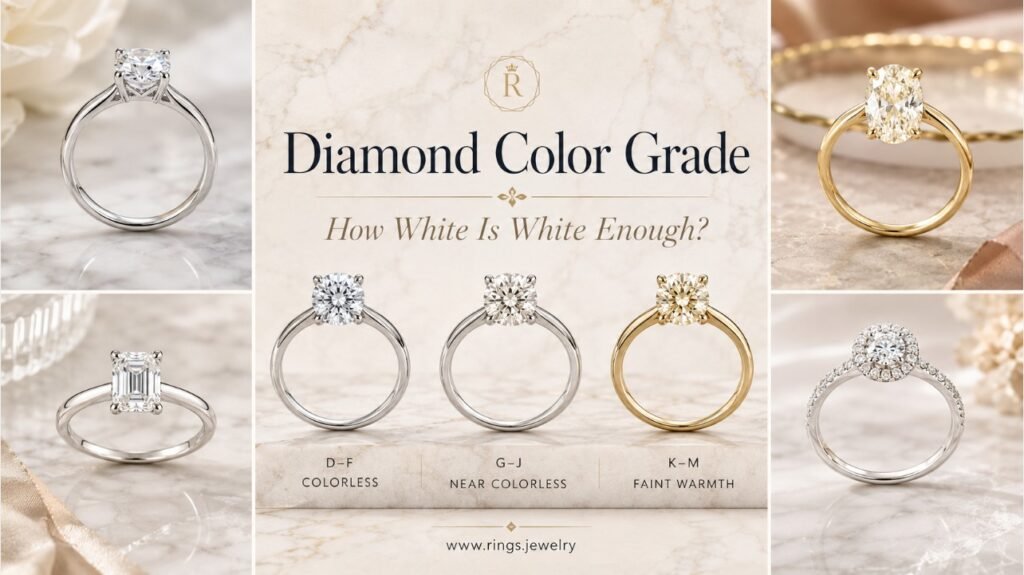
Diamond color grade measures how colorless or warm a white diamond appears, usually on a scale from D to Z.
What diamond color is best for an engagement ring?
For many engagement rings, G or H color offers a strong balance of white appearance and value. D, E, and F are best for buyers who want a very colorless look.
Is H color good for an engagement ring?
Yes. H color can look beautifully white in many engagement rings, especially when the diamond is well cut and set thoughtfully.
Can I see the difference between D and G color?
Some people can see the difference in controlled comparisons, especially in larger stones or white metal settings. In a finished ring, many buyers find the difference less obvious than the price difference.
Is I color too yellow for an engagement ring?
Not always. I color can work well in yellow gold, rose gold, vintage-inspired settings, or diamonds with strong cut quality. In platinum or white gold, warmth may be easier to notice.
Does diamond shape affect color?
Yes. Round brilliant diamonds often hide color better because of their sparkle, while emerald and asscher cuts can show color more easily through their open facets
Should I choose color or cut first?
Cut quality should usually come first because it affects sparkle, brightness, and overall beauty. A whiter diamond with poor cut may look less impressive than a slightly warmer diamond with excellent cut.
Does yellow gold make diamond color less noticeable?
Yellow gold can make slight warmth feel more natural and intentional. It is often more forgiving than platinum or white gold for lower color grades.
Are lab-grown diamonds different in color grading?
Lab-grown diamonds are also graded for color. The same basic idea applies: choose a color that looks beautiful in the ring, not just the highest grade available.
When is D color worth it?
D color can be worth it for buyers who want the highest colorless grade, especially in large diamonds, white metal settings, or step cuts. It should not come at the expense of cut quality or setting craftsmanship.