
Lab-Grown Diamond Engagement Ring Mistakes to Avoid
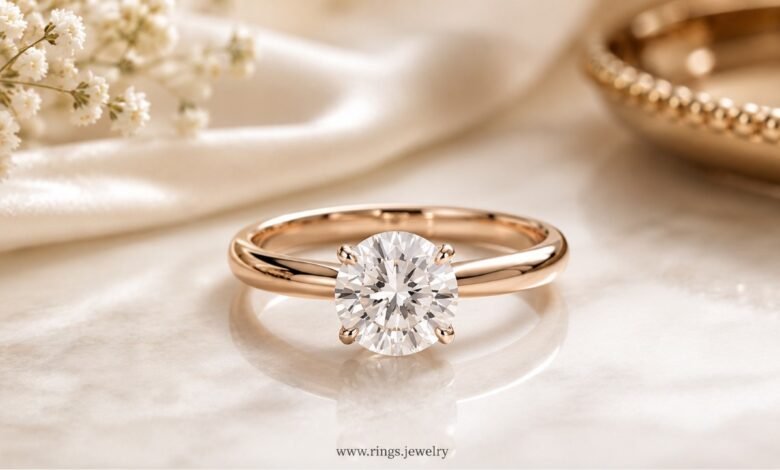
Lab-grown diamond engagement rings can be one of the smartest jewelry purchases a couple makes. You can often get more diamond presence, better-looking clarity, and a more impressive ring for the budget than you might with a comparable natural diamond.
That value advantage is exactly where the mistakes begin.
When a buyer suddenly realizes a larger diamond is within reach, common sense sometimes leaves the room wearing satin slippers. Carat size gets louder than cut quality. The setting becomes an afterthought. Certification is skimmed. Resale is misunderstood. A ring that could have been elegant and clever becomes big, bright, and slightly reckless.
This guide is the red pen review before you buy. Not to scare you away from lab-grown diamonds, but to help you buy one beautifully.
The Pattern Behind Most Lab-Grown Diamond Buying Mistakes
The most common lab-grown diamond engagement ring mistake is treating the lower price as permission to buy the largest diamond possible without checking cut quality, setting strength, certification, proportions, resale expectations, and daily wear. A lab-grown diamond can be a beautiful and smart choice, but the ring still needs excellent diamond selection and real craftsmanship. The best purchase is not the biggest stone on the page. It is the best-balanced ring for the budget, hand, lifestyle, and long-term wear.
Mistake 1: Letting Carat Size Drive the Whole Car
Lab-grown diamonds make size tempting. Very tempting.
A buyer starts with a reasonable idea: “Maybe around one carat.” Then the search filters open. Suddenly a much larger stone appears within reach. The budget still works. The diamond looks impressive. The brain starts whispering, “Why not?”
Sometimes the answer is: because the ring still has to look elegant on a real hand.
Carat weight is not the same as beauty. It is not the same as balance. It is not even the same as visible size, because measurements and cut proportions affect how large a diamond appears from above. A two-carat diamond with poor spread, dull cut, or awkward proportions can be less pleasing than a smaller diamond chosen with taste.
Where bigger starts to look less expensive, not more
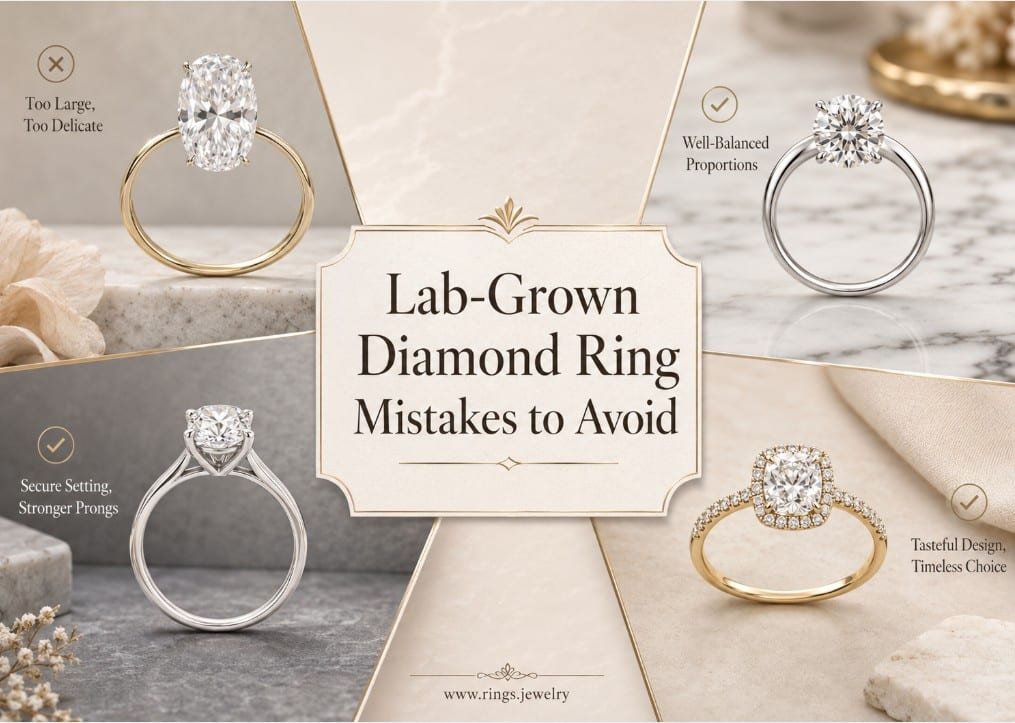
A large lab-grown diamond can look stunning when the cut, setting, band, and hand proportions work together. It can also look oversized, top-heavy, or strangely disconnected if the rest of the ring was chosen like an afterthought.
The better approach is to choose carat size after you compare measurements, cut quality, setting style, band strength, and the wearer’s lifestyle. A diamond should not bully the design. It should lead it gracefully.
Mistake 2: Buying the Certificate Instead of the Sparkle
A grading report is important. But the report is not the ring.
Buyers often compare lab-grown diamonds by carat, color, and clarity, then assume the “best numbers” automatically create the best diamond. That is not always true. Cut quality, proportions, polish, symmetry, and shape-specific issues can make or break the stone’s actual beauty.
Round brilliant diamonds need strong cut quality. Ovals and pears need attention to bow-tie effect and outline. Emerald cuts need clean step-cut appearance and carefully placed inclusions. Radiants and cushions need pleasant faceting, not crushed-ice chaos unless that look is intentional.
The jeweler’s first sparkle test
We look at how the diamond behaves, not just what the document says. Does it return light well? Does the shape feel graceful? Is the center lively? Are there dead zones? Does the stone still look good away from perfect showroom lighting?
This is especially important with lab-grown diamonds because buyers may feel they can “upgrade everything.” Higher color, higher clarity, bigger carat. Lovely. But if the cut is not strong, the diamond may still feel flat.
Spend your attention on cut first. It is the difference between a diamond that merely exists and a diamond that performs.
Mistake 3: Treating Certification Like Optional Decoration
A lab-grown diamond engagement ring should not be a mystery purchase wrapped in velvet.
The diamond should come with clear documentation from a reputable grading laboratory or recognized report source. The report should identify the stone as lab-grown and include its key details: carat weight, measurements, color, clarity, cut information where applicable, polish, symmetry, and other relevant notes.
Documentation protects clarity — not just diamond clarity, but buyer clarity.
The paperwork you want before paying
- Diamond origin clearly stated as lab-grown.
- Carat weight and measurements so you can judge size accurately.
- Color and clarity grades with realistic visual expectations.
- Cut, polish, and symmetry information where available.
- Return policy in writing, not just cheerful reassurance.
- Setting details including metal, prong style, band width, and side stones if included.
A beautiful ring photo is not enough. A persuasive seller is not enough. The purchase should be understandable after the excitement fades.
Mistake 4: Believing Resale Fairy Tales
Lab-grown diamonds can be worth buying. They should not be bought with fantasy resale expectations.
The lab-grown diamond market has changed quickly, and resale values can be much lower than retail purchase prices. That does not make the ring meaningless. It does mean you should buy it for beauty, budget logic, and daily enjoyment — not because someone made it sound like a safe financial asset.
The honest value frame
A lab-grown diamond is strongest as a visual-value purchase: more diamond beauty for the money. It is weaker as an investment story. If resale matters deeply, compare options carefully before choosing.
Natural diamonds also usually do not resell for retail price, so this is not a fairy tale on that side either. But natural diamonds have a longer-established market because natural origin and rarity are part of their value structure.
For a fuller comparison of origin, value, and symbolism, read our guide to lab-grown versus natural diamond engagement rings before making the final call.
Mistake 5: Putting a Smart Diamond in a Cheap Setting
This is one of the saddest mistakes because it is so avoidable.
A buyer saves money by choosing a lab-grown diamond, then puts the larger stone into the weakest possible setting because the diamond got all the attention. Tiny prongs. Too-thin band. Poorly supported basket. Pavé that looks delicate but has very little metal holding it. The ring looks exciting for a week and questionable under a jeweler’s loupe.
The setting is not the background singer. It is the security system, the architecture, and the daily-wear plan.
Do not let the setting become the budget victim
If a lab-grown diamond lets you save money, use some of that advantage to choose a better-built ring. Strong prongs, a sensible band, good finishing, and secure stone setting matter more than adding another tiny jump in carat weight.
A larger center stone needs proportionate support. This does not mean the ring has to look bulky. It means the prongs should be strong enough, the basket should make sense, and the shank should not feel like it was designed for a much smaller diamond.
If you are debating how exposed the center stone should be, our guide to prong and bezel setting protection can help you think through security, sparkle, and daily wear.
Mistake 6: Choosing an Ultra-Thin Band Because the Diamond Is Bigger Now
A large diamond on a very thin band can look glamorous. It can also behave badly.
The bigger the center stone, the more the ring needs balance. A very thin shank may spin, bend, or feel top-heavy. Add pavé stones and the maintenance conversation gets louder. Add a high setting and the ring may catch more often. Add a wearer who is active with their hands and the design starts sending smoke signals.
The delicate-ring correction
The band can still look slender. It does not need to look heavy. But it should have enough width and thickness to support the center stone without making the ring feel fragile or unstable.
This is where lab-grown diamonds need special discipline. Because a larger stone is more accessible, buyers may pair it with a delicate trend design that was never meant to carry that much visual weight.
If the ring design is slim, compare the construction advice in our article on thin band engagement ring durability before approving the final setting.
Mistake 7: Ignoring Metal Choice Because “The Diamond Is the Point”
The diamond is important. The metal is what goes to work every day.
Gold karat, platinum, white gold maintenance, prong strength, band thickness, and finish all affect how the ring ages. A larger lab-grown diamond may need a metal and setting combination that gives it proper support.
14k gold is often practical for daily wear because it generally offers more resistance than higher-karat gold. 18k gold gives richer color but may need a design with enough structure. Platinum is naturally white and dense, but it has its own cost and patina behavior. White gold can look bright and elegant, but rhodium plating maintenance should be understood.
Metal is not just color
Metal choice affects durability, prong behavior, resizing, maintenance, and how the ring feels on the hand. Treat it as part of the engineering, not just the palette.
If the ring will be gold, the comparison of 14k and 18k gold for engagement rings is useful before choosing the final metal.
Mistake 8: Forgetting the Hand, the Wedding Band, and the Future Ring Stack
The engagement ring does not live alone forever.
It may eventually sit beside a wedding band. Maybe an anniversary band. Maybe a spacer. Maybe a ring stack that looks effortless only because someone planned it properly. If the lab-grown diamond is large, high-set, wide, or unusual in shape, the wedding band question should not be postponed until later.
A straight wedding band may not sit flush under certain low baskets, bezels, three-stone rings, or larger center settings. A high setting may allow easier stacking but can catch more. A wide diamond shape may need a contoured band. A pavé engagement ring may need spacing to avoid rubbing against another band.
The question to ask before the proposal
“What kind of wedding band will sit safely with this engagement ring?” That one question can prevent a future mismatch between a beautiful center diamond and an awkward bridal set.
A ring should look good on day one and still make sense when the wedding band arrives. That is not overthinking. That is how expensive jewelry avoids becoming annoying jewelry.
Mistake 9: Thinking Lab-Grown Means Low-Maintenance
Lab-grown describes the diamond’s origin. It does not cancel jewelry care.
The diamond still needs cleaning. The prongs still need checking. Pavé stones can still loosen. White gold may still need rhodium replating. Thin bands can still bend. A ring worn every day still meets soap, lotion, gym equipment, desk edges, suitcase handles, and the mysterious chaos of normal life.
The maintenance plan worth having
- Clean the ring gently and regularly.
- Have prongs inspected at least periodically.
- Check pavé stones if the ring has small side diamonds.
- Remove the ring before heavy work, harsh chemicals, or rough activity.
- Understand white gold replating if choosing a white gold setting.
- Store the ring separately so it does not scratch against other jewelry.
Lab-grown diamonds can be practical. That does not mean the ring can be neglected. The stone may come from technology, but the ring still lives on a human hand. Human hands are very good at causing tiny jewelry problems.
The Mistake Nobody Talks About: Not Asking the Wearer What Matters
Sometimes the biggest mistake is not technical. It is emotional.
The buyer assumes bigger is better. Or assumes natural is more romantic. Or assumes lab-grown is the obvious modern choice. Meanwhile, the person who will actually wear the ring may care most about comfort, symbolism, low maintenance, ethical sourcing, a specific shape, or a design that does not feel too flashy.
An engagement ring is not a spreadsheet with a diamond attached. It is a daily object with emotional weight. The best ring respects the wearer’s taste, not just the buyer’s sense of value.
The quiet question
Would the wearer love this ring if no one mentioned carat size, origin, or price? If yes, you are probably close. If no, the diamond may be winning the argument while the ring loses the person.
The Final Red Pen Review Before You Buy
A lab-grown diamond engagement ring can be an excellent purchase when the buyer stays clear-eyed. Choose it for beauty, value, size flexibility, and the chance to create a ring that feels generous without stretching the budget too far.
Avoid the classic mistakes: buying only for carat size, ignoring cut, skipping proper certification, believing resale fantasy, underfunding the setting, choosing a fragile band, forgetting metal behavior, and failing to plan for the wedding band.
The best lab-grown diamond ring does not look like a bargain. It looks intentional. The diamond is well chosen, the setting is secure, the proportions suit the hand, and the value story is honest from the beginning. That is how lab-grown becomes not just a smart choice, but a beautiful one.
FAQ
What is the biggest mistake when buying a lab-grown diamond engagement ring?
The biggest mistake is choosing the largest diamond possible without checking cut quality, certification, setting strength, proportions, and resale expectations.
Should I buy the biggest lab-grown diamond I can afford?
Not always. A larger diamond can be beautiful, but it still needs good cut, balanced proportions, and a strong setting. Bigger is not better if the ring looks awkward or feels unstable.
Do lab-grown diamonds need certification?
Yes. A lab-grown diamond should come with a grading report that clearly states its origin and includes details such as carat weight, measurements, color, clarity, cut information, polish, and symmetry.
Are lab-grown diamond engagement rings good value?
They can be excellent value if you want more visual size and beauty for the budget. The value is strongest when the diamond is well cut, properly certified, and set in a well-made ring.
Do lab-grown diamonds have good resale value?
Resale expectations should be conservative. Lab-grown diamonds can be beautiful and worthwhile, but they should not be bought as guaranteed investments.
Is cut quality important for lab-grown diamonds?
Very important. Cut quality affects sparkle, brightness, and overall beauty. A poorly cut lab-grown diamond can look dull even if the color, clarity, and carat weight look impressive on paper.
Can a lab-grown diamond be set in any engagement ring?
Technically, yes, but the setting should match the diamond’s size, shape, and daily-wear needs. Larger stones need secure prongs, a strong basket, and a band that does not feel underbuilt.
Are thin bands risky with lab-grown diamonds?
They can be if the center stone is large or the band is extremely delicate. A thin band may bend, spin, or feel top-heavy if it does not have enough width and thickness.
What should I check before buying a lab-grown diamond ring?
Check the grading report, cut quality, diamond measurements, setting construction, metal choice, return policy, wedding band compatibility, and maintenance needs.
Is a lab-grown diamond ring low-maintenance?
No. The diamond itself is durable, but the ring still needs care. Prongs, pavé stones, metal finish, and band structure should be inspected and maintained like any fine engagement ring.
