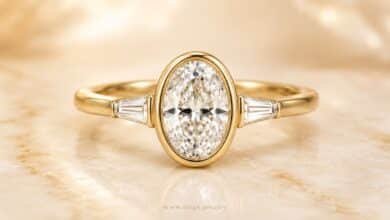
Engagement Ring Settings Explained
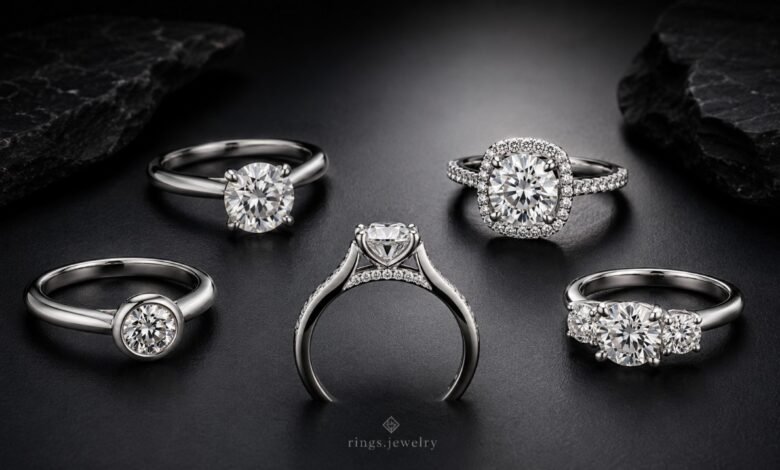
An engagement ring setting is not just the part that holds the diamond. It is the architecture of the ring, the personality of the design, the security system for the stone, and the reason one diamond can look romantic, modern, classic, dramatic, or quietly expensive.
Most buyers begin with the diamond. That is understandable. Diamonds get the poetry, the price tags, the close-up videos, and the slightly emotional late-night screenshots. But in the workshop, the setting is where the ring either becomes wearable jewelry or a beautiful mistake waiting for daily life to test it.
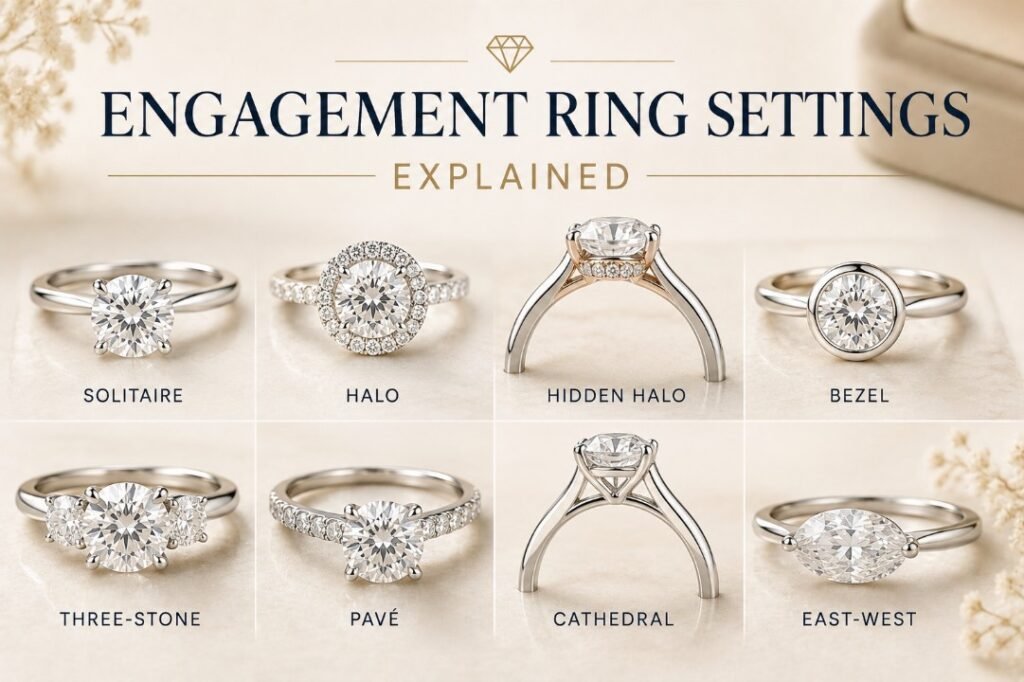
A solitaire can make a diamond feel pure and timeless. A halo can make the center stone look larger. A bezel can protect the edge and make the ring feel sleek. A three-stone setting can add symbolism and presence. A hidden halo can add private sparkle. Pavé can make the band shimmer. Cathedral shoulders can lift and frame the stone. East-west settings can turn a familiar diamond shape into something much more personal.
This guide explains the main types of engagement ring settings from a jeweler’s point of view: how they look, how they wear, what they do well, what they can get wrong, and which setting makes sense for different lifestyles, diamond shapes, hand proportions, and budgets.
Quick Answer: What Engagement Ring Setting Should You Choose?
Choose a solitaire setting if you want the most timeless and clean engagement ring style. Choose a halo if you want more sparkle and a larger-looking center stone. Choose a bezel if security, comfort, and modern style matter most. Choose a three-stone setting if you want symbolism and extra presence. Choose a hidden halo if you want subtle side sparkle without changing the top view too much.
The best engagement ring setting is the one that protects the stone, fits the wearer’s lifestyle, works with the diamond shape, and still looks beautiful next to a wedding band. A setting should not only impress in a product photo. It should survive years of real hands doing real things.
Before You Choose a Setting, Understand What the Setting Actually Does
A setting has three jobs. First, it must hold the center stone securely. Second, it must create the style of the ring. Third, it must work comfortably on the hand. Many rings succeed at one of these jobs and fail at another.
A very delicate prong setting may look airy and romantic, but if the prongs are too thin or poorly finished, the diamond is not well protected. A large halo may make the center stone look bigger, but if the proportions are clumsy, the ring can look more commercial than luxurious. A bezel may be practical, but if it is too heavy, it can smother the stone instead of framing it.
This is why “types of engagement ring settings” should not be treated like a menu where every option is equal. Each setting changes the ring’s comfort, maintenance, visual size, durability, wedding-band fit, and long-term character.
A diamond may be the face of the ring, but the setting is the posture. If the posture is wrong, even a beautiful stone can look uncomfortable.
Solitaire Setting
The solitaire setting is the purest engagement ring design: one center stone, one ring, no visual noise. It is the setting people imagine when they think of a classic diamond engagement ring. It does not rely on side stones, halos, pavé, or decorative tricks. The entire design depends on proportion, craftsmanship, and the beauty of the center diamond.
That simplicity is both its strength and its challenge. A solitaire engagement ring can look effortlessly elegant, but only when the details are right. The diamond must sit at a flattering height. The prongs must be balanced. The basket should feel clean from the side. The band width must support the stone without looking too heavy or too fragile. A solitaire gives the jeweler nowhere to hide.
Solitaire settings work with almost every diamond shape: round, oval, emerald cut, cushion, pear, marquise, radiant, and princess. The mood changes with the shape. A round solitaire feels classic. An oval solitaire feels graceful. An emerald cut solitaire feels architectural. A pear solitaire feels romantic and directional. A marquise solitaire feels dramatic.
The solitaire is also one of the best choices for people who want a ring that ages well. Trends can come and go, but a well-made solitaire remains easy to understand. It pairs beautifully with plain wedding bands, diamond bands, contoured bands, and anniversary bands. That flexibility matters because the engagement ring is only the beginning of the bridal stack.
The biggest mistake with solitaire settings is making the band too thin. Ultra-thin shanks became popular because they make the diamond look larger in photos. But metal has limits. If the center stone is substantial, the shank should have enough strength to resist bending and twisting over years of wear. Delicate is lovely. Underbuilt is not.
Workshop Check
When we inspect a solitaire, we look at the side profile before we admire the top view. A clean basket, even prong placement, proper stone height, and enough metal in the shank tell you whether the ring was designed for real wear or just for a pretty photo.
Solitaire settings can be low-profile or high-profile. A high setting may allow a wedding band to sit flush and can make the diamond look more prominent. A lower setting may feel more comfortable and less likely to catch. Neither is automatically better. The right profile depends on lifestyle, hand shape, stone size, and whether a straight wedding band is important.
If you want a timeless engagement ring, the solitaire remains the safest choice. But do not mistake simple for basic. A luxury solitaire is refined in the millimeters: the curve of the prongs, the polish under the basket, the transition from head to shank, the way the ring balances on the finger. This is where quiet craftsmanship lives.
Halo Setting
A halo setting surrounds the center stone with a border of smaller diamonds. The purpose is simple: more sparkle, more outline, and often the impression of a larger center diamond. A halo engagement ring can feel romantic, glamorous, vintage-inspired, or very modern depending on the proportions.
The halo became popular because it gives visual impact. A well-made halo can make a modest center diamond look more substantial. It can also soften the outline of certain diamond shapes and create a luminous frame around the stone. Round halos are classic. Oval halos feel romantic. Cushion halos can look plush and antique-inspired. Pear halos are dramatic and feminine.
But halos are dangerous when poorly designed. If the halo diamonds are too large, they compete with the center stone. If the halo is too wide, the ring can look bulky. If the tiny diamonds are poorly set, maintenance becomes annoying. A halo should support the center diamond, not wrestle it for attention.
There is also a difference between a fine halo and a commercial halo. A fine halo follows the outline of the center stone closely, uses well-matched small diamonds, and has clean bead or prong work. A clumsy halo looks like a glittery border pasted around the diamond. That difference is very visible on the hand.
Halo settings can be excellent for buyers who want a larger look without upgrading the center stone. They can also be useful when the center diamond has a softer or more unusual outline. The frame gives definition. This is why halos work especially well with cushion, oval, pear, and colored gemstone engagement rings.
Halo Warning
A halo is not automatically luxurious. The smaller diamonds need secure setting work, even spacing, good matching, and a clean outline. If the halo looks uneven, bulky, or too far from the center stone, the ring will look cheaper than it should.
From a practical standpoint, halo rings require more maintenance than plain solitaires. Small stones can loosen over time, especially if the ring is worn hard. This does not mean halos are fragile by default. It means the craftsmanship and upkeep matter. A halo ring should be checked periodically, especially if it has pavé on the band as well.
The best halo engagement rings have restraint. They do not try to fake a giant diamond. They create a beautiful frame. When the halo is proportioned correctly, the center stone still feels like the star, and the surrounding diamonds feel like light around it.
Hidden Halo Setting
A hidden halo setting places small diamonds beneath the center stone, usually around the basket or gallery, so the extra sparkle is seen mostly from the side. From the top, the ring may still look like a solitaire. From an angle, it reveals a flash of detail.
This is why hidden halo engagement rings became so popular. They give buyers the pleasure of extra diamonds without the full visual commitment of a traditional halo. The ring stays cleaner from the top but more decorative from the side. It feels like a private luxury detail rather than a public announcement.
A hidden halo works especially well with oval, round, cushion, pear, and elongated diamonds. It can lift the center stone visually and make the ring feel more finished. It also photographs beautifully from side angles, which matters because modern engagement rings are seen from every direction online.
However, hidden halos can create practical issues if they are not designed carefully. They may interfere with a flush wedding band. They can add small diamonds in an area that experiences contact and wear. If the basket is too delicate, the hidden halo may look pretty but weaken the structure. Extra sparkle should not come at the cost of engineering.
One of the most common mistakes is assuming a hidden halo is “safe” because it is small. Small diamonds still require small beads or prongs. Those tiny metal points need clean finishing. If the hidden halo is poorly made, stones can loosen. If it is placed too low or too wide, it can rub against the wedding band.
Master Jeweler’s Tip
Before choosing a hidden halo, ask how the wedding band will sit next to the engagement ring. A beautiful side detail can become a problem if it forces an awkward gap, causes rubbing, or makes future band pairing difficult.
The hidden halo is best for someone who wants a ring that feels classic at first glance but special on closer inspection. It is not the most minimal option, and it is not the most protective option. It is a detail option. When used well, it adds charm. When overused, it becomes another decorative layer the ring did not need.
I like hidden halos most when they are fine, subtle, and structurally clean. The diamonds should look like they belong to the architecture of the ring, not like they were added because the design felt empty. A hidden halo should whisper. If it shouts, it has misunderstood the assignment.
Bezel Setting
A bezel setting surrounds the edge of the center stone with a rim of metal. It is one of the oldest and most secure ways to set a gemstone, but it has become one of the most modern-looking engagement ring settings. That combination is exactly why it is so strong: ancient logic, contemporary style.
Bezel engagement rings are loved for security. The metal rim protects the diamond’s edge better than many prong settings. This is especially useful for people with active lifestyles, lower-maintenance taste, or diamond shapes with vulnerable corners and points. Pear, marquise, emerald cut, and princess cut stones all benefit from thoughtful edge protection.
A bezel also changes the ring’s personality. It makes the diamond look framed, clean, and intentional. It can make a ring feel sleek, architectural, vintage, or minimalist depending on the design. In yellow gold, a bezel can add warmth and a slightly antique feeling. In platinum, it can look crisp and modern.
The danger is heaviness. A poorly made bezel can make the diamond look smaller or trapped. The metal should be strong enough to hold the stone but refined enough to let the diamond breathe. The rim should be even, polished, and proportionate. A bezel is not just metal wrapped around a stone. It is a line drawn around the entire design.
Some buyers worry that bezels reduce sparkle. A bezel may block some side light, but a well-cut diamond still returns light primarily through the top. The bigger issue is not side light; it is whether the diamond is well cut and the bezel is well proportioned. A good bezel does not kill a diamond. A bad diamond does not become brilliant because the setting is open.
Where Bezel Settings Shine
They are excellent for active wearers, modern minimalists, low-profile rings, east-west designs, colored gemstones, and buyers who dislike catching prongs on clothing.
Where Bezels Need Caution
They can feel too enclosed for someone who loves a traditional airy diamond look. A heavy bezel can also make the ring feel visually dense if the proportions are not refined.
Bezel settings are especially useful for colored gemstones. Sapphires, emeralds, rubies, and other gemstones may need more thoughtful protection than diamonds. A bezel can help, though it does not make a delicate stone invincible. Emeralds, for example, still require care even in a protective setting.
If comfort and durability matter, bezel should be on the shortlist. It is one of the few settings that can look stylish and practical at the same time. A well-made bezel engagement ring has the calm confidence of a design that knows exactly why it exists.
Three-Stone Setting
A three-stone engagement ring features a center stone with one side stone on each side. It is one of the most meaningful setting styles because the three stones are often interpreted as past, present, and future. That symbolism is not required, but it is one reason the style has endured.
Three-stone rings offer presence without relying on a halo. They can make the ring look larger across the finger and add design complexity while still feeling balanced. The side stones can be diamonds, colored gemstones, tapered baguettes, pears, trillions, half-moons, or smaller versions of the center shape.
The key to a good three-stone ring is proportion. The side stones should support the center stone, not overpower it. If they are too large, the ring can feel crowded. If they are too small, they may look like afterthoughts. The angles, heights, and spacing must be carefully planned so the ring reads as one composition.
Three-stone settings work beautifully with round, oval, emerald cut, cushion, and radiant center stones. Emerald cuts with tapered baguettes are especially elegant. Ovals with pear side stones can feel romantic and graceful. Round diamonds with round side stones are classic, but they need careful sizing to avoid looking too bulky.
This setting is also excellent for people who want more finger coverage. Instead of one larger center stone, the visual width comes from the full arrangement. That can be a smart way to create presence while staying within a budget.
Workshop Check
In a three-stone ring, we check the relationship between the stones before anything else. The center stone should lead. The side stones should support. If all three stones fight for attention, the ring loses elegance.
Three-stone rings can be more complex to pair with wedding bands, especially if the side stones sit low or spread wide. A straight wedding band may not sit flush. This is not necessarily a problem, but it should be planned. A contoured band or custom band may be needed.
The three-stone setting is ideal for buyers who want symbolism, presence, and a ring that feels more designed than a solitaire. It is not as minimal, but it can be deeply elegant when the proportions are calm. The best three-stone rings feel like a sentence with perfect grammar: center, support, balance.
Pavé Setting
A pavé setting uses many small diamonds set closely along the band or parts of the ring to create a surface of sparkle. The word comes from the idea of a paved surface, like tiny diamonds paving the metal. Pavé can make an engagement ring feel delicate, glittering, and more luxurious.
Pavé is often used on the shank of a solitaire, around a halo, along cathedral shoulders, or in hidden details. It adds sparkle without changing the center stone. For buyers who want a more decorative ring but do not want a full halo, a pavé band can be a beautiful middle ground.
The challenge with pavé is durability. Tiny diamonds are held by tiny amounts of metal. That means craftsmanship matters enormously. If the beads are weak, stones can loosen. If the band is too thin, the structure can suffer. If the pavé extends too far around the band, resizing can become more difficult.
There are different pavé styles, including micro-pavé, French pavé, bead-set pavé, and shared-prong designs. Buyers do not need to memorize every technical term, but they should understand that not all pavé is equal. Fine pavé looks smooth, even, and controlled. Poor pavé looks rough, uneven, or overly busy.
Pavé also affects maintenance. A plain gold or platinum band is easier to wear and service. A pavé band needs more care, especially for people who are hard on their hands. This does not mean pavé is bad. It means pavé is jewelry, not armor.
Pavé Reality Check
If you choose pavé, choose quality over coverage. A small amount of well-set pavé looks more luxurious than a fragile band covered with tiny diamonds that constantly need attention.
Pavé is best for someone who loves shimmer and delicate detail. It pairs well with round, oval, cushion, and pear center stones. It can soften a geometric diamond shape or add romance to a clean solitaire. It also works well with hidden halos when the design is carefully controlled.
For long-term wear, I prefer pavé that does not extend all the way around the underside of the band. Leaving a plain sizing area can make future adjustments easier and reduce wear where the ring contacts surfaces most often. This is one of those practical details buyers rarely think about until later.
Cathedral Setting
A cathedral setting uses raised shoulders of metal that sweep upward from the band toward the center stone. The name comes from the arch-like structure, and when done well, the effect can be graceful and elegant. It gives the center stone visual lift and architectural support.
Cathedral settings are popular because they make the ring feel more finished from the side. Instead of the center stone appearing simply attached to a band, the shank rises to meet it. This can create a stronger silhouette and a more refined profile.
A cathedral setting can be plain, pavé, sculptural, vintage-inspired, or modern. It works with round, oval, cushion, emerald cut, and many other diamond shapes. It is especially useful when the center stone is larger because the shoulders can visually support the height and scale of the ring.
The main thing to watch is height. Some cathedral rings sit quite high. That can make the diamond prominent and allow a wedding band to sit closer, but it may also catch more easily. A high cathedral is not wrong, but it should match the wearer’s lifestyle.
Another important detail is the transition from shank to head. If the cathedral shoulders are too bulky, the ring can look heavy. If they are too thin, they may feel weak. The line should look intentional from every angle.
Why Buyers Like Cathedral Settings
They add elegance, lift the center stone, improve the side profile, and can make the ring feel more architectural than a basic solitaire.
What to Inspect Closely
Look at the side height, wedding band fit, shoulder thickness, prong integration, and whether the ring feels graceful or overly tall.
Cathedral settings are excellent for buyers who want a classic ring with more structure. They can still look clean and timeless, but they offer more visual interest than a plain peg-head solitaire. A well-made cathedral has a sense of lift without looking like the diamond is perched on a tower.
From a jeweler’s point of view, cathedral settings are often a smart compromise: more design than a plain solitaire, less maintenance than heavy pavé or halo work, and better visual support for a significant center stone.
East-West Setting
An east-west setting places an elongated diamond horizontally across the finger instead of vertically. This one design choice can completely change the mood of a ring. A vertical oval feels romantic and bridal. A horizontal oval feels modern and editorial. A vertical emerald cut feels classic. A horizontal emerald cut feels architectural and unexpected.
East-west settings work best with elongated shapes: oval, emerald cut, marquise, radiant, and elongated cushion. The horizontal orientation emphasizes the length of the stone and creates a wider visual line across the finger.
This setting is ideal for someone who wants a distinctive engagement ring without choosing an overly complicated design. It feels modern, but still wearable. It does not require a halo, pavé, or excessive detail to make an impression. The orientation itself is the statement.
However, east-west settings must be balanced carefully. If the stone is too long for the finger, the ring can look awkward. If the setting does not protect the ends of the stone, the design can become risky. Marquise and pear shapes especially need thoughtful tip protection.
Bezel east-west settings are particularly strong. The bezel frames the stone, protects the edges, and makes the whole ring feel intentional. East-west emerald cuts in bezels can look extremely refined, especially in yellow gold or platinum.
An east-west ring should not look like a traditional ring turned sideways by accident. It should look like the diamond was always meant to live that way.
Wedding band fit also deserves attention. Depending on the profile, an east-west setting may sit low and comfortable, or it may require a curved band. The width of the stone across the finger can affect stacking. This should be discussed before the ring is finalized.
Choose east-west if the wearer likes clean lines, fashion, architecture, and jewelry that feels personal without being overly ornate. It is one of the best settings for making a familiar diamond shape feel new.
Which Setting Is Most Secure?
The most secure engagement ring setting is usually a well-made bezel setting because the metal rim protects more of the stone’s edge than open prongs. However, security is not only about setting type. It is about execution. A poorly made bezel is not better than excellent prongs, and a beautiful-looking ring can still be weak if the construction is careless.
For daily wear, bezel settings, low-profile settings, six-prong solitaires, and protective prong designs are often strong choices. Three-stone rings can also be secure when the stones are properly seated. Pavé and halos can be secure too, but they add many small stones, which means more points that may need maintenance.
Diamond shape matters. Round and cushion shapes are easier to protect than pear, marquise, or princess cuts because they have fewer vulnerable points. Emerald cuts have cropped corners, but those corners still need proper prong placement. Pear and marquise tips should be guarded carefully.
Lifestyle matters even more. Someone who removes their ring during workouts, gardening, heavy cleaning, and hands-on work can wear more delicate settings safely. Someone who never removes jewelry needs a stronger design. Be honest about the wearer, not the fantasy version of the wearer who treats jewelry like a museum object.
Bezel Setting
Why: Metal surrounds the edge of the center stone and reduces snagging.
Best for: Active lifestyles, lower-profile rings, and vulnerable diamond shapes.
Six-Prong Solitaire
Why: More prongs share the responsibility of holding the diamond.
Best for: Round diamonds and classic engagement rings.
Pavé and Halo
Why: Many small diamonds mean more tiny settings to inspect over time.
Best for: Buyers who love sparkle and accept periodic care.
Pear, Marquise, Princess
Why: Points and corners can be more vulnerable to impact.
Best solution: V-prongs, bezels, or carefully designed protective prongs.
If security is your top priority, start with bezel, six-prong, or low-profile designs. Avoid ultra-thin bands with large stones, exposed tips, fragile pavé, and settings that look beautiful only because the metal has been reduced too much. Metal is not the enemy of elegance. Bad proportion is.
Which Setting Makes the Diamond Look Bigger?
The halo setting usually makes a diamond look bigger because the surrounding small diamonds extend the visual outline of the center stone. A well-made halo can create the impression of a larger face-up size without increasing the center diamond’s carat weight.
Bezel settings can also make a diamond appear slightly larger because the metal rim adds outline and presence. This is especially true in yellow gold or platinum when the bezel is fine and well polished. A bezel does not create the same sparkle expansion as a halo, but it can make the diamond look more defined.
Pavé bands do not usually make the center diamond itself look much bigger, but they make the overall ring feel more sparkly and luxurious. Thin bands can make the center stone appear larger by contrast, but the band should not become so thin that it compromises durability.
Three-stone settings make the ring look larger across the finger because the side stones add width and presence. This is different from making the center diamond look bigger. The full ring looks more substantial, but the eye still recognizes the center stone separately.
Hidden halos are subtle. They add sparkle from the side but do not dramatically increase the top-view size. Buyers sometimes expect a hidden halo to perform like a traditional halo, but it does not. It is a detail, not a visual enlargement strategy.
Halo Setting
Effect: Expands the visible outline around the center stone.
Best for: Buyers who want more sparkle and a larger-looking diamond.
Bezel Setting
Effect: Adds a polished metal frame that can increase visual presence.
Best for: Modern buyers who want size impression plus security.
Three-Stone Setting
Effect: Adds side stones for more finger coverage.
Best for: Buyers who want presence and symbolism without a halo.
Hidden Halo
Effect: Adds side sparkle but not much top-view size.
Best for: Buyers who want private detail rather than obvious enlargement.
If you want the diamond to look larger, choose a halo, a fine bezel, an elongated diamond shape, or a setting that keeps the design balanced around the center stone. But avoid overcorrection. A ring that tries too hard to make the diamond look bigger can end up looking less refined.
Final Jeweler’s Verdict
The best engagement ring setting depends on what the ring needs to do. Solitaire is the timeless choice. Halo is the size-and-sparkle choice. Hidden halo is the subtle-detail choice. Bezel is the secure modern choice. Three-stone is the symbolic presence choice. Pavé is the shimmer choice. Cathedral is the structural elegance choice. East-west is the design-forward choice.
If the wearer wants classic beauty, start with solitaire or cathedral. If they want maximum sparkle, consider halo or pavé. If they are active or practical, look seriously at bezel. If they love meaning, three-stone may feel right. If they want something modern without being loud, east-west can be excellent.
For the full ring selection process, see our complete Engagement Rings guide. The setting is one part of the decision, but the final ring also depends on diamond shape, metal, budget, hand proportion, wedding band fit, and craftsmanship.
My strongest advice is this: do not choose a setting only because it looks good in a photo. Look at the side. Look at the prongs. Think about the wedding band. Think about the wearer’s hands. A great setting does not only display the diamond. It protects the promise.
FAQ
What are the main types of engagement ring settings?
The main types of engagement ring settings include solitaire, halo, hidden halo, bezel, three-stone, pavé, cathedral, and east-west settings. Each setting affects the ring’s style, security, sparkle, diamond appearance, and long-term wear.
What is the most popular engagement ring setting?
The solitaire setting is one of the most popular and timeless engagement ring settings. It features one center stone and works beautifully with many diamond shapes, including round, oval, cushion, emerald cut, pear, and marquise.
What is a solitaire engagement ring?
A solitaire engagement ring has one center stone without side stones or a halo. It is classic, clean, and timeless. The beauty of a solitaire depends heavily on diamond quality, prong placement, band proportion, and setting craftsmanship.
What is a halo engagement ring?
A halo engagement ring has small diamonds surrounding the center stone. The halo adds sparkle and can make the center diamond look larger. It is a good choice for buyers who want extra brilliance and a more decorative look.
What is a hidden halo engagement ring?
A hidden halo engagement ring has small diamonds set beneath the center stone, usually around the basket or gallery. It adds sparkle from the side while keeping the top view cleaner than a traditional halo.
Is a bezel setting good for an engagement ring?
Yes. A bezel setting is one of the most secure engagement ring settings because metal surrounds the edge of the stone. It is especially good for active wearers, modern styles, low-profile rings, and diamond shapes with vulnerable points or corners.
Which engagement ring setting is most secure?
A well-made bezel setting is usually the most secure because it protects more of the stone’s edge. Six-prong solitaires, low-profile settings, and protective prong designs can also be very secure when properly made.
Which setting makes a diamond look bigger?
A halo setting usually makes a diamond look bigger because the surrounding small diamonds extend the visual outline. Bezel settings and three-stone settings can also increase the ring’s visual presence.
Are pavé engagement rings durable?
Pavé engagement rings can be durable if they are well made, but they require more maintenance than plain bands. Tiny diamonds are held by small beads or prongs, so periodic inspection is important.
What is a cathedral engagement ring setting?
A cathedral setting has raised shoulders of metal that sweep upward toward the center stone. It gives the ring height, structure, and an elegant side profile, often making the center stone feel more framed and supported.
What is an east-west engagement ring setting?
An east-west setting places an elongated diamond horizontally across the finger instead of vertically. It works especially well with oval, emerald cut, marquise, radiant, and elongated cushion diamonds.
Should I choose the diamond or setting first?
It is usually best to choose the diamond shape and setting together. The shape affects how the setting should protect the stone, how the ring looks on the hand, and how the wedding band will fit.