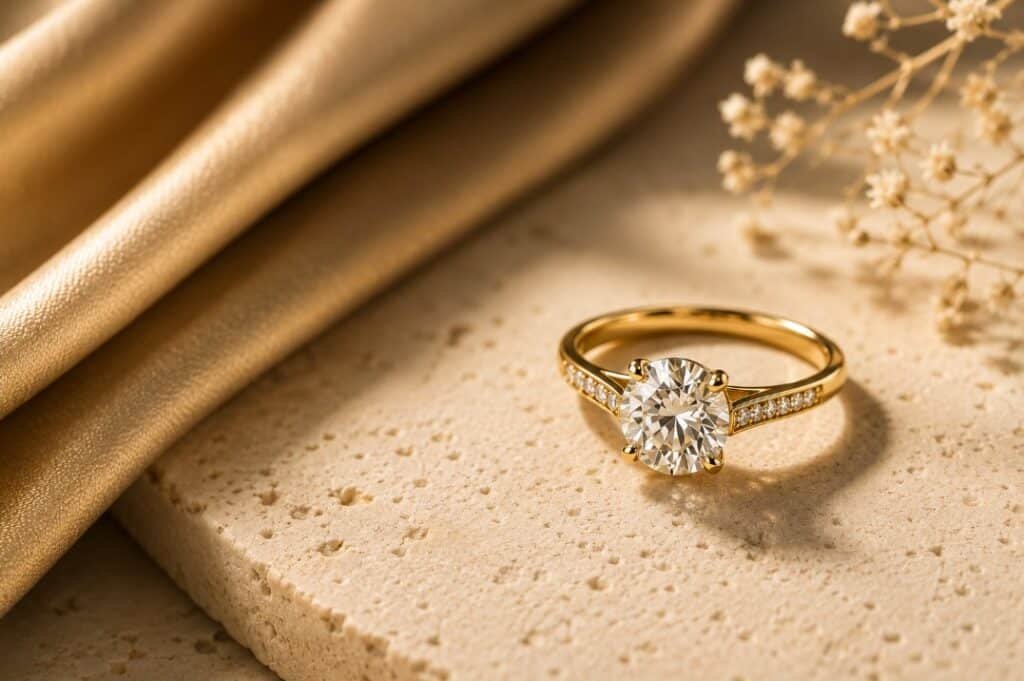
Yellow Gold Engagement Rings Are Back
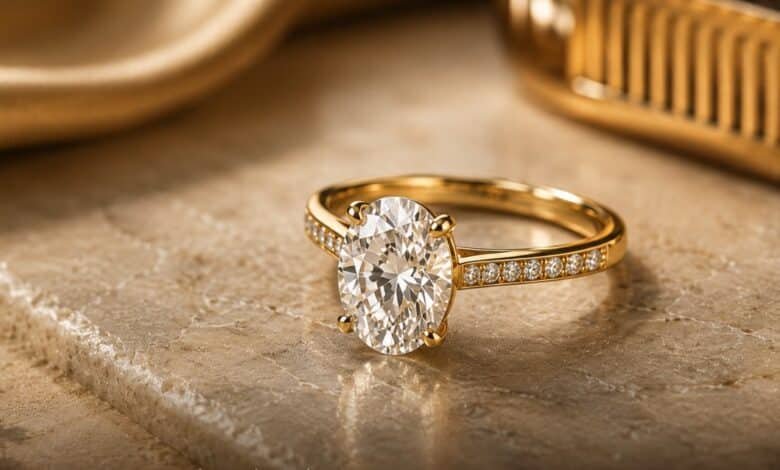
Metal Trend & Buying Guide
Yellow gold engagement rings have returned with the kind of confidence that does not need to ask permission. After years of white gold and platinum dominating the engagement case, warm gold is back on elegant hands, in designer collections, and in the conversations couples are having before they choose a ring.
This is not the old yellow gold many people remember from heavy 1980s settings or overly polished mall jewelry. The current version is cleaner, more sculptural, more intentional. Think oval diamonds in low yellow gold baskets, bezel-set antique cuts, slim solitaire bands with claw prongs, chunky gold shoulders with a modernist mood, and vintage-inspired rings that look inherited rather than manufactured yesterday.
Yellow gold works because it changes the emotional temperature of a diamond. White metals make a diamond feel icy, crisp, and formal. Yellow gold makes the same stone feel warmer, softer, and often more personal. It can flatter skin, forgive slightly warmer diamond color, and give even a simple solitaire a sense of old-world richness.
Compare yellow gold with other metals in our full engagement ring guide.
Why Yellow Gold Is Trending Again
Yellow gold is trending again because engagement rings are becoming more personal. For a long time, many buyers were chasing the same visual language: bright white metal, white diamond, delicate pavé, thin band, high sparkle, minimal warmth. It was polished and pretty, but it often made rings look strangely interchangeable.
Now the mood has shifted. Couples want rings with character: warmer metals, antique-inspired details, hand-cut diamonds, bezel settings, sculptural bands, and designs that do not look as if they were selected by an algorithm. Yellow gold fits that movement perfectly because it brings instant identity. It makes a ring feel less clinical and more intimate.
There is also a fashion reason. Yellow gold pairs beautifully with the jewelry people already wear every day: gold hoops, chain necklaces, signet rings, tennis bracelets, vintage watches, and stacked bands. A yellow gold engagement ring does not need to be “saved” for formal occasions. It can live naturally with daily jewelry, which is exactly how modern luxury is moving: less locked-away perfection, more beautiful objects worn often.
Yellow gold has stopped looking old-fashioned because the settings around it became cleaner. The metal did not change. The design discipline did.
Another reason yellow gold is back: it is kind to diamonds. Not every diamond needs to be icy white. In yellow gold, a near-colorless or slightly warm diamond can look harmonious rather than compromised. This can be useful when choosing a natural diamond, especially if the buyer would rather spend on cut quality, size, or craftsmanship instead of paying a premium for the highest color grades.
That does not mean yellow gold hides everything. A poorly cut diamond will still look sleepy. A brownish or visibly tinted stone may still show color depending on shape and setting. But yellow gold gives the whole ring a warmer visual context, and that can make smart diamond buying easier.
The best current yellow gold rings are not trying to be nostalgic copies. They borrow warmth from antique jewelry and restraint from modern design. A thin yellow gold solitaire with a beautifully cut oval diamond feels current. A bezel-set emerald cut in 18k yellow gold can feel architectural and calm. A slightly chunkier gold band with an old mine cut diamond can feel like something from a private family collection rather than a trend piece.
Expert buying note: Yellow gold is not automatically “vintage” and white gold is not automatically “modern.” The setting profile, prong shape, band width, stone cut, and finishing decide the style more than the metal alone.
Best Diamond Shapes for Yellow Gold
Yellow gold can work with almost any diamond shape, but some shapes become especially strong in warm metal. The trick is to match the shape’s personality with the tone of the gold. A round brilliant in yellow gold can feel timeless. An oval can feel romantic and elongated. An emerald cut can look quietly expensive. A cushion can lean antique or soft. A pear or marquise can become dramatic without feeling harsh.
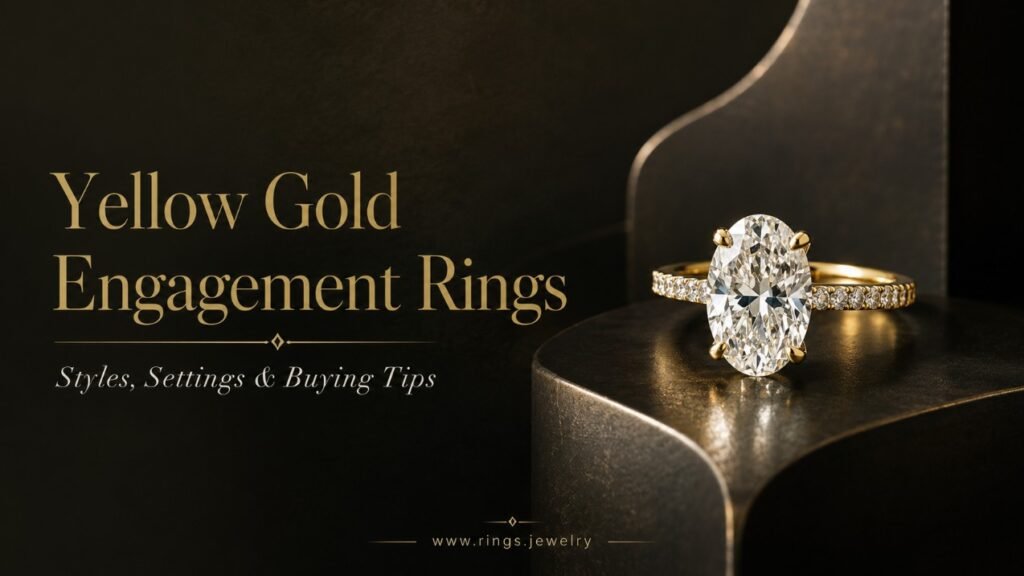
Oval diamonds are one of the strongest choices for yellow gold engagement rings right now. The elongated shape gives graceful finger coverage, while yellow gold softens the oval’s outline. An oval yellow gold engagement ring can look classic or modern depending on the setting. With slim claw prongs, it feels clean and bridal. In a bezel, it becomes more editorial. With a slightly thicker band, it starts to feel bold and fashion-aware.
When buying an oval, inspect the bow-tie carefully. A little shadow across the center is normal, but a strong dark bow-tie can make the diamond look split in half. Also pay attention to length-to-width ratio. A softly elongated oval feels traditional; a longer oval feels more dramatic. Yellow gold will not fix a poorly proportioned oval, but it will make a good one look warmer and more romantic.
Round brilliant diamonds remain the safest classic. In yellow gold, a round diamond can look almost heirloom-like, especially with six prongs or a cathedral setting. If you want a yellow gold diamond ring that will not date quickly, a round solitaire is difficult to beat. The danger is choosing a setting that is too generic. The difference between ordinary and exceptional may be in the prong shape, basket design, band taper, and polish quality.
Emerald cuts are elegant in yellow gold because the metal’s warmth balances the diamond’s cool geometry. Step-cut diamonds do not sparkle like round brilliants; they flash in broad, mirror-like planes. Yellow gold gives that quiet light a richer frame. However, emerald cuts reveal clarity more easily than many brilliant cuts, so eye-clean quality matters. Windowing also matters. If the center looks glassy or transparent in a dead way, keep looking.
Cushion cuts are natural friends of yellow gold. They can feel antique, soft, and romantic, especially in 18k gold. Antique cushion cuts, old mine cuts, and chunky-facet cushions look particularly beautiful with warm metal because the combination feels intentional, not overly perfect. Modern crushed-ice cushions can also work, but compare them carefully; some look lively, while others look busy without being bright.
Radiant cuts give a yellow gold ring more brilliance and structure. They are useful for buyers who like the outline of an emerald cut but want more sparkle. Radiants in yellow gold can feel glamorous, especially with a slightly thicker band or hidden halo. Watch the cut pattern closely. Some radiants have excellent life; others look like a glittery blur.
Pear and marquise diamonds become expressive in yellow gold. They are not quiet shapes. They create movement, length, and a little drama. Yellow gold makes them feel less icy and more artistic. The points need protection, so prong placement matters. A V-prong at the tip is not just decorative; it is a tiny security guard with a difficult job.
Round brilliant in a yellow gold solitaire, especially with refined claw prongs or a graceful six-prong basket.
Oval diamond in yellow gold, particularly in a slim solitaire, bezel setting, or east-west design.
Emerald cut or antique cushion in 18k yellow gold with clean proportions and a low, well-built setting.
Yellow Gold Solitaire Rings
A yellow gold solitaire ring is the simplest design to describe and one of the hardest to execute well. Because there is nowhere to hide. No halo distracts from the center stone. No pavé band creates a cloud of sparkle. No decorative gallery pretends to be craftsmanship. The diamond, metal, prongs, and proportions must carry the entire ring.
This is exactly why yellow gold solitaires are having such a strong moment. They feel clean, but not cold. Traditional, but not stiff. Romantic, but not sugary. A good yellow gold solitaire looks like it belongs on a hand, not only in a product render.
The first decision is band width. A very thin band can make the center diamond appear larger, but if the shank is too thin, daily durability suffers. For many engagement rings, a band around 1.8 mm to 2.2 mm offers a practical balance, though the right choice depends on ring size, diamond size, setting style, and lifestyle. Ultra-thin bands may photograph beautifully and live anxiously.
The second decision is setting height. A high-set solitaire allows more light around the diamond and may pair more easily with a straight wedding band, but it can snag more. A lower setting can feel elegant and wearable, but may not allow a flush wedding band. Neither is automatically better. The correct answer depends on the wearer’s habits and whether a gap between engagement ring and wedding band will bother them.
Prongs also change the whole mood. Rounded prongs feel traditional. Claw prongs feel sharper and more refined. Double claw prongs can add a designer look, especially on oval, emerald, radiant, or cushion diamonds. Six prongs can make a round diamond feel classic and secure. Four prongs can show more of the stone but may feel less protective depending on stone size and setting style.
Workshop detail: On a yellow gold solitaire, look closely at the prongs from above and from the side. They should be even, clean, and properly seated against the stone. Thick uneven prongs can make an expensive diamond look clumsy.
A yellow gold solitaire is especially good for someone who wants an engagement ring that can evolve. It pairs well with plain gold wedding bands, diamond bands, curved bands, vintage bands, and anniversary rings. It can be dressed up later without feeling incomplete now.
For diamond color, yellow gold gives some flexibility. Many buyers do not need a D, E, or F color diamond in a yellow gold setting. Depending on the shape and personal sensitivity, G, H, I, and sometimes warmer grades may look beautiful. Step cuts show color more openly than round brilliants, so judge the actual stone, not only the certificate.
The best yellow gold solitaire rings have restraint, but not laziness. The basket should be shaped, not merely functional. The shank should have enough substance. The polish should be clean. The stone should sit straight. Simple does not mean cheap; simple means every mistake is visible.
Yellow Gold Bezel Rings
Yellow gold bezel engagement rings may be the most interesting version of the trend because they combine warmth with confidence. A bezel wraps a fine rim of metal around the stone instead of holding it only with prongs. In yellow gold, that rim becomes part of the visual design. It outlines the diamond like a frame around a painting.
Bezel settings are popular because they look modern, but they also solve practical problems. They protect the edge of the stone, reduce snagging, and can feel smoother for daily wear. For people who work with their hands, travel often, wear gloves, have active lifestyles, or simply dislike prongs catching on knitwear, a bezel can be a very intelligent choice.
That said, not every bezel is elegant. A heavy bezel can swallow a diamond and make the ring look blunt. A poorly finished bezel can look wavy or uneven. The best bezels are precise. The rim should be even, the stone should sit level, and the metal should look intentional rather than thick because the maker was nervous.
Ovals, emerald cuts, cushions, pears, and round diamonds all work beautifully in yellow gold bezels. An oval bezel in yellow gold feels current and soft. An emerald cut bezel feels architectural. A round bezel can look minimal and quietly vintage. A pear bezel can feel artistic, especially if the band is clean and the profile is low.
Choose bezel if you want:
Low snagging, a modern silhouette, edge protection, a smooth feel, and a stronger outline around the center stone.
Be cautious if you want:
Maximum visible diamond edge, very airy lightness, or the most traditional prong-set bridal look.
A bezel can also make a diamond appear slightly larger from the top because the gold rim visually expands the outline. This is useful for smaller diamonds or modest budgets. It gives presence without pretending to be a halo. The effect is cleaner, more architectural, and usually easier to maintain than tiny pavé around the center.
For yellow gold bezel rings, metal color matters. 18k yellow gold has a richer, deeper tone. 14k yellow gold is usually slightly paler and harder, which may suit daily wear and budget. Both can be excellent. The choice depends on color preference, lifestyle, and setting construction.
If you are buying a bezel online, side-view images are essential. Some bezels look graceful from above but bulky from the side. Check the ring height, gallery openings, band transition, and whether the wedding band can sit close. A beautiful top view is not enough; your partner will see the side profile every day.
Yellow Gold Vintage-Inspired Rings
Yellow gold and vintage-inspired design have a natural connection, but this is where buyers need taste and restraint. Vintage-inspired should not mean “every decorative detail available in the catalog.” Milgrain, engraving, filigree, side stones, halos, scrollwork, and antique cuts can be beautiful. All of them together can begin to look like the ring is wearing a costume.
The strongest yellow gold vintage-inspired rings usually choose one or two historical references and execute them well. An old mine cut diamond in a simple yellow gold bezel. An oval diamond with delicate shoulders. A cushion cut with subtle milgrain. A three-stone ring with tapered baguettes. A signet-inspired setting with a low profile. A hand-engraved band that feels like jewelry, not wallpaper.
Antique and antique-style diamonds are especially compelling in yellow gold. Old mine cuts, old European cuts, rose cuts, and antique cushions have different light behavior from modern brilliant cuts. They tend to flash in broader, moodier patterns. Yellow gold supports that softness. It makes the ring feel intentional rather than less-than-perfect by modern standards.
True vintage rings require extra inspection. Romance is lovely; worn prongs are not. Check the shank thickness, previous repairs, stone security, condition of side stones, and whether the ring has been resized multiple times. A vintage ring may need restoration before daily wear. That is not a reason to avoid it, but it should be part of the budget.
Buying warning: Do not buy a vintage yellow gold engagement ring only from dreamy photos. Ask about prong wear, metal thinning, stone chips, previous repairs, and whether the ring is safe for everyday wear.
For newly made vintage-inspired rings, ask whether the decorative details are cast, hand-finished, or hand-engraved. Cast detail can be beautiful when done well, but weak finishing makes it look soft and blurry. Hand engraving has a sharper life to it. Milgrain should look crisp, not like a row of tired dots.
Yellow gold vintage-inspired rings are especially good for people who like jewelry with atmosphere. They suit someone who loves antique shops, old books, family pieces, silk blouses, tailored coats, handwritten notes, or the feeling that an object has a story. The ring does not need to be old to feel storied. It needs proportion, texture, and sincerity.
One of the best modern approaches is to combine an antique-feeling diamond with a cleaner yellow gold setting. That keeps the romance but avoids fussiness. A chunky old mine cut in a simple bezel or low prong setting can look far more luxurious than a ring overloaded with decorative references.
Yellow Gold vs White Gold
Yellow gold and white gold are not just different colors. They create different moods, require different maintenance expectations, and flatter diamonds in different ways.
Yellow gold is warm, traditional, and visually rich. It can make a ring feel softer and more romantic. It works beautifully with near-colorless and slightly warm diamonds, antique cuts, ovals, cushions, emerald cuts, and vintage-inspired designs. It also blends naturally with everyday gold jewelry, which is a major reason many people are returning to it.
White gold is bright, cool, and classic in a more contemporary bridal way. It gives the impression of platinum at a lower price, though it is not the same metal. Most white gold engagement rings are rhodium plated to achieve that bright white finish. Over time, rhodium wears and the ring may need replating if the wearer wants it to stay icy white.
Yellow gold does not need rhodium plating. Its color is its own color. It will still need cleaning, polishing, and maintenance, but it does not have the same white plating issue. Over years of wear, yellow gold can develop a soft patina, which some people love. Others prefer regular polishing to keep it crisp.
From a diamond-color perspective, white gold can make warmth in a diamond more obvious because the metal is cooler. Yellow gold can make warmth feel more harmonious. This does not mean you can ignore diamond color completely. It means you can choose more strategically.
Warm, rich, traditional, flattering with gold jewelry, excellent for vintage-inspired designs and slightly warmer diamonds.
Cool, bright, bridal, often rhodium plated, strong for icy diamond looks and buyers who prefer a platinum-like color at a lower cost.
Does your partner wear more yellow gold or white metal every day? Their existing jewelry box often answers the question better than trend reports.
Durability depends partly on karat. 14k yellow gold is generally harder and more resistant to bending than 18k yellow gold because it contains more alloy metal. 18k yellow gold has a richer color and a more luxurious feel, but it is softer. Both can work well for engagement rings when the design is properly built.
White gold also varies by alloy and karat, and nickel content can matter for sensitive skin. If the wearer has metal allergies, ask carefully about alloy composition. Platinum may be a better choice for some sensitive wearers, though it sits outside the yellow versus white gold comparison.
Style-wise, yellow gold is currently stronger for buyers who want warmth, character, and a fashion-aware but timeless look. White gold remains excellent for those who want the diamond to feel as white and crisp as possible. Neither is universally better. The correct metal is the one that supports the wearer’s skin tone, jewelry wardrobe, lifestyle, and desired ring personality.
Who Should Choose Yellow Gold?
Yellow gold is ideal for someone who already wears yellow gold jewelry. This sounds obvious, but many engagement ring mistakes happen because buyers ignore the jewelry their partner chooses every single day. If their favorite pieces are gold hoops, gold chains, gold bracelets, vintage gold watches, or warm-toned rings, a yellow gold engagement ring will likely feel natural.
It is also excellent for someone who loves warmth in design: cream silk over bright white satin, old libraries over glass towers, walnut wood over chrome, candlelight over fluorescent light. Engagement rings are visual objects, but they also have atmosphere. Yellow gold has atmosphere.
Choose yellow gold if your partner likes vintage-inspired rings, antique diamonds, oval diamonds, cushion cuts, emerald cuts, bezel settings, signet-like forms, or bolder gold bands. It is also a strong choice for someone who wants a ring that feels stylish now but not disposable later.
Yellow gold can be especially flattering on warm, olive, deep, golden, and neutral skin tones, though skin tone rules should never be treated as law. Some cool-toned people look spectacular in yellow gold because contrast can be beautiful. The best test is simple: look at what your partner already wears and what makes them feel expensive.
Who should be cautious? Someone who only wears silver, platinum, white gold, or cool-toned jewelry may not enjoy yellow gold every day. Someone who wants the iciest possible diamond look may prefer platinum or white gold. Someone who dislikes visible warmth in metal may appreciate yellow gold in photos but not on their own hand.
Common buying mistake: choosing yellow gold because it is trending, while the wearer’s entire jewelry wardrobe is white metal. Trends are useful signals. They are not substitutes for knowing the person.
Before buying, decide whether the ring should be 14k or 18k yellow gold. For a delicate daily-wear setting, 14k can be very practical. For a richer luxury tone, 18k is beautiful, especially in heavier or well-supported designs. If the setting has very fine pavé, tiny prongs, or a delicate shank, construction matters more than the romantic idea of higher karat gold.
Also consider the wedding band plan. A yellow gold engagement ring pairs beautifully with a matching gold band, but mixed-metal stacks can also look intentional. A yellow gold solitaire with a platinum diamond band can be chic. A yellow gold bezel with a plain cigar band can feel modern. A vintage-inspired ring may need a custom curved band. Think ahead before the wedding band becomes an expensive surprise.
Yellow gold engagement rings are back because they offer something many couples want now: warmth, individuality, heritage, and style without shouting. The best ones are not merely gold versions of white-metal trends. They are designed with the metal in mind, using yellow gold as part of the ring’s voice.
Final buying judgment
A yellow gold engagement ring is the right choice when warmth is not an accident but the point. Choose it for character, daily wearability, flattering color, vintage possibility, and a ring that feels personal rather than mass-approved. Then judge the piece like a jeweler: stone quality, setting security, prong work, band strength, profile, finish, and how naturally it belongs on the hand.
FAQ
Are yellow gold engagement rings popular again?
Yes. Yellow gold engagement rings are strongly trending again, especially in oval solitaires, bezel settings, vintage-inspired designs, antique cuts, and chunkier gold bands.
Is yellow gold good for engagement rings?
Yes. Yellow gold is a durable and classic engagement ring metal when properly made. It offers warmth, pairs well with many diamond shapes, and does not require rhodium plating like white gold.
What diamond shapes look best in yellow gold?
Oval, round brilliant, emerald cut, cushion, radiant, pear, and marquise diamonds can all look beautiful in yellow gold. Ovals, cushions, and antique cuts are especially popular in warm gold settings.
Is an oval yellow gold engagement ring a good choice?
Yes. An oval yellow gold engagement ring is one of the strongest current styles because it combines flattering finger coverage with a warm, romantic metal color.
Does yellow gold make diamonds look yellow?
Yellow gold can reflect warmth into a diamond, but it can also make slightly warmer diamond colors look more harmonious. The effect depends on diamond shape, color grade, setting style, and personal sensitivity.
Is 14k or 18k yellow gold better for an engagement ring?
14k yellow gold is usually harder and practical for daily wear. 18k yellow gold has a richer color and more luxurious feel but is softer. Both can be excellent when the setting is well made.
Are yellow gold bezel engagement rings practical?
Yes. Yellow gold bezel rings are practical because the metal rim helps protect the stone, reduces snagging, and creates a smooth modern profile for daily wear.
What is better, yellow gold or white gold?
Neither is universally better. Yellow gold is warmer and does not need rhodium plating, while white gold gives a cooler, brighter look. The best choice depends on personal style, skin tone, jewelry wardrobe, and maintenance preferences.
Can yellow gold engagement rings look modern?
Yes. Yellow gold looks very modern in clean solitaires, low bezels, east-west settings, sculptural bands, and minimalist designs with refined proportions.
Who should choose a yellow gold engagement ring?
Yellow gold is ideal for someone who already wears gold jewelry, loves warm tones, likes vintage or antique-inspired design, or wants an engagement ring with character and softness.