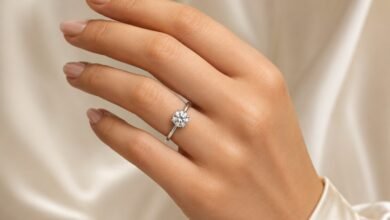
Diamond Cut Quality: Why It Matters More Than Carat
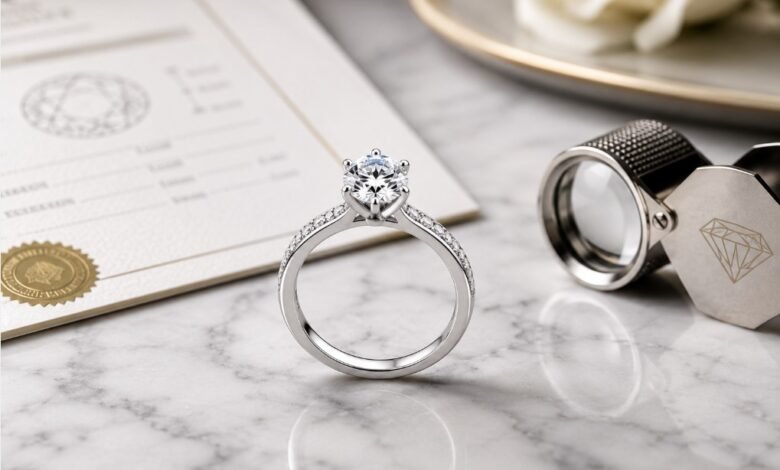
Diamond cut quality is the reason one engagement ring looks alive and another looks expensive only on paper. It controls how light enters the diamond, moves through it, and returns to your eye as brightness, fire, and sparkle.
Carat weight gets attention because it is easy to understand. Bigger sounds better. Bigger photographs well. Bigger makes people feel like they are getting more diamond for the money. But a larger diamond with weak cut quality can look sleepy, watery, or strangely flat. A smaller diamond with excellent cut can look sharper, brighter, and more luxurious.
This is the part of diamond buying where a jeweler quietly saves you from paying for weight instead of beauty. The best engagement ring diamond is not the heaviest stone your budget can tolerate. It is the diamond that knows what to do with light.
The Light Truth: Cut Is the Beauty Engine
Diamond cut quality matters more than carat weight because cut determines how bright, lively, fiery, and visually beautiful a diamond looks. Carat tells you how much the diamond weighs; cut tells you how well the diamond performs. A poorly cut large diamond can look dull, while a well-cut smaller diamond can appear brighter and more impressive. For engagement rings, cut quality should usually be prioritized before chasing extra size, especially if sparkle and long-term beauty matter.
What “Cut” Really Means — And What It Does Not Mean
Cut is one of the most misunderstood words in diamond shopping. People often use it to mean shape: round, oval, emerald, pear, cushion, radiant. That is not wrong in casual language, but in diamond buying, shape and cut quality are different conversations.
Shape is the outline. Cut quality is the engineering of light.
Cut quality involves proportions, angles, facet arrangement, symmetry, polish, depth, table size, and how precisely the diamond has been finished. These details decide whether light returns through the top of the stone or leaks away where no one gets to enjoy it.
Shape vs Cut Quality
- Shape is the diamond’s outline: round, oval, emerald, pear, marquise, cushion, radiant, princess, or asscher.
- Cut quality is how well the diamond’s facets, proportions, symmetry, and finish work together to return light.
- Sparkle depends far more on cut quality than on carat weight alone.
This is why two diamonds with the same carat weight can look completely different. One may look crisp and bright. The other may look large but tired, like it stayed up too late in bad lighting. The difference is often cut.
The Carat Trap: Paying for Weight You Cannot Enjoy
Carat weight is seductive because it feels objective. A 2-carat diamond sounds better than a 1.5-carat diamond. A 3-carat diamond sounds better than almost anything if you say it with enough confidence.
But diamonds are not potatoes. You are not buying beauty by the pound.
Carat measures weight, not visible size, and definitely not sparkle. A diamond can carry extra weight in its depth, making it heavier without looking much larger from above. Another diamond may face up beautifully because its measurements and proportions are well balanced.
The Expensive Illusion
A poorly proportioned diamond can cost more because it weighs more, while giving you less visible beauty. That is the most annoying kind of luxury mistake: paying extra for something your eye does not get to enjoy.
When comparing diamonds, look at measurements, not just carat weight. A well-cut diamond with a slightly lower carat number can look larger, brighter, and more refined than a heavier stone with poor spread and weak light return.
This is especially important when shopping lab-grown diamonds, where larger carat weights may be more accessible. The budget advantage is wonderful, but it can tempt buyers into choosing size over cut. Our guide to lab-grown diamond buying mistakes explains why the biggest stone is not always the smartest stone.
Proportions: The Hidden Architecture of Sparkle
Diamond proportions are not glamorous to talk about at dinner. They are, however, the reason the diamond looks glamorous at dinner.
Depth, table, crown angle, pavilion angle, girdle thickness, and facet relationships all influence how light behaves. If the proportions are balanced, light can enter the diamond, reflect internally, and return to the eye. If the proportions are weak, light can leak through the bottom or sides.
Too Deep
The diamond may carry weight in the bottom and look smaller from above. Light can also behave less efficiently if the angles are not working together.
Too Shallow
The diamond may spread wider, but it can lose brightness or show watery areas if the facet structure cannot return light properly.
Balanced
The diamond has a better chance of looking bright, lively, and visually satisfying because weight, spread, and light return are working together.
For round brilliant diamonds, cut grading can help a lot because the shape has more standardized performance expectations. For fancy shapes, the report gives useful information, but your eyes and a careful video or in-person inspection matter even more.
The Jeweler’s Proportion Question
We do not ask only, “How big is it?” We ask, “Where is the weight sitting, and what is the diamond doing with light?” That question separates impressive numbers from impressive diamonds.
Round Brilliant Diamonds: Where Cut Grade Speaks Loudly
Round brilliant diamonds are the easiest place to understand cut quality because the grading language is more developed and familiar. A well-cut round diamond can deliver strong brightness, fire, and scintillation — that sharp, lively sparkle people expect when they imagine a classic engagement ring.
If you are buying a round brilliant diamond, cut should be a top priority. Not a polite afterthought. Not something to compromise heavily because the next diamond is a little bigger. Cut is the main event.
For Round Diamonds, Examine This
- Cut grade: prioritize strong cut quality before increasing carat weight.
- Table and depth: check whether the proportions make sense together.
- Polish and symmetry: finishing details help support the diamond’s visual performance.
- Measurements: compare visible spread, not only carat weight.
- Real-life appearance: view the diamond beyond perfect showroom lighting when possible.
A round diamond with excellent cut can make a solitaire look clean, expensive, and timeless. A mediocre cut can make even a larger stone feel underwhelming. This is why experienced jewelers often recommend choosing a slightly smaller, better-cut round over a larger diamond that looks dull.
Fancy Shapes Need More Than a Pretty Outline
Fancy shapes are where the shopping gets more personal and a little more dangerous. Oval, pear, marquise, emerald, cushion, radiant, princess, and asscher diamonds each have their own beauty language. They also have their own traps.
A certificate can help you compare details, but fancy shapes are not judged by one cut grade in the same simple way many buyers expect from round brilliants. You need to look at shape appeal, light pattern, symmetry, length-to-width ratio, and how the stone behaves visually.
Oval
Watch for bow-tie effect, outline elegance, and whether the stone looks lively across the center.
Emerald Cut
Look for clean step reflections, pleasing length-to-width ratio, and clarity that does not distract the eye.
Pear
Symmetry, tip protection, and graceful proportions matter. A beautiful pear should not look like a teardrop having an identity crisis.
Radiant
Look for lively faceting and balanced shape. Some radiants sparkle beautifully; others look busy without feeling bright.
Fancy shapes reward taste. They also punish lazy buying. Do not choose only by carat and color. Look at the actual stone, compare videos, ask about proportions, and make sure the setting supports the shape.
If the diamond shape is part of your larger ring decision, our expert guide to engagement ring buying can help connect shape, setting, metal, budget, and long-term wear.
Reading the Report: Useful, But Not a Personality Test
A diamond report gives you facts. It does not give you taste.
That is not an insult to reports. A grading report is essential for serious diamond buying. It helps document carat weight, measurements, color, clarity, cut details where available, polish, symmetry, fluorescence, origin, and sometimes laser inscription. You need that information.
But buyers sometimes become so focused on grades that they forget the diamond is supposed to be beautiful. The report may say the stone is clean, large, and high color. The eye may say, “Why does it look sleepy?” Listen to the eye.
How to Use the Report Intelligently
- Use carat and measurements together.
- Use color grade in context with the metal choice.
- Use clarity grade with inclusion placement, not just the label.
- Use cut information to understand light performance.
- Use polish and symmetry as finishing clues.
- Use fluorescence as a question, not an automatic rejection.
- Use the report to narrow choices, then judge the diamond visually.
If you need help understanding report names and what each laboratory means, the article on GIA, IGI, and GCAL diamond certification explains how reports support the buying process without replacing good judgment.
The Setting Can Help or Hurt the Diamond’s Light
A great diamond still needs a setting that respects it. The setting does not create cut quality, but it can influence how the diamond is seen, protected, cleaned, and framed.
Prong settings expose more of the diamond and can make the stone feel open and bright. Bezel settings offer more protection and a cleaner outline, but they change the visual framing. Halo settings can add presence, but they can also distract from a weak center stone if the proportions are not thoughtful. A high setting can make the diamond look prominent, while a low setting can feel practical and secure.
The Setting Should Not Be a Cover-Up
A halo, hidden halo, or bright pavé band should enhance the diamond, not compensate for a lifeless center stone. If the main diamond lacks beauty, extra sparkle around it may only make the problem more obvious.
Cleaning also matters. Dirt under a diamond can dull even excellent cut. Lotion, soap, oil, and everyday residue collect around prongs and baskets. A diamond that looked brilliant in the store can look tired if the setting traps buildup and the ring is never cleaned.
If you are comparing exposure and protection, the guide to prong and bezel setting choices can help you decide how much openness or security makes sense for the center stone.
Four Real Buyer Scenes Where Cut Changes the Decision
Diamond cut quality becomes easiest to understand when you imagine actual buying situations.
The Buyer Choosing Between Two Similar Carat Weights
One diamond is slightly larger. The other has stronger cut, better spread, and noticeably more life. Choose the one that looks better, not the one that wins the scale by a tiny number.
The Buyer Tempted by a “Deal”
A suspiciously affordable diamond may be priced that way for a reason: weak cut, poor proportions, visible inclusions, or less desirable color. A bargain that does not sparkle is just a discount with lighting problems.
The Buyer Choosing an Elongated Shape
Ovals, pears, and marquise diamonds can look elegant and large for their weight, but the center pattern, symmetry, and bow-tie effect need careful review. Do not buy the outline and ignore the middle.
The Buyer Planning a Simple Solitaire
In a solitaire, the diamond has nowhere to hide. That is the beauty of it and the danger of it. Cut quality becomes especially important because the entire ring depends on the center stone’s performance.
How Cut Quality Changes the Budget Conversation
Cut quality is not just a beauty detail. It is a budget strategy.
Many buyers assume that increasing carat weight is the clearest way to make a ring feel more impressive. Sometimes it is. But often, spending more carefully on cut quality produces a better-looking diamond than simply moving up in weight.
A better-cut diamond can appear brighter, more balanced, and more intentional. It may catch light more beautifully across ordinary environments: daylight, restaurant lighting, office lighting, evening interiors, and quick glances while the wearer is moving. That matters because an engagement ring is not worn only under jewelry store spotlights.
Where the money usually works harder
- Cut quality first: especially for round brilliant diamonds where sparkle is the goal.
- Measurements second: to make sure the diamond faces up well for its weight.
- Carat after that: once the diamond already performs beautifully.
- Setting quality always: because even a great diamond deserves proper support.
This is why a jeweler may recommend a slightly smaller stone that looks better. It is not always an upsell or a mysterious professional preference. Sometimes it is simply the more beautiful diamond.
Cut Quality and Metal Color: A Quiet but Useful Pairing
Metal color does not change the cut of the diamond, but it can change how the diamond is perceived. White gold and platinum can make a bright diamond feel crisp and icy. Yellow gold can make certain color grades feel warmer and more intentional. Rose gold can soften the overall look.
Cut still matters in every metal. A beautifully cut diamond can hold its own across different settings. A weakly cut diamond may look especially disappointing in a minimal solitaire because there is nothing to distract from the center stone.
For buyers working with a warmer diamond color, a yellow gold setting may make the warmth feel romantic rather than like a compromise. For buyers choosing high-color stones, white metals can emphasize the clean brightness. But none of these choices should be used to hide poor light performance.
Color can flatter. Cut must perform.
Metal color can make a diamond feel cooler, warmer, softer, or more classic. It cannot turn a dull diamond into a lively one. Start with cut, then style the diamond with the right metal.
What to Ask the Jeweler Before You Choose the Stone
A good jeweler should be able to discuss cut quality without burying you in jargon. You do not need a gemology degree. You need clear answers.
Ask how the diamond performs in normal lighting. Ask whether its weight is well distributed. Ask how it compares with a slightly smaller or slightly larger stone. Ask whether the stone has any visual issues that do not show clearly in the grade summary.
Useful questions before buying
- Does this diamond face up well for its carat weight?
- Is the cut quality strong enough to prioritize this stone?
- Are there any dark, dull, or leaky areas?
- How does it look away from showroom lighting?
- For fancy shapes, is there a visible bow-tie or uneven light pattern?
- Would a slightly smaller diamond look better?
- Does the setting help frame the diamond without hiding problems?
The right seller will not be annoyed by these questions. They will understand that you are trying to buy beauty, not just a number.
The Final Cut Check Before You Buy
Diamond cut quality is not a technical detail for gemologists to argue about in a quiet room. It is the reason the engagement ring looks bright, elegant, and expensive in real life.
Carat weight tells you how heavy the diamond is. Cut tells you how much beauty the diamond gives back. If you prioritize size and ignore cut, you may end up with a larger stone that feels less special every time the light is not doing it favors.
Choose the diamond that performs. Look at the report, but do not worship it. Compare measurements, proportions, sparkle, shape appeal, and setting compatibility. A diamond with excellent cut does not just sit in the ring. It wakes the ring up.
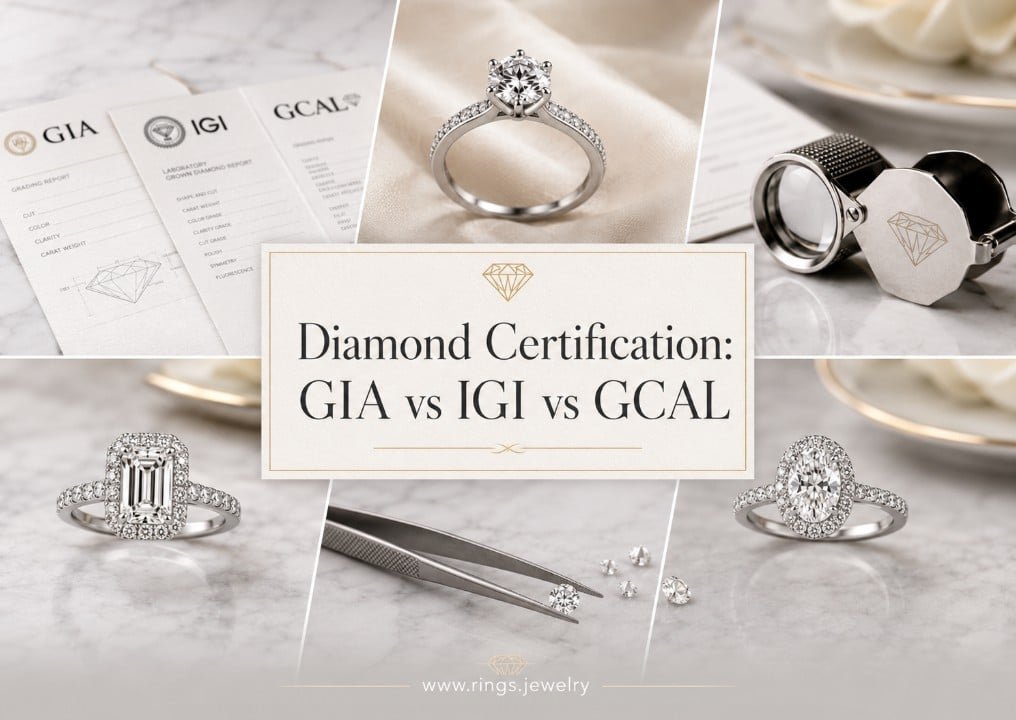
FAQ
What is diamond certification?
Diamond certification is a grading report that documents a diamond’s characteristics, including carat weight, measurements, color, clarity, cut information, polish, symmetry, fluorescence, and sometimes origin.
Is GIA better than IGI?
GIA is often more recognized for natural diamonds, while IGI is very common for lab-grown diamonds. The better choice depends on the diamond type, the seller, the report details, and how the stone actually looks.
Is IGI certification good for lab-grown diamonds?
Yes, IGI reports are commonly used for lab-grown diamonds. Buyers should still read the report carefully and compare cut, measurements, color, clarity, and origin disclosure.
What is GCAL diamond certification?
GCAL is a diamond grading and certification provider often associated with detailed documentation and performance-focused information. It can be useful when buyers want more than basic grading details.
Do I need a certified diamond for an engagement ring?
For a meaningful center stone, yes, a grading report is strongly recommended. It helps confirm what you are buying and makes comparison, insurance, appraisal, and resale discussions clearer.
Does a certificate mean a diamond is beautiful?
No. A report documents characteristics, but beauty depends on cut quality, proportions, light performance, shape appeal, setting style, and how the diamond looks in real life.
What should I check on a diamond report?
Check origin, carat weight, measurements, cut information, color, clarity, fluorescence, polish, symmetry, report number, and any laser inscription details.
Can a lab-grown diamond have a certificate?
Yes. Lab-grown diamonds can and should have grading reports that clearly identify them as lab-grown and list their quality characteristics.
Is a diamond without certification bad?
Not always, especially for very small stones, but for an engagement ring center stone, missing documentation makes the purchase harder to verify and compare. It increases buyer risk.
Should I choose a diamond only by the grading report?
No. Use the report to understand the diamond, but also judge the stone visually and evaluate the setting, metal, craftsmanship, return policy, and long-term wear.