
Best Diamond Shapes for Engagement Rings
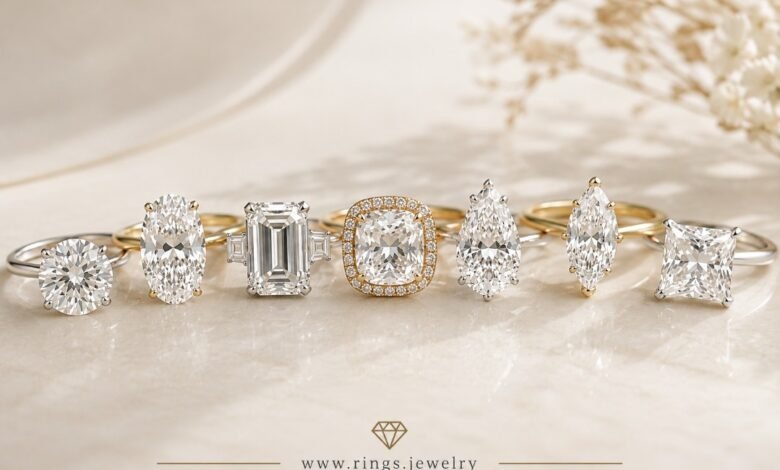
The best diamond shape for an engagement ring is not simply the one that looks most popular online. It is the shape that suits the wearer’s hand, lifestyle, taste, budget, setting, and the emotional character of the ring.
Diamond shape changes everything. It changes how large the stone appears, how much it sparkles, how modern or classic the ring feels, how delicate the corners are, how easy the diamond is to set securely, and how well the ring pairs with a wedding band. Two engagement rings with the same carat weight can look completely different because one diamond is round and the other is oval, emerald cut, pear shaped, or marquise.
In the workshop, we never start by asking only, “What carat size do you want?” That question comes too early. We first look at the wearer’s style. Do they prefer timeless elegance or something more distinctive? Do they like clean architectural lines or romantic softness? Do they want maximum sparkle, maximum finger coverage, or a shape with personality? A diamond shape should feel like the person, not like a trend accidentally purchased under pressure.
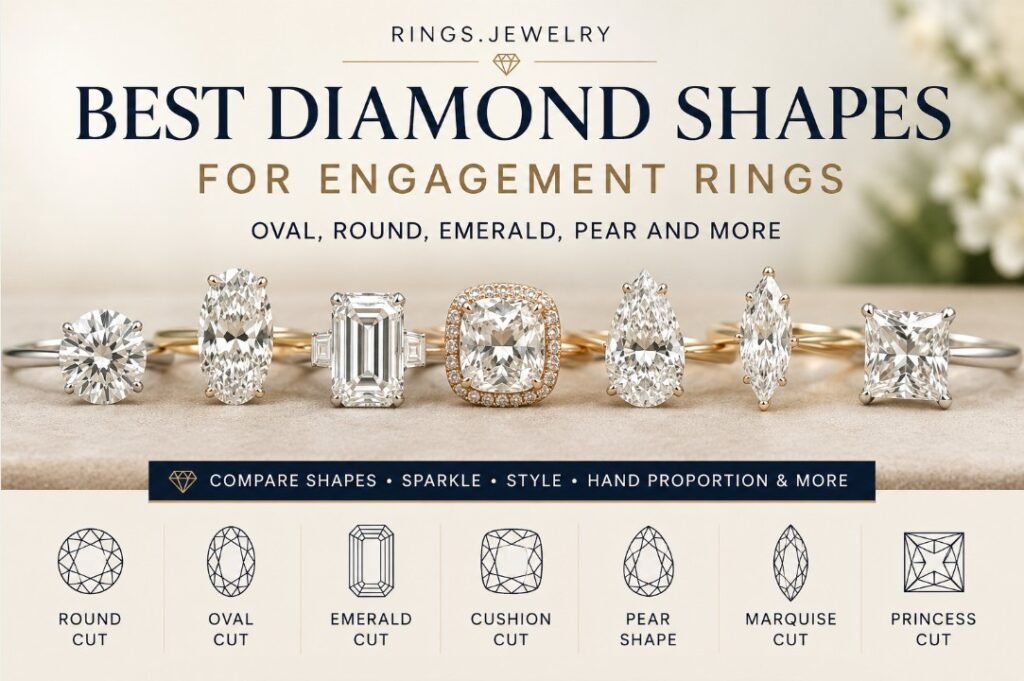
This guide compares the most important engagement ring diamond shapes: round, oval, emerald, cushion, pear, marquise, and princess. We will look at beauty, durability, visual size, setting compatibility, timelessness, and hand proportion. Not every shape is right for every person. But when the shape is right, the entire ring suddenly makes sense.
Quick Answer: What Is the Best Diamond Shape for an Engagement Ring?
The round cut is the most timeless and brilliant diamond shape for an engagement ring. The oval cut is often the best choice for buyers who want elegance, sparkle, and a larger-looking stone. The emerald cut is best for quiet luxury and clean architectural style. Pear and marquise shapes are ideal for buyers who want elongation and personality.
If you want maximum sparkle, start with round. If you want the stone to look larger for its carat weight, consider oval, pear, marquise, or elongated cushion. If you want an elegant, minimalist ring with less glitter and more presence, emerald cut may be your shape. The best diamond shape is the one that looks beautiful on the hand and still feels right after the trend conversation ends.
Round Cut
The round cut diamond is the classic engagement ring shape for a reason. It is brilliant, balanced, symmetrical, and extremely versatile. If someone asks for a diamond engagement ring and gives no other details, most jewelers will imagine a round brilliant almost automatically. It is the shape that built much of the modern engagement ring tradition.
A round brilliant diamond is designed for light performance. Its faceting pattern is engineered to produce brightness, fire, and scintillation. In plain language: it sparkles beautifully when cut well. This is why round diamonds often look lively across many lighting environments, from jewelry store spotlights to office lighting to candlelit dinners.
The round cut is also forgiving in design. It works in solitaire settings, halos, three-stone rings, pavé bands, cathedral settings, bezels, vintage-inspired designs, and modern minimal rings. It pairs easily with wedding bands and rarely looks awkward on the hand. Some diamond shapes require a very specific setting to shine. The round cut is more adaptable.
But classic does not mean boring. A round diamond can look completely different depending on the setting. A round brilliant in a thin platinum solitaire feels traditional and refined. The same shape in a yellow gold bezel feels modern and confident. Set it with tapered baguettes and it becomes old Hollywood. Add a hidden halo and it becomes softer and more romantic.
The main downside is price. Round diamonds often cost more per carat than many fancy shapes because of demand, cutting loss, and their popularity. If your goal is maximum visual size for budget, round may not be the most efficient choice. A round diamond can look slightly smaller face-up than elongated shapes of similar carat weight because it does not stretch along the finger.
Jeweler’s Note
Do not buy a round diamond only because it is “safe.” A poorly cut round diamond can look sleepy, even if the shape is classic. With round brilliants, cut quality is the soul of the stone. Protect the cut grade before chasing color, clarity, or a slightly larger carat number.
For buyers who want a timeless engagement ring, round is still the safest long-term choice. It does not depend heavily on fashion cycles. It does not need explanation. It looks bridal without trying too hard. If the wearer likes tradition, symmetry, sparkle, and a ring that will not feel dated in twenty years, round cut is difficult to beat.
Round Cut Diamond: Best Uses and Watch Points
Maximum Classic Sparkle
Why it works: The round brilliant cut is designed for strong light return and balanced brilliance.
Ideal buyer: Someone who wants a timeless engagement ring with traditional beauty.
Extremely Versatile
Best settings: Solitaire, halo, pavé, bezel, cathedral, three-stone, and vintage-inspired designs.
Jeweler’s advice: Round diamonds are easy to style, but the setting quality still matters.
Often Higher Price Per Carat
Why it matters: Round diamonds are highly popular and can be more expensive than many fancy shapes.
Buyer tip: If size is your top priority, compare oval, pear, marquise, or cushion before deciding.
Cut Quality Is Everything
Watch for: Weak cut, poor light return, and stones that look dull despite good paperwork.
Jeweler’s advice: A smaller excellent-cut round often beats a larger mediocre round.
Round cut is the right choice when you want the engagement ring to feel permanent, clean, and universally elegant. It may not be the most unusual shape, but unusual is not always the goal. Sometimes the best shape is the one that looks effortlessly right every time the hand moves.
Oval Cut
The oval engagement ring has become one of the most loved modern choices because it combines sparkle, softness, and visual size. It gives many buyers what they wish a round diamond could give: brilliant-style sparkle with more finger coverage and a more elongated, graceful silhouette.
A well-proportioned oval diamond can look larger than a round diamond of the same carat weight because its weight is spread across length. This is one reason oval engagement rings are so popular. The shape flatters the finger, photographs beautifully, and feels elegant without becoming too unusual.
Oval diamonds also have emotional softness. They do not feel as strict as emerald cuts or as traditional as round diamonds. They sit somewhere between classic and modern. In yellow gold, an oval can feel warm and romantic. In platinum, it feels crisp and bridal. In a bezel, it becomes sleek and contemporary. With a hidden halo, it becomes soft and luminous from the side.
However, oval diamonds require careful selection. The biggest issue is the bow-tie effect: a darker shadow that can appear across the center of elongated brilliant-cut stones. A slight bow-tie is normal. A heavy, dark bow-tie can make the center of the diamond look lifeless. This is why video, real-life inspection, and expert evaluation matter more than numbers alone.
Proportion also changes the look dramatically. A shorter oval feels fuller, softer, and more classic. A longer oval feels more elegant and dramatic. Too narrow, and the stone may look stretched. Too wide, and it can lose the elongated effect buyers wanted in the first place.
Workshop Note
When we inspect an oval diamond, we look at the outline first. The shoulders should feel balanced, the ends should not look pinched, and the center should stay lively under different lighting. An oval that only looks good in one perfect photo is not enough.
Oval cuts are excellent for buyers who want beauty with presence. They can make a ring feel more substantial without requiring the same budget jump as a larger round diamond. This is especially useful for lab-grown diamond engagement rings, where buyers often choose oval shapes to maximize elegant visual impact.
The setting should protect the stone and balance its length. Four-prong settings are common, but six-prong settings can add security and soften the outline. Bezels are increasingly popular because they frame the oval beautifully and protect the girdle. Cathedral shoulders can give the ring height and structure, while a low-profile setting may feel more comfortable for everyday wear.
Oval Engagement Ring: Best Uses and Watch Points
Elegant Finger Coverage
Why it works: The elongated shape can look larger on the hand than many compact shapes.
Ideal buyer: Someone who wants sparkle, softness, and modern bridal style.
Classic but Current
Best settings: Solitaire, hidden halo, bezel, cathedral, three-stone, and yellow gold designs.
Jeweler’s advice: Oval is popular, but a well-chosen oval can still feel personal.
Bow-Tie Effect
Watch for: A dark area across the center that makes the stone look flat.
Buyer tip: Judge the actual stone in motion, not just the grading report.
Length-to-Width Matters
Shorter oval: Softer and more classic.
Longer oval: More elegant, dramatic, and finger-lengthening.
If you want a diamond shape that feels romantic, flattering, and visually generous, oval is one of the strongest choices. Just do not buy it blindly. The best oval engagement ring is not simply the biggest oval in the budget; it is the oval with balanced proportions, controlled bow-tie, lively light return, and a setting that understands its shape.
Emerald Cut
The emerald cut engagement ring is for someone who likes elegance without noise. It does not sparkle like a round brilliant or oval. It flashes. It reflects. It opens and closes with long, mirror-like steps of light. It is less glitter and more architecture.
Emerald cut diamonds have rectangular outlines with cropped corners and step-cut facets. Instead of many tiny flashes, they create broad flashes and a hall-of-mirrors effect. This gives the ring a calm, sophisticated presence. It is the diamond shape of clean tailoring, marble interiors, old money understatement, and people who never need to shout across the room.
But emerald cuts are honest stones. They reveal more than brilliant cuts. Inclusions can be easier to see because the faceting pattern is open. Body color can also be more noticeable. This does not mean you must buy the highest clarity and color possible, but it does mean you need to inspect the stone carefully.
Emerald cuts also need strong proportions. If the stone is too shallow, it may window and look glassy. If it is too deep, it may face up smaller than expected. If the length-to-width ratio is awkward, the ring can look either too square or too stretched. A beautiful emerald cut feels balanced, crisp, and alive in a quieter way.
This is one of the best shapes for minimalist and architectural engagement rings. A simple emerald cut solitaire in platinum can look extremely refined. In yellow gold, it becomes warmer and more vintage. In an east-west setting, it becomes modern and editorial. With tapered baguette side stones, it becomes classic high-jewelry territory.
Jeweler’s Note
Emerald cuts do not forgive weak clarity or lazy proportion. If you choose this shape, prioritize a stone that looks clean to the eye, has pleasing depth, and shows lively step flashes. The beauty is quieter, so the details matter more.
The emerald cut is not the right choice for someone who wants maximum sparkle. If the wearer loves glittery brilliance and constant sparkle, round or oval may be better. But if they love clean lines, restrained luxury, and a diamond that feels grown-up and intentional, emerald cut is powerful.
From a durability perspective, the cropped corners help compared with sharp-cornered shapes, but the setting still matters. Prongs should protect the corners properly. Bezels work beautifully with emerald cuts and can make the ring feel even more architectural. A poorly set emerald cut can look loose, uneven, or underwhelming because the geometry exposes mistakes quickly.
Emerald Cut Engagement Ring: Best Uses and Watch Points
Quiet Luxury
Why it works: Step-cut facets create clean flashes rather than busy sparkle.
Ideal buyer: Someone who loves minimalism, architecture, tailoring, and refined style.
Clarity Matters More
Why it matters: The open facets can reveal inclusions more easily than brilliant cuts.
Buyer tip: Eye-clean appearance matters more than chasing numbers blindly.
Architectural Settings
Best settings: Solitaire, bezel, east-west, three-stone, tapered baguettes, and yellow gold.
Jeweler’s advice: Keep the design disciplined. Emerald cuts do not need clutter.
Maximum Sparkle Lovers
Why: Emerald cuts are elegant and reflective, not glittery like round brilliants.
Alternative: Consider oval, round, radiant, or cushion if sparkle is the top priority.
An emerald cut engagement ring is best when the wearer appreciates subtlety. It is not trying to impress everyone instantly. It rewards attention. That is why it often looks most expensive on people who already dress with restraint and confidence.
Cushion Cut
The cushion cut diamond has a soft, romantic shape with rounded corners and a square or rectangular outline. It sits beautifully between classic and vintage. If round is pure tradition and emerald cut is architecture, cushion cut is candlelight.
Cushion cuts can vary dramatically. Some look square and pillowy. Others are elongated and elegant. Some have a crushed-ice sparkle pattern, while others have broader antique-style facets. This variety is part of the charm, but it also means buyers need to be careful. “Cushion cut” is not one single look.
A cushion cut engagement ring often feels warmer and softer than a princess cut or emerald cut. It can look beautiful in yellow gold, rose gold, platinum, halos, solitaires, and vintage-inspired settings. It works especially well for someone who wants romance without choosing the more common oval.
The main challenge is visual size. Cushion cuts can sometimes face up smaller than elongated shapes because more weight may sit in the depth of the stone. This does not make them bad. It simply means you should compare measurements, not only carat weight. A cushion that weighs more may not always look larger from the top.
Cut style also changes personality. A modern brilliant cushion has more sparkle and energy. An antique-style cushion or old mine-inspired cushion has broader flashes and a softer glow. One feels more contemporary. The other feels more heirloom. Both can be beautiful when chosen intentionally.
Workshop Note
With cushion cuts, we always ask what kind of sparkle the client wants. Some buyers love the crushed-ice look; others prefer chunkier antique-style flashes. The name “cushion” alone does not tell you enough.
Cushion cuts are especially attractive in settings with slightly romantic detail. A hidden halo, delicate pavé, milgrain edge, or warm gold band can complement the softness of the shape. But cushion cuts can also work in clean solitaires when the stone itself has enough character.
For durability, cushion cuts are generally practical because the rounded corners are less vulnerable than sharp points. This makes them easier to set securely than pear or marquise shapes. Still, prongs should be placed correctly, and the stone should sit level in the setting.
Cushion Cut Engagement Ring: Best Uses and Watch Points
Soft Romance
Why it works: Rounded corners and a pillowy outline create a warm, romantic feel.
Ideal buyer: Someone who wants elegance with softness and vintage potential.
Modern or Antique Feel
Modern cushion: More glitter and brilliant-style sparkle.
Antique-style cushion: Broader flashes and old-world character.
May Face Up Smaller
Why it matters: Some cushion cuts carry more weight in depth.
Buyer tip: Compare millimeter measurements, not only carat weight.
Friendly Corners
Why it works: Rounded corners are easier to protect than sharp points.
Best settings: Solitaire, halo, hidden halo, bezel, and vintage-inspired designs.
Choose cushion if you want warmth, romance, and flexibility. It is not always the shape that looks largest, but it often feels deeply personal. A good cushion cut has charm, and charm is not something a grading report can fully describe.
Pear Shape
The pear shaped engagement ring is romantic, graceful, and slightly dramatic. It combines the rounded softness of an oval with the pointed elegance of a marquise. The result is a teardrop silhouette that naturally draws the eye along the finger.
Pear shaped diamonds are excellent for buyers who want a distinctive ring without moving too far from traditional diamond beauty. They sparkle in a brilliant-cut way, but the outline has more personality than a round or oval. A pear shape can feel feminine, elegant, artistic, or vintage depending on the setting.
One reason pear shapes are popular is visual length. Like oval and marquise diamonds, they can make the finger appear longer. They also often look larger than round diamonds of similar carat weight because the shape spreads across more surface area. For budget-conscious buyers who still want presence, pear can be very appealing.
The pointed tip is the most important practical concern. It needs protection. A V-prong or bezel tip is usually wise because the point is vulnerable to chipping if left exposed. This is not a reason to avoid pear diamonds; it is a reason to set them properly.
Symmetry matters greatly. A pear should have balanced shoulders, a pleasing curve, and a point that lines up correctly with the rounded end. If one side looks heavier than the other, the entire ring may feel slightly off. Pear diamonds are emotional shapes, and emotional shapes become distracting when the outline is wrong.
Master Jeweler’s Tip
For pear shaped diamonds, always inspect the outline before falling in love with carat weight. The shoulders should feel balanced, the point should be protected, and the stone should not look too narrow or too squat for the wearer’s hand.
Pear diamonds can be worn point-up or point-down, though point-up toward the fingertip is more common. Point-up tends to elongate the hand. Point-down can feel softer and more unconventional. The right orientation depends on the setting and the wearer’s taste.
Pear shapes look beautiful in solitaires, halos, three-stone rings, toi et moi designs, and vintage-inspired settings. A pear diamond with a delicate halo can feel romantic. A pear in a clean bezel can feel modern. A pear paired with another shape in a toi et moi ring can feel artistic and fashion-forward.
Pear Shaped Engagement Ring: Best Uses and Watch Points
Romantic Elongation
Why it works: The teardrop shape visually lengthens the finger and adds personality.
Ideal buyer: Someone who wants elegance with a distinctive silhouette.
Protect the Point
Watch for: An exposed tip that can chip if struck.
Jeweler’s advice: Use a V-prong, bezel tip, or protective setting design.
Symmetry Matters
Watch for: Uneven shoulders, awkward curves, or a point that feels misaligned.
Buyer tip: View the stone straight-on and in motion before deciding.
Flexible Personality
Best settings: Solitaire, halo, bezel, toi et moi, three-stone, and vintage-inspired rings.
Jeweler’s advice: Pear can be delicate or bold depending on the setting.
Pear shaped engagement rings are best for someone who wants beauty with a little drama. They are graceful, flattering, and memorable. But they reward careful selection. A good pear is lovely. A poorly shaped pear looks like the diamond could not decide what it wanted to become.
Marquise Cut
The marquise cut diamond is dramatic, elongated, and historically elegant. It has pointed ends and a long, narrow body that can create exceptional finger length. If oval is graceful and pear is romantic, marquise is theatrical in the best possible way.
Marquise diamonds are one of the best shapes for visual size. Because they spread length across the finger, they can look larger than many other diamond shapes of the same carat weight. This makes them attractive for buyers who want presence and a striking silhouette.
The shape has a vintage association, but in 2026 it is being styled in fresh ways. East-west marquise settings feel modern and editorial. Bezel-set marquise diamonds look sleek and protective. Marquise solitaires in yellow gold feel warm and dramatic. A marquise with side stones can look regal, but it needs restraint to avoid feeling costume-like.
The pointed tips are the main durability concern. Both ends must be protected. V-prongs are common, and bezels can be excellent. If the points are left vulnerable, the stone is more exposed to damage. A marquise should look delicate; it should not be set carelessly.
Bow-tie effect can also appear in marquise diamonds. Like oval and pear shapes, the center may show a dark area depending on cut quality. Some bow-tie is normal. A strong dark bow-tie can make the stone look flat through the middle.
Important Marquise Warning
The marquise cut is not a shape to buy casually from a still photo. Check the bow-tie, symmetry, tip protection, and length-to-width ratio. A beautiful marquise looks elegant. A poorly chosen one can look harsh, narrow, or fragile.
Length-to-width ratio strongly affects the mood. A very slender marquise feels dramatic and finger-lengthening. A slightly fuller marquise feels softer and more vintage. Too narrow, and the stone can look severe. Too wide, and it may lose the graceful line that makes marquise special.
This shape is excellent for confident wearers. A marquise engagement ring will be noticed. It is not the quietest option, especially when set vertically. But when chosen well, it can feel sophisticated, historic, and genuinely distinctive.
Marquise Cut Engagement Ring: Best Uses and Watch Points
Maximum Finger Length
Why it works: The long pointed shape creates strong visual elongation.
Ideal buyer: Someone who wants a bold, elegant, memorable diamond shape.
Looks Large for Carat Weight
Why it matters: Marquise diamonds often spread beautifully across the finger.
Buyer tip: Compare millimeter dimensions and not only carat weight.
Protect Both Tips
Watch for: Exposed points that can chip.
Best settings: V-prong, bezel, or secure custom prong work.
Can Become Too Dramatic
Watch for: Overly ornate settings that make the ring feel theatrical rather than refined.
Jeweler’s advice: Let the shape do the talking.
Choose marquise if the wearer has a strong sense of style and wants a ring with history, elongation, and presence. It is not the most neutral shape, and that is exactly the point.
Princess Cut
The princess cut diamond is square, bright, and modern. It became especially popular because it offered strong sparkle in a clean geometric shape. For buyers who like symmetry but want something sharper than round, princess cut can be appealing.
A princess cut has pointed corners and brilliant-style faceting. It can produce lively sparkle, especially when well-cut. Its square outline works beautifully in modern solitaires, channel-set bands, and sleek contemporary designs. It can also feel slightly bolder than round because the shape has more edge.
The biggest practical issue is the corners. Princess cut diamonds have sharp points that must be protected. A secure setting is essential. Prongs should cover the corners properly, and the stone should not sit in a mount that leaves vulnerable edges exposed.
Princess cuts can also show quality differences quickly. A poorly cut princess may have dark areas or weak sparkle. Depth and proportions matter because some stones carry weight in a way that does not improve face-up size. As always, carat weight alone is not the full story.
Stylistically, princess cut is more specific than round or oval. It can look clean and modern, but it can also feel a little dated if placed in a generic setting from the wrong era. The solution is not to avoid the shape; it is to design around it carefully.
Workshop Note
Princess cuts need good corner protection. A square diamond with exposed points is asking too much from daily life. The ring should make the geometry look sharp while keeping the vulnerable areas secure.
Princess cuts pair well with straight bands, channel-set diamonds, clean solitaires, and contemporary settings. They are less naturally soft than cushion or oval shapes, so the metalwork should either embrace the geometry or balance it with refined detail.
This shape is best for someone who likes crisp lines, symmetry, and sparkle but does not want a round diamond. It is not the most currently fashionable shape, but it still has a place when chosen by the right person and set with modern taste.
Princess Cut Engagement Ring: Best Uses and Watch Points
Modern Geometry
Why it works: The square outline feels clean, bright, and structured.
Ideal buyer: Someone who likes symmetry and sharp modern lines.
Brilliant-Style Faceting
Why it matters: A well-cut princess can have strong sparkle.
Buyer tip: Avoid stones with dead centers or poor face-up life.
Corner Security
Watch for: Sharp corners that need proper prong protection.
Jeweler’s advice: The setting should guard all four corners confidently.
Needs Updated Design
Watch for: Generic settings that make the shape feel dated.
Best approach: Use clean, intentional metalwork and strong proportions.
Princess cut is not the universal answer, but it can be excellent for the right wearer. It is crisp, bright, and confident. Just make sure the setting respects those sharp corners, because daily life is not always gentle with geometry.
Which Shape Looks Biggest?
If your goal is a diamond that looks larger on the hand, shape matters as much as carat weight. Some diamond shapes naturally spread across more surface area, while others carry more weight in depth. This is why two diamonds with the same carat weight can appear very different once set in a ring.
Marquise often looks largest for its carat weight because of its long, pointed outline. Oval and pear shapes also perform very well because they elongate the finger and create strong face-up presence. Emerald cuts can look large if well-proportioned, but their quieter sparkle means they may not feel as visually bright as brilliant cuts. Cushion cuts can be beautiful, but some face up smaller because of depth.
Round diamonds are brilliant and timeless, but they are not usually the most size-efficient shape. Their beauty is in balance and sparkle rather than spread. If someone wants the biggest look possible within a set budget, I would usually show oval, pear, marquise, radiant, or elongated cushion before round.
But visual size is not only shape. Setting design changes the perception too. A halo can make a center stone look larger, though halos are not right for everyone. A thin band can emphasize the diamond, but if the band is too thin, durability suffers. A bezel can slightly increase the outline of the stone while adding protection. A well-proportioned setting makes size feel intentional rather than forced.
Diamond Shapes That Often Look Largest
Marquise Cut
Why it looks big: Long spread and pointed ends create strong visual length.
Watch for: Tip protection, bow-tie, and overly narrow proportions.
Oval Cut
Why it looks big: Elongated shape gives more finger coverage than many compact shapes.
Watch for: Bow-tie effect and outline balance.
Pear Shape
Why it looks big: The teardrop silhouette elongates the finger and spreads visually.
Watch for: Symmetry and point protection.
Cushion Cut
Why it varies: Some cushions face up smaller because of depth, while elongated cushions can look larger.
Buyer tip: Always compare millimeter size, not only carat weight.
The smartest way to shop is to compare actual dimensions. Look at length, width, and how the stone appears on the hand. A diamond that looks large in a macro product photo may feel less impressive in real life, while a well-proportioned elongated stone can look generous without being excessive.
Expert Buying Advice
If size matters, do not chase carat weight blindly. Compare face-up measurements, shape efficiency, cut quality, and setting style. The diamond that looks biggest is not always the diamond with the largest number on the certificate.
Which Shape Is Most Timeless?
The most timeless diamond shape for an engagement ring is the round cut. It has the longest modern bridal tradition, the most universal recognition, and the most enduring sparkle style. A round brilliant solitaire can move through decades with very little explanation.
But timelessness is not limited to round diamonds. Emerald cuts are also deeply timeless, especially for buyers who love clean lines and understated luxury. They have an old-world elegance that does not depend heavily on trend cycles. Cushion cuts, particularly antique-style cushions, can also feel timeless because they connect to vintage and heirloom design language.
Oval diamonds are slightly different. They are very popular now, but they also have enough softness and elegance to age well when chosen in a balanced setting. A simple oval solitaire in yellow gold or platinum will likely feel beautiful long after the current trend peak has passed. An overly trend-heavy oval setting may age faster.
Pear and marquise shapes are more distinctive. They can be timeless for the right person, but they are more style-specific. A pear shaped ring may feel romantic forever to someone who loves that silhouette. A marquise may feel iconic to a confident wearer. But they are not as universally neutral as round, emerald, or cushion.
Princess cut sits in a more complicated place. It can be elegant, but some older princess cut settings feel tied to specific decades. To make a princess cut feel timeless today, the design needs clean proportions and updated craftsmanship.
Most Timeless Diamond Shapes
Round Cut
Why: Classic sparkle, symmetry, and universal bridal appeal.
Best setting: Solitaire, cathedral, pavé, bezel, or three-stone.
Emerald Cut
Why: Clean lines and understated elegance age beautifully.
Best setting: Solitaire, bezel, east-west, or tapered baguette three-stone.
Cushion Cut
Why: Soft outline and vintage associations give it lasting charm.
Best setting: Yellow gold, hidden halo, vintage-inspired, or simple solitaire.
Oval Cut
Why: Elegant shape with strong current popularity and long-term wearability.
Best setting: Clean solitaire, bezel, cathedral, or subtle hidden halo.
Timelessness depends heavily on setting restraint. A round diamond can look dated if the setting is overly tied to one trend. A pear diamond can look timeless if the ring is refined and beautifully proportioned. The shape matters, but the design around it decides how the ring ages.
The most timeless engagement rings usually have one strong idea, not ten decorative arguments happening at once.
Which Shape Is Best for Your Hand?
The best diamond shape for your hand depends on finger length, finger width, personal style, and how much visual presence you want. This is where online charts can be helpful but incomplete. Hands are individual. A shape that looks perfect on one person can feel unbalanced on another.
For shorter fingers, elongated shapes often help. Oval, pear, marquise, and elongated cushion diamonds can create the illusion of length. They guide the eye along the finger rather than sitting as a compact shape. This can make the hand look more graceful and the ring more flattering.
For long fingers, almost every shape can work. Round diamonds look balanced, emerald cuts look elegant, and marquise shapes can look dramatic. Wider bands and sculptural settings may also look especially good because the hand can visually carry more design.
For wider fingers, consider shapes with presence. Oval, cushion, emerald, radiant, and three-stone designs can create better balance than a tiny compact center stone on a very thin band. This does not mean the ring needs to be huge. It means the proportions should feel intentional.
For very slender fingers, extremely large elongated stones can sometimes overwhelm the hand. A delicate oval, round, cushion, or emerald cut may feel more balanced. The goal is not simply to make the diamond as noticeable as possible. The goal is to make the whole ring look like it belongs.
Best Diamond Shapes by Hand Type
Oval, Pear, Marquise
Why they work: Elongated shapes visually lengthen the finger.
Watch for: Stones that are too wide or settings that sit awkwardly high.
Emerald, Round, Marquise
Why they work: Long fingers can carry clean geometry, classic shapes, and dramatic silhouettes.
Watch for: A stone that feels too small for the overall hand proportion.
Oval, Cushion, Emerald
Why they work: Shapes with more presence can balance the hand beautifully.
Watch for: Bands that are too thin or center stones that look visually under-scaled.
Round, Oval, Cushion
Why they work: These shapes can give beauty without overwhelming delicate proportions.
Watch for: Extremely long stones that dominate the hand instead of flattering it.
The setting also changes hand proportion. A north-south oval lengthens. An east-west oval widens. A halo increases visual size. A bezel adds outline. A three-stone ring spreads across the finger. A wider band adds presence. A thin band emphasizes the center stone but may not be the strongest choice for large diamonds.
Try to view the ring from normal social distance, not only close-up. Engagement rings are often chosen from magnified photos, but they are worn in real life at arm’s length. The shape should look good when the hand moves, not only when frozen under perfect lighting.
Common Mistake: Choosing Shape Only by Trend
A trendy shape may look beautiful online but feel wrong on the wearer’s hand. Always consider personal style and proportion before popularity.
Common Mistake: Ignoring the Wedding Band
Some shapes and settings affect how a wedding band fits. Low settings, bezels, and elongated stones may require planning ahead.
Common Mistake: Buying from One Photo
Diamond shape changes with movement. Video, side views, hand photos, and real-light inspection reveal far more than one perfect product image.
Common Mistake: Prioritizing Size Over Shape Quality
A larger pear, oval, or marquise with awkward symmetry can look worse than a smaller stone with excellent proportions.
Once you know the shape you like, compare settings and buying steps in our Engagement Rings guide. Shape is the beginning of the decision, but the final ring depends on setting, metal, comfort, budget, and craftsmanship working together.
Final Jeweler’s Verdict
The best diamond shape for an engagement ring is the one that balances beauty, wearability, proportion, and meaning. Round is the safest timeless choice. Oval is one of the best modern choices for elegance and visual size. Emerald cut is the quiet luxury choice. Cushion is romantic and soft. Pear and marquise are distinctive and finger-lengthening. Princess cut is crisp, bright, and geometric when set well.
If you are unsure, begin with the wearer’s style rather than the diamond case. A classic person may love round. A modern minimalist may love emerald. A romantic person may love cushion or pear. A confident fashion-focused wearer may love marquise or east-west settings. The right diamond shape should look like it belongs to the person, not like it was copied from a trend list.
And from a jeweler’s point of view, never forget the setting. A beautiful diamond shape can be weakened by poor prongs, awkward height, bad proportions, or careless finishing. Choose the shape with your heart, then build the ring with your head.
FAQ
What is the best diamond shape for an engagement ring?
The round cut is the most timeless and brilliant diamond shape for an engagement ring. Oval is often the best choice for buyers who want a larger-looking stone with elegant sparkle. Emerald cut is best for quiet luxury and clean lines.
Which diamond shape looks the biggest?
Marquise, oval, and pear shaped diamonds often look largest for their carat weight because their elongated outlines spread across more of the finger. Always compare millimeter measurements, not only carat weight.
Is an oval engagement ring a good choice?
Yes. An oval engagement ring is a strong choice if you want sparkle, elegance, and a larger visual appearance. The main thing to watch for is bow-tie effect and uneven proportions.
Is an emerald cut engagement ring timeless?s.
Yes. Emerald cut engagement rings are very timeless for buyers who love clean lines, quiet luxury, and architectural style. They have less glitter than round or oval diamonds but a refined, mirror-like beauty.
Are pear shaped engagement rings durable?
Pear shaped engagement rings can be durable when properly set. The pointed tip should be protected with a V-prong, bezel tip, or secure setting because it is more vulnerable than rounded shapes.
Which diamond shape has the most sparkle?
Round brilliant diamonds usually have the most classic sparkle because their faceting is designed for strong light return. Oval, pear, cushion, princess, and marquise shapes can also sparkle beautifully when well-cut.
Which diamond shape is best for short fingers?
Oval, pear, and marquise diamonds are often flattering for shorter fingers because their elongated shapes create the illusion of length. A balanced setting is important so the ring does not overwhelm the hand.
Which diamond shape is best for wide fingers?
Oval, cushion, emerald, radiant, and three-stone designs can look beautiful on wider fingers because they provide more presence and balance. Very tiny center stones on ultra-thin bands may look under-scaled.
Is cushion cut good for engagement rings?
Yes. Cushion cut diamonds are excellent for romantic engagement rings. They have rounded corners, soft character, and work beautifully in solitaires, halos, yellow gold, and vintage-inspired settings.
Is princess cut still popular for engagement rings?
Princess cut diamonds are less dominant than round and oval right now, but they remain a good option for buyers who like square geometry and bright sparkle. The corners must be well protected.
Should I choose diamond shape or setting first?
Start with the diamond shape, then choose the setting around it. Shape affects proportion, durability, sparkle, and wedding band fit. The setting should protect and enhance the specific shape you choose.
What diamond shape is best for a classic engagement ring?
Round is the most classic choice. Emerald cut and cushion cut can also feel timeless when set with restraint. Oval can work beautifully as a modern classic if the design is clean and balanced.
