Diamond Carat Size Guide for Engagement Rings: What Looks Big Enough?
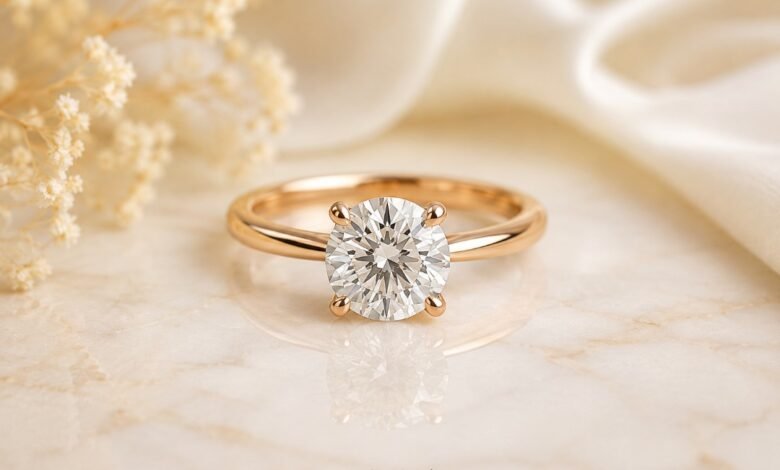
Diamond carat size is the number everyone asks about first and understands last. A one-carat diamond sounds modest to one person, perfect to another, and tiny to someone who has been scrolling engagement ring videos at midnight with no adult supervision.
The truth is more useful: carat is weight, not size. It tells you how heavy the diamond is, not exactly how large it will look on the hand. Shape, measurements, cut quality, depth, setting style, finger size, band width, and even metal color can change how big a diamond appears.
This is why two diamonds with the same carat weight can create completely different rings. One looks bright, balanced, and expensive. The other looks heavy in the wrong places or oddly small from above. A good engagement ring is not about winning the carat number. It is about choosing a diamond that looks right on the hand and still leaves room in the budget for beauty, structure, and daily wear.
So let’s treat carat size like a fitting session, not a trophy contest.
The Carat Reality Before You Start Chasing Bigger
The best diamond carat size for an engagement ring is not the largest one you can afford. It is the size that looks balanced on the hand, works with the diamond shape, keeps cut quality strong, fits the setting securely, and leaves enough budget for craftsmanship. For many buyers, 1 to 1.5 carats feels classic and wearable. Around 2 carats feels more statement. Above that, proportion, setting strength, and lifestyle become even more important. A smaller well-cut diamond can look better than a larger diamond with weak proportions.
Carat Is Weight, Not a Beauty Measurement
Carat measures diamond weight. It does not directly measure how large the diamond looks from above. That detail matters because engagement rings are seen face-up on the hand, not weighed in conversation every morning.
A diamond can carry weight in its depth. That means it may weigh more without looking much larger from the top. Another diamond may have better spread, meaning its measurements make it appear larger for its carat weight. This is where lazy shopping gets expensive.
The hidden carat mistake
Paying for extra weight that sits deep in the diamond can be disappointing. The receipt says bigger. The hand does not agree.
Measurements matter. A diamond’s length, width, and depth tell you more about visible size than carat weight alone. For round diamonds, diameter is especially useful. For ovals, emerald cuts, pears, radiants, and cushions, length-to-width ratio changes the entire impression.
This is why the smartest buyers compare carat weight with actual dimensions. They do not ask only, “How many carats?” They ask, “How does it face up?” That is the grown-up version of diamond shopping.
What Popular Diamond Sizes Actually Feel Like
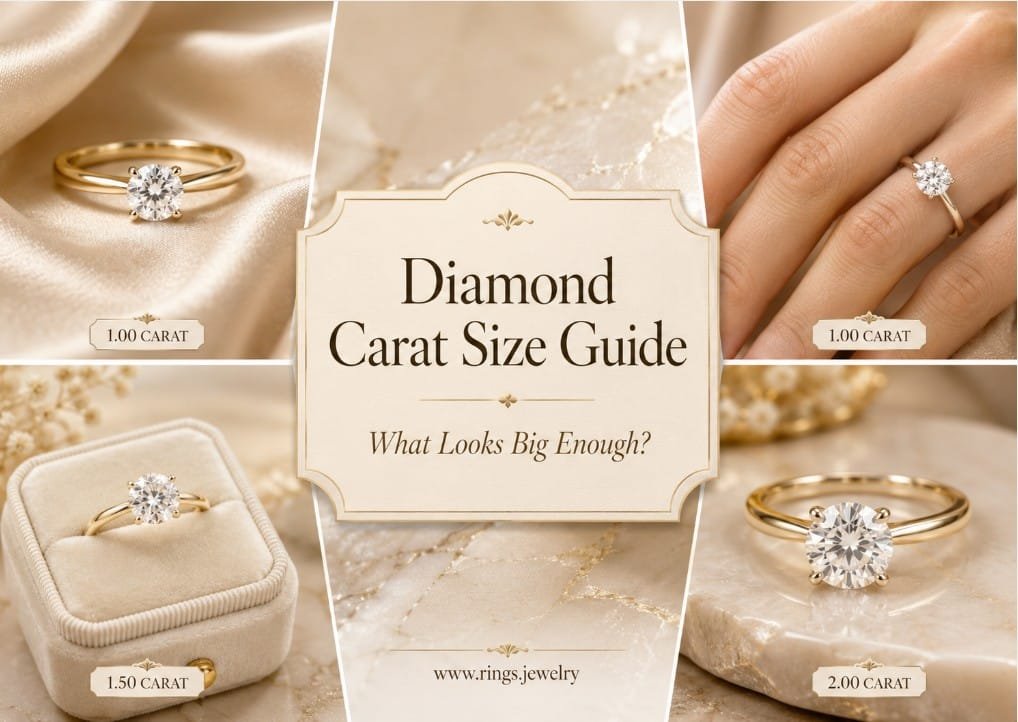
There is no universal perfect size. A 1-carat diamond can look elegant and classic. A 1.5-carat diamond can feel generous without becoming dramatic. A 2-carat diamond often becomes a clear statement. A 3-carat diamond can be breathtaking, but it also asks for better design discipline.
The number alone does not tell you whether the ring will feel refined. Some diamonds look smaller than expected because of poor spread. Some look larger because of elongated shape or smart setting design. Some look too large for the wearer’s taste, which is a problem nobody talks about until the ring feels awkward in real life.
0.75 carat
Can look delicate, elegant, and very wearable, especially with excellent cut or a thoughtful setting.
1 carat
A classic engagement ring size that can feel polished and timeless when the diamond is well cut.
1.5 carats
Often a strong middle ground: noticeably larger than 1 carat without always feeling oversized.
2 carats
A statement size for many hands. Cut, setting security, and finger proportion become more important.
Above 2 carats, the ring becomes more visible in every sense. More diamond means more attention, more need for balance, more setting responsibility, and more reason to check cut quality carefully. Bigger can be beautiful. Bigger can also be bossy.
Diamond Shape Can Make the Same Carat Look Bigger or Smaller
Shape is one of the biggest reasons carat size feels confusing. A 1.5-carat oval does not look like a 1.5-carat round. A 2-carat emerald cut does not feel like a 2-carat cushion. Each shape distributes weight differently.
Elongated shapes often appear larger because they cover more finger length. Ovals, pears, marquise, and elongated radiants can create a strong visual spread. Round diamonds are classic and bright, but they do not always look as large as elongated stones of the same carat weight. Cushions can vary dramatically depending on depth and faceting. Emerald cuts may look elegant and long, but they also need careful clarity and proportion review.
Oval
Often looks larger for its carat weight because the elongated outline covers more finger space.
Round brilliant
Classic, bright, and balanced, but visible size depends heavily on diameter and cut quality.
Emerald cut
Looks elegant and architectural, but carat size must be balanced with clarity and length-to-width ratio.
Cushion
Can look soft and romantic, though some cushions hold weight deeper and may face up smaller.
Do not choose a shape only because it “looks bigger.” Choose it because it suits the wearer’s style. A large oval on someone who loves clean symmetry may feel wrong. A smaller round brilliant with superb cut can look more expensive than a larger shape chosen only for spread.
If shape is still undecided, start with our engagement ring buying guide to compare diamond shape, setting, metal, budget, and daily wear as one complete decision.
Finger Size Changes the Whole Carat Conversation
A diamond does not float in a display case forever. It lives on a hand. That hand has finger length, width, nail style, skin tone, movement, and a real daily life attached to it.
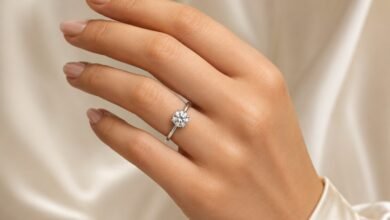
The same carat size can look very different on different fingers. A 1.5-carat diamond may look bold on a smaller hand and understated on a larger hand. A 2-carat diamond may look elegant on long fingers and overwhelming on someone who prefers delicate jewelry.
The mirror test
Ask whether the diamond looks like it belongs to the hand or like it is trying to win an argument. A ring should feel intentional, not like the center stone arrived before the design team.
Personal style matters too. Some people love a statement ring. Some want something quiet and refined. Some wear bold jewelry every day, so a larger diamond feels natural. Others rarely wear jewelry and may feel more comfortable with a smaller, lower-profile, practical design.
This is where photos can mislead buyers. Social media close-ups make every ring look enormous because the camera is inches away. In real life, proportion is calmer. Look at full-hand photos when possible, not just dramatic diamond close-ups.
Cut Quality Can Make a Diamond Look Bigger, Brighter, and More Expensive
A well-cut diamond can look more impressive than a heavier diamond with poor proportions. This is not jewelry poetry. It is what happens when light returns properly and the diamond has good face-up presence.
Brightness makes size feel stronger. A dull diamond may technically be large, but if it does not return light well, the eye does not celebrate it. A lively diamond catches attention because it moves with sparkle, contrast, and fire.
Large but dull vs smaller but alive
If the choice is between a larger diamond with weak cut and a slightly smaller diamond with excellent cut, the better-cut stone often creates the more luxurious ring. Carat weight impresses on paper. Light performance impresses on the hand.
This matters in every price range. It matters for natural diamonds, where every size jump can be expensive. It matters for lab-grown diamonds, where size becomes tempting fast. In both cases, do not let carat weight bully cut quality.
For a deeper breakdown of why sparkle and proportions matter more than the number on the scale, read our guide to diamond cut quality for engagement rings.
The Setting Can Make a Diamond Feel Larger — or Just Louder
Setting style changes perceived size. A halo can make a center diamond look larger. A thin band can make the diamond appear more prominent. A bezel can create a clean outline. A cathedral setting can lift the stone visually. A hidden halo can add sparkle from the side without changing the top view much.
But setting tricks should not be used as apologies for a poor diamond. A halo around a dull center stone can look busy rather than luxurious. A very thin band under a large diamond can look delicate in photos and nervous in real life. A high setting may show off the stone, but it may also snag more often.
Halo setting
Can increase visual presence, but the proportions must be elegant rather than crowded.
Thin band
Makes the diamond look larger by contrast, but the shank still needs enough strength.
Bezel setting
Frames the diamond with a smooth outline and adds protection, though it changes the visual edge.
For larger carat sizes, setting security becomes more serious. The prongs, basket, shoulders, and band must all support the stone. Bigger diamonds create more leverage and more visual weight. They deserve structure, not wishful thinking.
If you are comparing exposed sparkle with protective design, our article on prong and bezel setting choices can help you decide how much openness or security makes sense.
The Budget Question: Where Carat Size Should Sit in the Priority List
Carat size is usually the most visible budget lever. Increase size, increase cost. But the smartest engagement ring budget is not built around size alone.
A good diamond budget balances cut, carat, color, clarity, certification, metal, setting construction, and future wedding band planning. If carat eats the whole budget, something else may suffer. That “something else” is often the part that keeps the ring beautiful and wearable for years.
Spend more on carat when…
- The diamond already has strong cut quality.
- The setting is secure and proportional.
- The wearer genuinely wants a larger look.
- The budget still protects craftsmanship.
- The shape and measurements give good visible spread.
Redirect budget away from carat when…
The larger stone forces you to accept weak cut, visible inclusions, awkward proportions, a fragile band, or a setting that feels underbuilt. A slightly smaller diamond in a better ring is often the more expensive-looking choice.
Clarity and color also interact with size. Larger diamonds may show warmth and inclusions more easily, so you may need to spend more carefully in those categories. If you are balancing the full 4Cs, our guide to diamond clarity grade for engagement rings explains when eye-clean is enough and when higher clarity matters.
Lab-Grown vs Natural: Carat Size Changes the Strategy
Lab-grown diamonds have changed the carat conversation. A size that once felt financially impossible may now fit the budget. That can be exciting, and sometimes it is genuinely smart.
But easier access to size creates a new problem: buyers may go bigger than the design, hand, or lifestyle can handle. A large lab-grown diamond still needs excellent cut, proper certification, secure setting, and realistic value expectations. It is not automatically a better ring because the carat number jumped.
Natural diamonds make the carat decision more expensive. Buyers may choose a smaller natural stone because rarity, origin, and traditional value matter more than size. That can also be a beautiful choice when the stone is well cut and the design is thoughtful.
The origin-size trade-off
Lab-grown often wins when the buyer wants more visible diamond for the budget. Natural often wins when origin, rarity, and heirloom meaning matter more than maximum size. Neither answer is universal. The ring should match the buyer’s values, not just the carat chart.
If you are still deciding between origin and size, our guide to lab-grown and natural diamond engagement rings compares price, value, symbolism, certification, and long-term expectations.
Five Carat-Size Decisions That Happen in Real Life
Carat size becomes clearer when you stop treating it like a scoreboard and imagine the actual wearer.
The classic solitaire buyer
Around 1 to 1.5 carats can feel beautifully balanced in a clean solitaire, especially if the diamond has excellent cut. In a minimal setting, the center stone needs to perform because there is nowhere to hide.
The buyer who wants “big but not flashy”
Shape matters here. An oval or elongated cushion may give more visual presence without feeling too loud. A low profile setting can also make a larger stone feel more wearable.
The buyer choosing a 2-carat diamond
This is often where the ring becomes a statement. Check cut, measurements, setting height, prong strength, band width, and finger proportion before falling in love with the number.
The buyer with a strict budget
Do not force a carat milestone if it weakens the ring. A 0.90-carat or 1.40-carat diamond can sometimes offer better value than chasing the exact 1.00 or 1.50 label.
The buyer who secretly wants a delicate ring
Not everyone wants a large center stone. A smaller diamond with exquisite cut, elegant setting, and perfect proportions can feel more luxurious than a diamond that overwhelms the wearer’s style.
The Near-Magic Sizes: Why 0.90, 1.40, and 1.90 Carats Can Be Smart
Diamond pricing often jumps around popular milestone weights. One carat. One and a half. Two carats. These numbers are emotionally powerful, which means they can also become expensive.
Sometimes choosing just below a milestone gives you a diamond that looks almost the same visually but costs less. A well-cut 0.90-carat diamond may look very close to a 1-carat diamond on the hand. A 1.40-carat diamond may satisfy the eye beautifully without reaching for the 1.50 label. A 1.90-carat diamond can feel very close to 2 carats if the measurements and cut are strong.
The quiet value move
Shopping just below a milestone can be smart if the diamond faces up well and the savings improve cut quality, setting craftsmanship, or the wedding band budget. The goal is not to trick anyone. The goal is to avoid paying for a label your eye barely sees.
This strategy only works if the diamond is good. A poorly cut almost-2-carat stone is not a clever purchase. It is just a cheaper disappointment. Always compare measurements, light performance, and visual balance.
Comfort and Daily Wear: The Part Carat Charts Ignore
Large diamonds are beautiful, but they are not weightless ideas. They sit above the finger, interact with gloves, pockets, sweaters, bags, towels, car doors, office desks, and the entire choreography of daily life.
A larger stone may need a higher or more structured setting, depending on shape and design. It may spin more if the band is too thin. It may catch more if the setting is tall. It may feel too showy for someone who works with their hands or prefers understated jewelry.
The daily-wear check
- Will the setting catch on clothing?
- Does the ring feel top-heavy?
- Is the band strong enough for the center stone?
- Can the wearer comfortably wear it every day?
- Will a wedding band sit safely beside it?
- Does the diamond size match the wearer’s actual style?
Do not buy a diamond for a photograph if the wearer has to live with it. The best carat size is one that feels exciting on day one and comfortable on day one thousand.
What to Ask Before Choosing Diamond Carat Size
Good carat decisions come from better questions. Not “What size should I get?” but “What size works for this diamond, this setting, this hand, and this life?”
Ask these before you commit
- What are the diamond’s actual measurements?
- Does it face up well for its carat weight?
- Is the cut quality strong enough to make the size worthwhile?
- Does the shape make the diamond look larger or smaller?
- Is the setting strong enough for this center stone?
- Does the ring look balanced on the wearer’s hand?
- Would a slightly smaller diamond allow better cut, clarity, or craftsmanship?
- Will this size still feel comfortable for daily wear?
A jeweler who only talks about carat weight is not giving you the full picture. A better jeweler talks about spread, proportions, light, security, comfort, and whether the ring actually suits the person.
The Final Carat Check Before You Buy
Diamond carat size matters. It affects presence, price, proportion, and the emotional feeling of the ring. But it should not be allowed to make every other decision smaller.
A beautiful engagement ring is not built from carat weight alone. It comes from a diamond with strong cut, attractive measurements, thoughtful color and clarity choices, a secure setting, and a size that looks natural on the wearer’s hand.
Choose the carat size that gives the ring presence without stealing its judgment. Bigger can be wonderful. Balanced is better.
FAQ
What is diamond carat size?
Diamond carat measures weight, not exact visible size. Two diamonds with the same carat weight can look different depending on shape, measurements, depth, and cut quality.
What carat size is best for an engagement ring?
There is no single best size. Many buyers like 1 to 1.5 carats for a classic look, while 2 carats and above feel more statement. The right size depends on hand proportion, budget, diamond shape, setting, and personal style.
Does a 1-carat diamond look big?
A 1-carat diamond can look classic, elegant, and balanced, especially with excellent cut quality and a flattering setting. It may look larger or smaller depending on finger size and diamond shape.
Is 2 carats too big for an engagement ring?
Not necessarily. A 2-carat diamond can look beautiful, but it needs good proportions, a secure setting, and a design that suits the wearer’s hand and lifestyle.
Which diamond shape looks biggest for its carat weight?
Oval, pear, marquise, and some elongated radiant or emerald cuts often look larger because they cover more finger length. Round diamonds may look slightly smaller for the same carat weight but can offer excellent sparkle.
Should I choose carat or cut first?
Cut quality should usually come first. A smaller well-cut diamond can look brighter and more luxurious than a larger diamond with weak proportions or poor light performance.
Why do two diamonds with the same carat look different sizes?
Because carat measures weight. One diamond may carry more weight in depth, while another may have better face-up measurements. Shape and cut also affect visible size.
Is a lab-grown diamond better if I want a larger carat size?
Lab-grown diamonds often allow buyers to choose a larger diamond within the same budget. Still, size should not replace cut quality, certification, setting security, or realistic value expectations.
Can a setting make a diamond look bigger?
Yes. Halo settings, thin bands, elongated shapes, and certain prong styles can increase visual presence. The setting should still be secure and proportional.
Is it smart to buy just under a carat milestone?
Often, yes. A 0.90, 1.40, or 1.90 carat diamond can sometimes look very close to the next milestone while costing less, especially if the cut and measurements are strong.