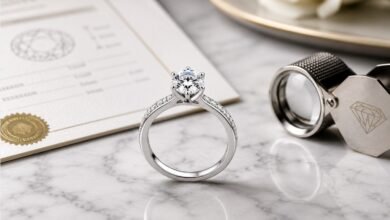
Natural Diamond Engagement Rings: When They Still Make Sense
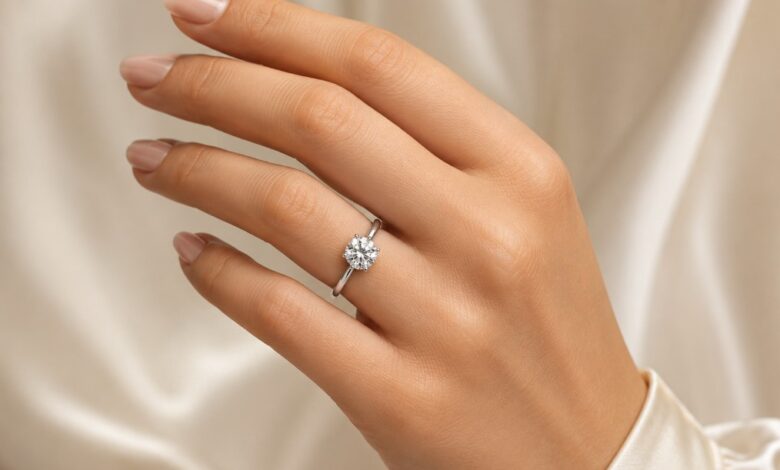
Natural diamond engagement rings still make sense. Not for everyone, not at every budget, and not because “natural” automatically means better. But when the buyer values geological rarity, traditional symbolism, long-term recognition, and the feeling of owning a stone formed by nature rather than technology, a natural diamond can still be the right choice.
The mistake is treating natural diamonds like the only serious option. The other mistake is pretending they no longer matter. Jewelry is more interesting than that.
A natural diamond engagement ring is not just a sparkle decision. It is a value decision, a story decision, a sourcing decision, and sometimes an heirloom decision. The stone’s origin is part of what the buyer is paying for. The question is whether that origin matters enough to you — and whether the specific diamond is good enough to deserve the premium.
The Honest Salon Answer: Natural Diamonds Still Have a Place
Natural diamond engagement rings still make sense for buyers who value geological rarity, traditional engagement symbolism, established market recognition, and heirloom meaning. A natural diamond is not automatically more beautiful than a lab-grown diamond; beauty still depends on cut, proportions, color, clarity, and setting quality. The reason to choose natural is not simply sparkle. It is origin, rarity, emotional permanence, and long-term recognition. If those things matter to you, a natural diamond can be worth the premium. If your priority is maximum size for budget, lab-grown may be the smarter choice.
What “Natural Diamond” Actually Means
A natural diamond formed deep within the earth under intense heat and pressure over a very long period of time. It was not created in a laboratory. It was mined, sorted, cut, polished, graded, and eventually set into jewelry.
That origin is the entire point.
When someone chooses a natural diamond engagement ring, they are often choosing more than a clear, faceted stone. They are choosing the idea of a diamond that came from nature, existed before the relationship, before the proposal, before the person wearing it ever saw it. There is romance in that for many people. There is also market value attached to rarity.
The natural diamond value stack
- Natural origin: the diamond formed underground through geological processes.
- Finite rarity: it is not produced on demand in the same way lab-grown diamonds can be.
- Traditional recognition: natural diamonds have a long-established engagement ring market.
- Heirloom appeal: many buyers value the idea of passing down a naturally formed stone.
None of this means every natural diamond is automatically desirable. Some are poorly cut. Some are overpriced. Some are not well matched to the setting. Some come with vague sales language instead of useful documentation. Natural origin gives the stone a story. It does not excuse a bad purchase.
Why People Still Choose Natural Diamonds
People choose natural diamonds for reasons that are sometimes emotional, sometimes practical, and often a mix of both.
Some buyers want the traditional engagement ring experience. They like the continuity: generations of proposals, family rings, heirloom stones, old photographs, jewelry boxes with velvet interiors, and the feeling that a natural diamond belongs in that lineage.
Others care about rarity. A lab-grown diamond can be beautiful, but it does not carry the same finite natural origin. For some people, that difference is central. They want a stone that was found, not made.
The emotional reason is allowed
Not every jewelry decision has to be optimized like a spreadsheet. If natural origin feels more meaningful to the wearer, that matters. Engagement rings are daily objects, but they are also symbolic objects. The story behind the stone can be part of the beauty.
There is also the recognition factor. Natural diamonds have an established resale, appraisal, insurance, and luxury market language around them. That does not mean they are guaranteed investments. It means the market understands them in a way that is older and more settled.
In short: natural diamonds still make sense when the origin itself is part of the value.
A Natural Diamond Still Has to Be Beautiful
This sounds obvious. It is ignored constantly.
Natural diamonds can be breathtaking. They can also be sleepy, cloudy, badly cut, too deep, too shallow, visibly included, or poorly matched to the setting. “Natural” is not a sparkle grade.
Cut quality matters first. Especially with round brilliant diamonds, cut affects brightness, fire, scintillation, and overall life. For fancy shapes, the details change: oval diamonds need graceful shape and bow-tie control; emerald cuts need clean step reflections; pear and marquise shapes need careful symmetry and protected points; cushions and radiants need pleasing faceting.
Our first beauty check
We would rather see a slightly smaller natural diamond with excellent cut and balanced proportions than a larger natural diamond that looks dull. Size impresses first. Light performance keeps impressing every day.
Clarity and color should be judged with context. Some inclusions are hidden well. Some are obvious. Some color grades look warm and romantic in yellow gold but less crisp in white metal. A natural diamond should be chosen as part of a complete ring, not as a loose certificate number floating in the air.
If you are comparing natural with lab-grown because visual size matters, our guide to lab-grown and natural diamond engagement rings explains how appearance, origin, value, and budget differ.
Certification Is Not Glamorous. It Is Necessary.
A natural diamond engagement ring should come with serious documentation, especially when the center stone is a meaningful part of the budget. A grading report gives structure to the conversation. It records the diamond’s characteristics and helps the buyer understand what they are actually purchasing.
The report does not replace your eyes. It keeps the sales pitch honest.
What to review on a natural diamond report
- Carat weight: compare it with actual measurements and face-up appearance.
- Cut grade: especially important for round brilliant diamonds.
- Color grade: consider the metal color and setting style.
- Clarity grade: check whether inclusions are visible to the eye or hidden by placement.
- Measurements: these reveal whether the stone faces up well for its weight.
- Fluorescence: not always bad, but worth understanding.
- Laser inscription: helpful when matching a diamond to its report.
Do not buy a natural diamond engagement ring on romance alone. Romance is lovely. Paperwork is what protects the purchase after the champagne is gone.
Resale, Appraisals, and the Word “Investment”
Natural diamonds often have stronger resale recognition than lab-grown diamonds, but that does not mean a natural diamond engagement ring should be sold to you as a guaranteed investment.
Retail jewelry pricing includes many things beyond the loose stone: design, setting labor, brand, overhead, grading, craftsmanship, and margin. If you resell, you are usually entering a different market than the one you bought from.
The investment sentence to be careful with
A natural diamond may hold value better than a lab-grown diamond in many cases, but “better than” is not the same as “guaranteed profit.” Buy a natural diamond for rarity, meaning, beauty, and long-term recognition — not because someone made resale sound effortless.
Appraisals are useful for insurance, but an appraisal value is not always the same as resale value. Insurance replacement value, retail price, and what a buyer might pay secondhand are different conversations.
The healthiest way to think about a natural diamond engagement ring is this: it is a luxury purchase with emotional and material value. It may have stronger long-term recognition than lab-grown. It is still not a stock certificate with prongs.
Sourcing: Ask Better Questions Than “Is It Ethical?”
Ethical sourcing matters. It also deserves more than a decorative sentence.
Natural diamond sourcing can vary by supplier, region, traceability, and standards. Responsible sellers should be able to discuss where their diamonds come from, what documentation is available, and what policies guide their sourcing.
Do not accept foggy language if this matters to you. “Conflict-free” may be part of the answer, but it should not be the entire conversation. Ask about traceability. Ask about supplier standards. Ask what the jeweler can actually prove.
The sourcing question we like
“What can you tell me about this diamond’s origin and supply chain?” It is a better question than asking for a vague ethical promise. A confident seller should answer clearly, not dramatically.
Some buyers choose lab-grown because they prefer an above-ground origin. That is fair. Some choose natural from sellers with strong sourcing standards because natural origin matters to them. Also fair. The point is to ask for specifics and choose with eyes open.
The Buyers Who Are Usually Happiest With Natural Diamonds
Natural diamonds are not the automatic answer. They are the right answer for certain priorities.
The heirloom-minded buyer
This person wants a ring that feels connected to tradition, family, permanence, and future generations. Natural origin adds emotional weight to the story.
The rarity-focused buyer
They care that the diamond formed naturally and cannot simply be produced to order. For them, rarity is not marketing. It is the point.
The buyer who values established recognition
Natural diamonds have a longer history in appraisal, insurance, resale, and luxury jewelry markets. If long-term recognition matters, natural may feel more comfortable.
The buyer who should pause
If you want the largest possible diamond for the budget and natural origin does not feel emotionally important, you may be paying a premium for something you do not personally value.
The best natural diamond buyer is not pressured. They know why natural matters to them, and they choose a stone whose quality matches the meaning.
Natural Diamond Mistakes That Still Happen Every Day
Natural diamonds have prestige, but prestige does not prevent bad shopping decisions.
Buyers still overpay for weak cut. They still chase carat weight at the expense of sparkle. They still ignore inclusions because the ring looked good under jewelry store lighting. They still buy a natural diamond with a setting that is too delicate for daily wear. They still confuse appraisal value with resale value.
The natural diamond pre-purchase check
- Do not buy on carat weight alone. Measurements and cut quality matter.
- Check the diamond in different lighting. Showroom lights can be very flattering.
- Read the grading report carefully. Do not rely only on the sales description.
- Ask about sourcing. Especially if origin and ethics matter to you.
- Choose the setting with care. A valuable natural diamond deserves secure prongs, basket support, and a sensible band.
- Be realistic about resale. Stronger recognition does not equal guaranteed retail recovery.
If you are still choosing the overall ring structure — metal, setting, budget, diamond shape, and long-term wear — start with our complete engagement ring guide before committing to the stone alone.
How to Make a Natural Diamond Feel Modern
A natural diamond does not have to mean a predictable ring.
The freshest natural diamond engagement rings often combine tradition with restraint: a beautifully cut stone, a secure setting, a band that feels intentional, and a metal choice that gives the diamond character. Yellow gold can make a natural diamond feel warm and heirloom-like. Platinum can make it feel crisp and classic. A bezel can make it feel architectural. A low profile setting can make it feel practical and quietly luxurious.
Natural origin gives the ring history. Design gives it personality.
Design note
A smaller natural diamond in a beautifully proportioned setting can feel more expensive than a larger stone in a lazy design. Luxury is not only size. It is judgment.
That is the real modern approach: do not buy natural because you are supposed to. Buy natural because the stone is excellent, the design is thoughtful, and the story actually matters to the person wearing it.
The Final Salon Note: Natural Still Makes Sense When Meaning Meets Quality
Natural diamond engagement rings still make sense when the buyer values rarity, origin, tradition, and long-term recognition. They are not automatically better than lab-grown diamonds, and they are not the best choice for every budget. But when the natural story matters, it can make the ring feel more permanent and personal.
The important word is quality. A natural diamond should not get a free pass because it came from the earth. It still needs excellent cut, honest certification, thoughtful sourcing, secure setting work, and proportions that suit the wearer.
Choose natural if you want the origin, rarity, and heirloom feeling enough to pay for them. Choose it carefully. A natural diamond engagement ring should feel not only precious, but considered.
FAQ
Are natural diamond engagement rings still worth it?
Natural diamond engagement rings are still worth it for buyers who value geological rarity, traditional symbolism, established recognition, and heirloom meaning.
Are natural diamonds better than lab-grown diamonds?
Not automatically. Natural diamonds have rarity and origin value, while lab-grown diamonds often offer more size for the budget. Beauty depends on cut, proportions, color, clarity, and setting quality.
Why are natural diamonds more expensive?
Natural diamonds usually cost more because they are mined, finite, sorted, cut, graded, distributed, and valued through an established rarity-based market.
Do natural diamonds hold value better?
Natural diamonds generally have stronger resale recognition than lab-grown diamonds, but they should not be treated as guaranteed investments. Resale depends on quality, market conditions, documentation, and buyer demand.
What should I check before buying a natural diamond?
Check the grading report, cut quality, measurements, color, clarity, fluorescence, sourcing information, setting security, and how the diamond looks in different lighting.
Is a natural diamond more romantic?
For many people, yes. Natural diamonds carry the appeal of geological origin, rarity, tradition, and heirloom symbolism. For others, romance comes more from the design, proposal, and meaning of the ring.
Can a natural diamond look worse than a lab-grown diamond?
Yes. A poorly cut natural diamond can look dull, while a well-cut lab-grown diamond can look bright and lively. Origin does not replace cut quality.
Should I buy a smaller natural diamond or larger lab-grown diamond?
Choose the smaller natural diamond if origin and rarity matter more to you. Choose the larger lab-grown diamond if visual size and budget value matter more. There is no universal answer.
Do natural diamonds need certification?
Yes, especially for engagement rings with meaningful center stones. Certification helps confirm carat weight, cut details, color, clarity, measurements, and other important characteristics.
Are natural diamonds ethical?
They can be, but sourcing varies. Ask about traceability, supplier standards, and documentation rather than accepting vague ethical claims.