Are Lab-Grown Diamonds Worth It? A Jeweler’s Honest Guide
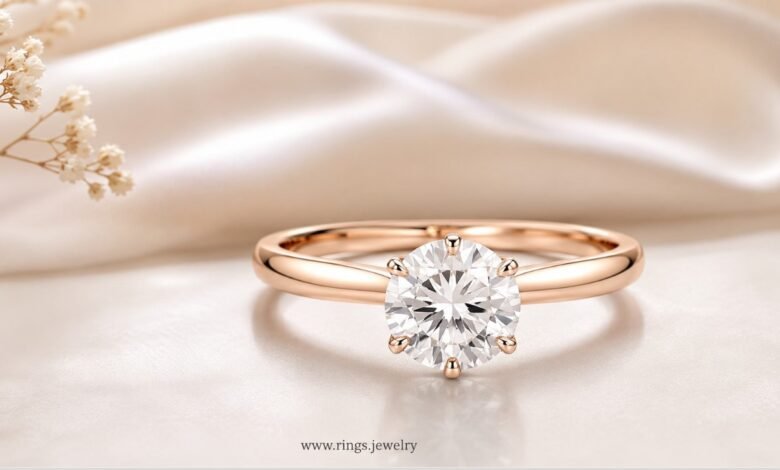
Lab-grown diamonds are worth it for many engagement ring buyers — but not for every reason the internet likes to shout about. They can be beautiful, real diamonds. They can give you a larger center stone for the same budget. They can make a ring feel more generous without forcing the buyer into financial gymnastics.
But “worth it” is not the same as “perfect.” A lab-grown diamond may be a brilliant purchase if you value appearance, size, clarity, and budget control. It may be less satisfying if you expect natural rarity, strong resale, or the traditional emotional pull of a diamond formed underground over geological time.
This guide is a value audit, not a sales pitch. We are going to look at where lab-grown diamonds make sense, where the marketing gets too shiny, what to check before buying, and how to choose one that still feels smart years after the proposal.
The Honest Answer: Worth It Depends on What You Want the Diamond to Do
Lab-grown diamonds are worth it if you want a real diamond look, strong sparkle, larger carat size, and better visual value for your budget. They are not the best choice if your priority is natural geological rarity or stronger long-term resale recognition. A well-cut lab-grown diamond can look just as beautiful in an engagement ring as a natural diamond of similar quality, but buyers should treat resale expectations realistically. The smartest lab-grown diamond purchase focuses on cut quality, certification, setting security, and total ring design — not just the biggest carat number.
First, Retire the “Fake Diamond” Drama
A lab-grown diamond is not cubic zirconia. It is not moissanite. It is not a sparkly understudy pretending to be the main character.
A lab-grown diamond is created in a controlled environment using technology that produces diamond crystal growth. In jewelry terms, it is a diamond: it can be cut, polished, graded, and set into an engagement ring. It has the same hardness category and optical appeal people associate with diamond jewelry.
The difference is origin. Natural diamonds form in the earth. Lab-grown diamonds are made by human technology. That origin difference affects price, rarity, market value, and emotional meaning. It does not mean a lab-grown diamond cannot be beautiful.
The clean definition
A lab-grown diamond is a real diamond created above ground rather than mined from natural deposits. The important buying question is not whether it is “real,” but whether its origin, price, certification, and long-term expectations fit the ring you want.
This matters because many buyers waste energy defending the wrong point. You do not need to apologize for choosing lab-grown. You do need to understand what you are buying. Those are different things.
Where Lab-Grown Diamonds Make the Most Financial Sense
The strongest argument for lab-grown diamonds is budget power.
For the same money, buyers can often choose a larger lab-grown diamond or improve color, clarity, and carat weight compared with a natural diamond. That can make a meaningful difference in the final engagement ring. A one-carat budget might stretch visually into something more substantial. A buyer who loves elongated ovals, emerald cuts, radiant cuts, or larger solitaires may suddenly have more room to choose.
That is the practical magic.
More diamond presence
Lab-grown diamonds often let buyers choose a larger or visually cleaner stone without increasing the total ring budget.
Room for a better ring
The savings can go toward a stronger setting, better metal, a wedding band plan, or a design that feels more finished.
But here is where buyers need discipline: do not spend every saved dollar on size. A huge diamond in a weak setting is not a victory. If the center stone is larger, the ring still needs proper prongs, a balanced shank, secure shoulders, and a metal choice that supports daily wear.
If you are still planning the full ring — diamond size, setting, metal, budget, and style — use our guide to choosing an engagement ring before committing to the center stone alone.
Beauty Check: A Lab Diamond Still Has to Earn Its Sparkle
Lab-grown does not automatically mean beautiful. Natural does not automatically mean beautiful either. A diamond’s origin is not a sparkle button.
Cut quality is the star. A well-cut lab-grown round brilliant can look bright, crisp, and lively. A poorly cut lab-grown diamond can look flat. The same is true for natural diamonds. For fancy shapes — oval, pear, emerald cut, radiant, cushion, marquise — proportions and faceting matter enormously.
What we would inspect before celebrating the price
We would look at cut, measurements, table, depth, symmetry, polish, bow-tie in elongated shapes, clarity placement, and how the stone performs in the setting. A good price does not excuse a lifeless diamond.
For engagement rings, visual beauty also depends on the setting. A lab-grown diamond can look expensive in a clean solitaire, bezel, cathedral, hidden halo, or three-stone design when the proportions are right. It can also look awkward if the stone is too large for the band, set too high, or paired with a setting that feels underbuilt.
This is where lab-grown diamonds can be especially fun: because the stone budget may be more flexible, buyers can choose a shape and size that feels intentional instead of settling for whatever carat weight barely fits the budget. Just do not let carat weight bully the whole design.
The Resale Reality: This Is Where the Champagne Gets Less Fizzy
Lab-grown diamonds should not be purchased with dreamy resale expectations. That is the plain truth.
Prices for lab-grown diamonds have changed as production has expanded, and resale values can be much lower than the original retail price. This does not make the diamond worthless emotionally or visually. It means the financial story is different from natural diamond rarity.
The value warning to take seriously
Buy a lab-grown diamond because you love the ring, the size, the appearance, and the budget logic. Do not buy it because someone suggests it will behave like a rare natural diamond in the resale market.
To be fair, most natural diamonds also do not resell for the full retail price. Retail includes grading, cutting, setting, business costs, and margin. But natural diamonds generally have a more established resale and trade market because their supply is tied to natural rarity.
The better way to think about lab-grown value is cost-per-wear and happiness-per-dollar. If the ring looks beautiful, fits the budget, and lets the buyer avoid debt or compromise, it can be very worth it — even if resale is not the main strength.
For a direct origin-by-origin comparison, the full guide to lab-grown and natural diamond engagement rings explains where each option wins and where expectations should stay realistic.
The Paper Trail: Do Not Buy a Mystery Diamond With a Nice Smile
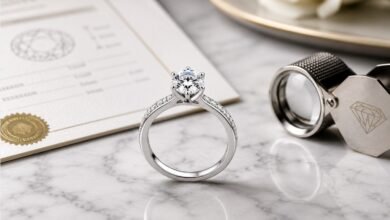
A lab-grown diamond should come with clear documentation. The grading report should identify it as lab-grown and list the diamond’s details: carat weight, color, clarity, measurements, cut information, polish, symmetry, and other relevant characteristics.
This is not boring paperwork. This is how you avoid buying purely on lighting, sales language, and the emotional fog of “it looks big.”
The lab diamond report audit
- Origin: the report should clearly state that the diamond is lab-grown.
- Cut information: especially important for round brilliant diamonds and sparkle performance.
- Measurements: these help you judge face-up size, not just carat weight.
- Color grade: compare how the stone looks in the metal you plan to choose.
- Clarity grade: check whether inclusions are visible or hidden by the setting.
- Growth method or notes: useful context, especially when comparing stones closely.
Certification does not make a diamond beautiful by itself. It gives you a language for comparison. The final choice should still involve your eyes, the setting design, and whether the stone feels right in the ring.
The Buyers Who Usually Love Lab-Grown Diamonds Most
Lab-grown diamonds are not for one type of person. They appeal to practical buyers, style-focused buyers, budget-conscious buyers, and people who would rather put more money into life than into geological romance.
The size lover
This buyer wants a diamond with presence. Lab-grown can make a larger center stone realistic without turning the engagement ring budget into a small national crisis.
The design-first buyer
This person cares about the whole ring: setting, metal, proportions, wedding band pairing, and daily wear. Lab-grown can free budget for a more thoughtful design instead of forcing every dollar into the center stone.
The practical romantic
They still want beauty and symbolism, but they do not need the diamond to be naturally mined for the ring to feel meaningful. For them, the proposal, the relationship, and the design carry the emotion.
The clarity-sensitive shopper
If someone wants a cleaner-looking emerald cut, radiant, or oval without jumping into a much higher budget, lab-grown can open more options.
The common thread is simple: these buyers care about what the ring looks like, how it feels, and whether the purchase makes sense. Lab-grown diamonds do very well in that room.
When a Lab-Grown Diamond May Not Feel Worth It
There are also buyers who may be happier with a natural diamond.
If natural origin is emotionally important, do not talk yourself out of it only because lab-grown is better priced. Some people genuinely want a stone formed by nature. That feeling is not silly. Jewelry has always carried story, and origin can be part of the story.
If resale recognition matters strongly, be careful. A lab-grown diamond may still be the right choice, but it should not be bought with the expectation that resale will behave like natural rarity.
Pause before buying lab-grown if…
- You want natural geological rarity above all.
- You are treating the diamond as a financial asset.
- You feel you will need to defend the choice forever.
- You are choosing only the largest stone, not the best-looking one.
- The setting is too weak for the larger diamond you can now afford.
That last point is the quiet trap. Lab-grown makes size more accessible, and size is intoxicating. But a larger stone needs proportion, support, and balance. The ring should not look like a diamond landed on a thread.
If you are choosing a larger center stone, compare the setting carefully. Our guide to prong and bezel setting security can help you think through exposure, protection, and daily wear.
What About Ethics?
Many buyers consider lab-grown diamonds because they want to avoid traditional diamond mining. That can be a meaningful reason. Lab-grown diamonds are created above ground, and for some couples, that feels more aligned with their values.
Still, ethics should be discussed with specifics, not slogans. Lab-grown production uses technology and energy. Natural diamond sourcing varies by supplier, region, traceability, and standards. Neither category should be reduced to a perfect angel and a villain in a cape.
The question to ask the seller
Ask what documentation is available, how the diamond’s origin is represented, what sustainability claims are actually supported, and whether the seller can explain the supply chain without vague luxury poetry.
If ethical sourcing matters to you, ask for proof. A beautiful answer is not the same as a documented one.
The Shopping Audit Before You Say Yes to the Stone
Before buying a lab-grown diamond engagement ring, slow the room down. Look past the size. Look past the discount. Look past the “this one is a deal” pressure.
Then ask the questions that actually protect the purchase.
The lab-grown diamond buying audit
- Is the diamond certified? Do not buy a vague stone with no clear report.
- Is the cut strong? Sparkle begins with cut quality, not origin.
- Are the measurements appealing? Face-up size matters as much as carat weight.
- Does the setting support the stone? Larger diamonds need proper prongs, basket, and band structure.
- Are resale expectations realistic? Buy for beauty and value, not fantasy returns.
- Does the ring still feel meaningful? The stone should match the wearer’s values, not only the budget.
- Would a smaller, better-cut diamond look better? Sometimes restraint is more elegant than size.
There is no award for buying the biggest possible diamond if the proportions are off, the setting feels weak, or the ring does not suit the hand. Lab-grown gives you room. Use that room with taste.
The Final Call: Lab-Grown Is Worth It When the Value Is Honest
Lab-grown diamonds are worth it when you want a beautiful diamond engagement ring with more size, better visual quality, and a smarter budget. They can be a genuinely excellent choice for couples who care about the look, the design, and the freedom to spend money wisely.
They are less ideal if you want natural rarity, stronger traditional resale recognition, or the emotional story of a mined diamond. That does not make lab-grown wrong. It simply means the value is different.
The best lab-grown diamond purchase is honest from the beginning: real diamond, real beauty, real budget advantage, realistic resale expectations. Choose the stone well, set it properly, and the ring can feel every bit as meaningful as the moment it is meant to mark.
FAQ
Are lab-grown diamonds worth it?
Lab-grown diamonds are worth it if you want a real diamond with strong visual beauty, larger size, and better value for your budget.
Are lab-grown diamonds real diamonds?
Yes. Lab-grown diamonds are real diamonds created in a controlled environment rather than formed naturally underground.
Do lab-grown diamonds lose value?
Lab-grown diamonds often have lower resale value than their original retail price, and prices can change as supply grows. Buy one for beauty and budget value, not as an investment.
Can people tell if a diamond is lab-grown?
Usually not by eye in normal wear. A grading report or professional testing is needed to confirm whether a diamond is lab-grown or natural.
Why are lab-grown diamonds cheaper?
They are created through technology rather than mined as rare natural stones. Because production and supply work differently, lab-grown diamonds usually cost less than natural diamonds with similar size and quality characteristics.
Do lab-grown diamonds sparkle like natural diamonds?
They can. Sparkle depends mostly on cut quality, proportions, polish, symmetry, and cleanliness. A well-cut lab-grown diamond can look bright and lively.
Should I buy a lab-grown diamond engagement ring?
Consider one if you want a larger diamond, better visual quality for the budget, and a ring that feels financially sensible. Choose natural if geological rarity and traditional value matter more to you.
Are lab-grown diamonds good for large engagement rings?
Yes, they can be excellent for larger engagement rings because they make bigger carat weights more accessible. Just make sure the ring setting is strong enough to support the stone.
What is the biggest downside of lab-grown diamonds?
The biggest downside is resale expectation. Lab-grown diamonds can be beautiful and real, but they should not be bought with the same value assumptions as rare natural diamonds.
What should I check before buying a lab-grown diamond?
Check the grading report, cut quality, measurements, color, clarity, seller transparency, return policy, and setting quality. Do not choose by carat size alone.