
Engagement Rings: The Complete Guide to Choosing the Right Ring
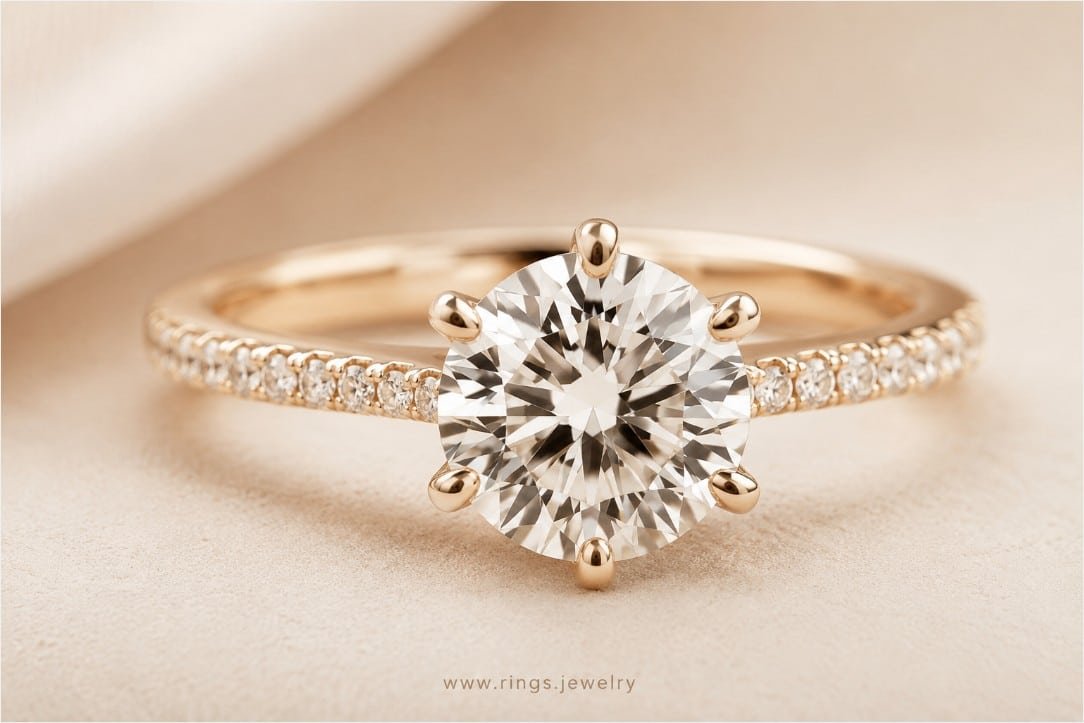
How to Choose an Engagement Ring That Works in Real Life
Engagement rings are easier to choose when you understand the whole ring, not just the diamond. The right ring is a mix of promise, design, daily comfort, stone quality, metal durability, setting structure, budget strategy, and long-term care.
Use this guide as the main map for choosing an engagement ring, then follow the detailed guides when you want to compare diamonds, settings, metals, shapes, lab-grown versus natural stones, or budget decisions more deeply.
How to choose an engagement ring: the short answer
To choose an engagement ring, start with the wearer’s personal style and daily routine, then choose the center stone, diamond shape, setting, metal, and budget in that order. Prioritize cut quality and good proportions over carat size alone, choose a setting that protects the stone well enough for everyday wear, and select a metal that matches both the look and the maintenance level the wearer will accept.
The best engagement ring is not automatically the largest or most expensive one. It is the ring that looks beautiful on the hand, feels comfortable in real life, is made with proper craftsmanship, and still feels meaningful after the proposal moment has passed.
The engagement ring decision map
Most people shop for engagement rings in the wrong order. They start with a photo, a carat weight, or a price filter. A better approach is to make the decisions in a sequence that protects both beauty and practicality.
Understand the wearer first
A person who wears delicate jewelry, works with their hands, and dislikes snagging will probably need a very different ring from someone who loves dramatic sparkle and statement pieces. The same diamond can feel perfect in one setting and completely wrong in another.
Decide what the ring should prioritize
Some buyers want maximum visible size. Some want a natural diamond with traditional rarity. Some want a lab-grown diamond with a larger look for the budget. Some care most about low maintenance. Some care about a romantic setting style, such as hidden halo or three-stone.
Know whether engagement is the right category
Not everyone is ready for a formal engagement yet. If you want a meaningful ring that marks commitment without setting a wedding timeline, start with our guide to promise rings.
Judge the whole ring, not just the stone
A ring is not just a center stone. It is stone, setting, prongs, profile, band thickness, metal, finish, wedding band fit, documents, service policy, and long-term care. A ring can look perfect online but be uncomfortable, too fragile, too high, difficult to insure, or awkward with a wedding band.
Jeweler’s note: A ring should be evaluated from the top, side, and underside. The top view sells the ring in photos, but the side view and construction often decide comfort, durability, cleaning, snagging, and how the wedding band will sit later.
Start with the structure
These guides explain how the ring is built: how the stone is held, how high it sits, and how the design performs in daily wear.
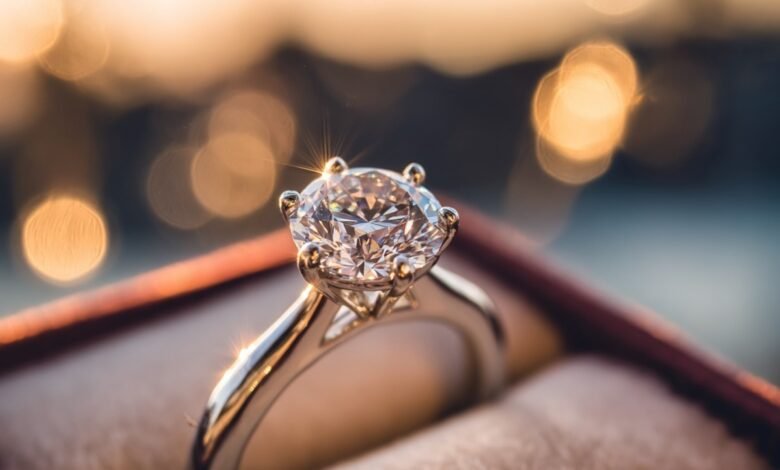
Engagement Ring Settings Explained
Understand solitaire, halo, pavé, bezel, cathedral, three-stone, and other major setting types.
Read the settings guide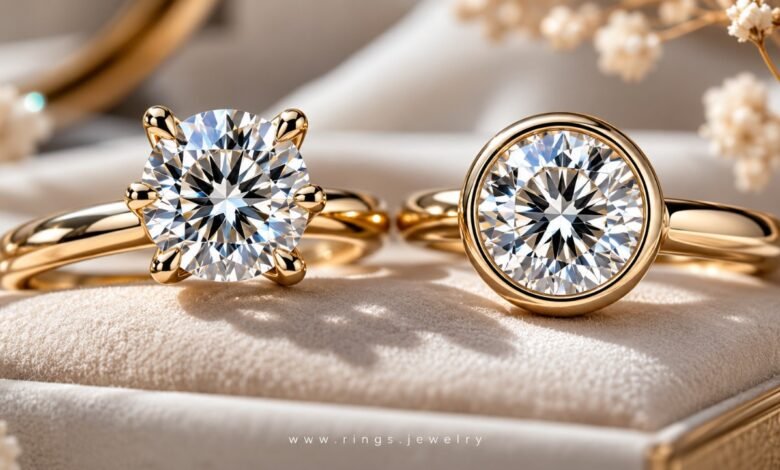
Prong vs Bezel Setting
Compare sparkle, protection, maintenance, and how secure each setting feels in real life.
Compare settings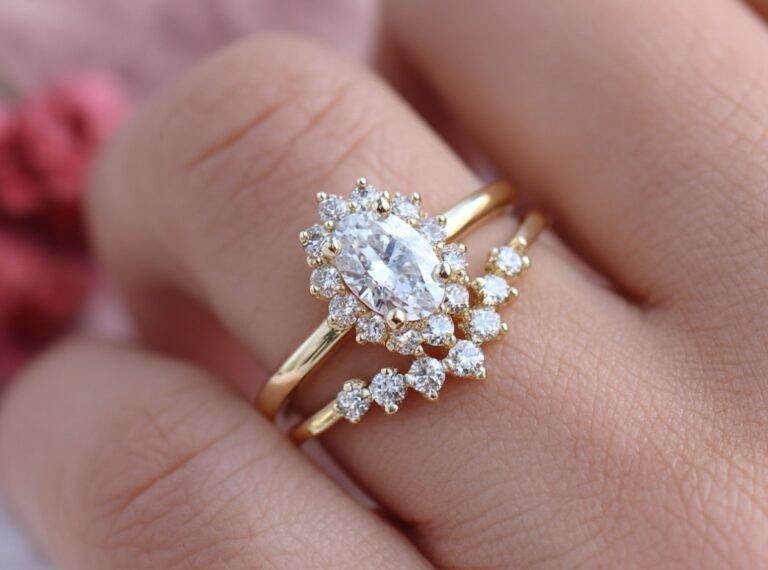
High Profile vs Low Profile
See how ring height changes comfort, snagging, visibility, and everyday wear.
Compare profilesWhat actually matters before buying an engagement ring
A strong engagement ring choice balances emotion with engineering. The ring should feel personal, but it also needs enough structure, comfort, and quality to survive the ordinary days after the proposal.
The first thing that matters is style. A ring should look like it belongs to the person wearing it. If the wearer loves quiet luxury, a clean solitaire, bezel, oval, or emerald cut may feel more natural than a very ornate halo. If they love romantic detail, a hidden halo, three-stone ring, vintage-inspired setting, or pavé band may feel more special.
The second thing is lifestyle. Engagement rings are daily jewelry, not red-carpet jewelry. A high-profile ring with exposed prongs can be beautiful, but it may not be ideal for someone who works with gloves, children, animals, textiles, or fitness equipment. A low-profile or bezel setting may feel calmer, smoother, and easier to live with.
The third thing is visible diamond quality. Many buyers obsess over certificate grades but forget the hand. Cut quality, shape, spread, contrast, and proportions influence what people actually see. A smaller diamond with excellent cut can look more alive than a larger diamond with weak proportions.
The fourth thing is purchase protection. A beautiful ring should come with clear documentation, a return or exchange policy you understand, realistic warranty terms, and enough information for insurance. These details are not romantic, but they protect the romantic part.
Diamond quality: what the 4Cs really mean on the hand
The 4Cs — cut, color, clarity, and carat — are useful, but they are not equal in every ring. The most intelligent diamond choice is not the diamond with the highest grade in every category. It is the diamond where the money is spent on the qualities that create visible beauty.
Cut: the diamond quality buyers should not treat casually
Cut affects brightness, fire, contrast, and the lively sparkle people expect from a diamond. A well-cut diamond returns light beautifully and can appear crisp, bright, and energetic. A poorly cut diamond can look dull even if it has an impressive carat weight or high color grade.
This is why cut quality often deserves priority over size. A diamond that is slightly smaller but better cut can look more expensive on the hand than a larger stone with weak performance. For fancy shapes like oval, emerald, pear, or cushion, buyers need to look carefully at proportions, symmetry, bow-tie effect, facet pattern, and overall face-up appearance.
Color: when whiteness matters and when it can be strategic
Diamond color measures how colorless a diamond appears. Colorless stones are rare and priced accordingly, but many engagement rings do not require the absolute top color grades to look beautiful. Metal choice, diamond shape, and personal taste all change how color is perceived.
White metals like platinum and white gold can make warmth more noticeable in some diamonds, especially in larger stones or step cuts. Yellow gold can make a slightly warmer diamond look harmonious rather than compromised.
Clarity: do not pay for invisibility unless you want to
Clarity refers to inclusions inside the diamond and blemishes on the surface. Many clarity characteristics are not visible without magnification. For most buyers, the practical goal is an eye-clean diamond, not necessarily a flawless diamond.
Carat: weight is not the same as visible size
Carat measures weight, not diameter and not visual spread. Two diamonds with the same carat weight can look different on the hand because of shape, depth, table size, and proportions. A deeper diamond may carry weight below the surface, while a better-proportioned stone may look larger face-up.
Understand the diamond
Use these detailed guides when you want to move beyond generic 4Cs advice and understand what affects visible beauty.
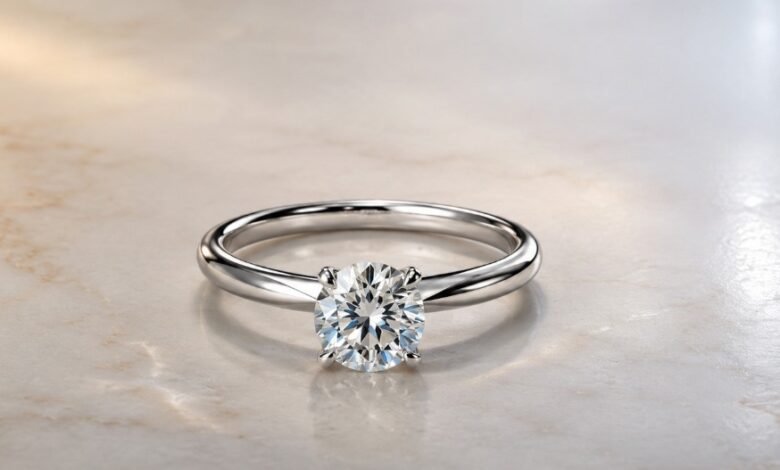
Diamond Cut Quality
Learn why cut often matters more than size when the goal is visible sparkle and beauty.
See cut advice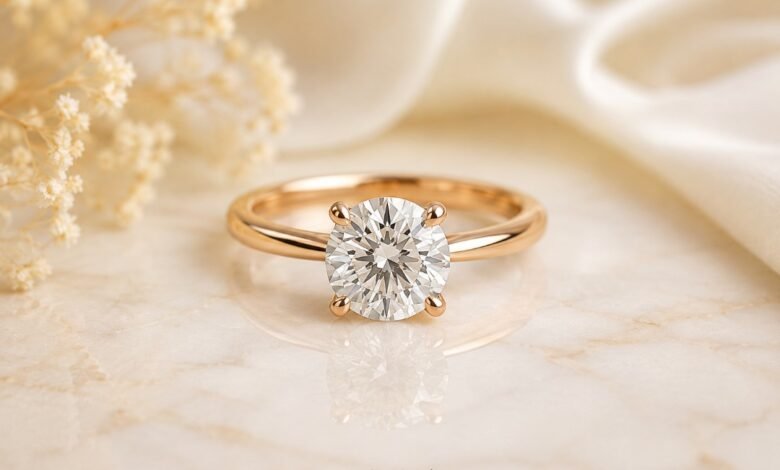
Diamond Carat Size
Understand visible size, spread, proportions, and the budget trade-offs behind carat weight.
Compare carat size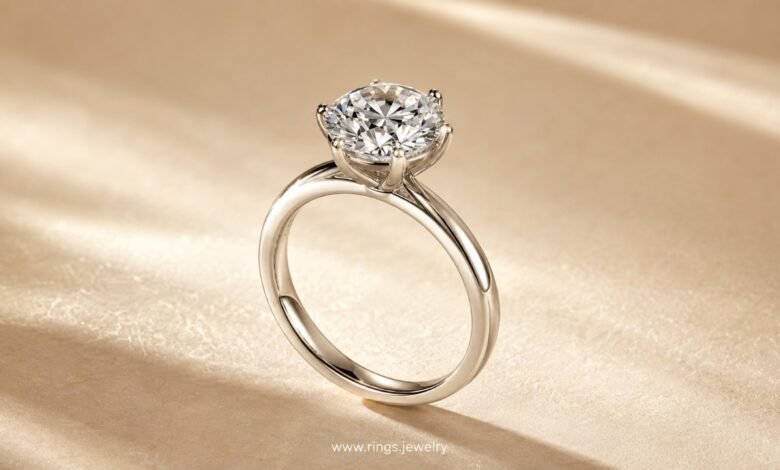
Diamond Table and Depth
See how proportions can change brightness, face-up size, and the overall look of the stone.
Learn proportions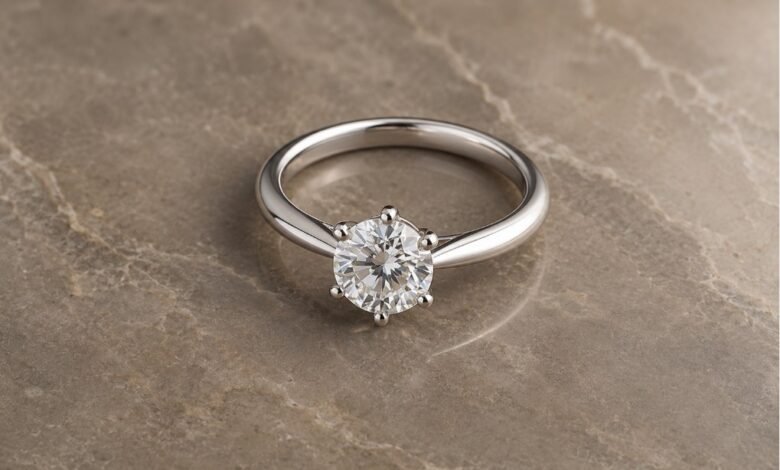
Diamond Polish and Symmetry
Understand finish, precision, and the small details that support a well-made diamond.
Read finish guide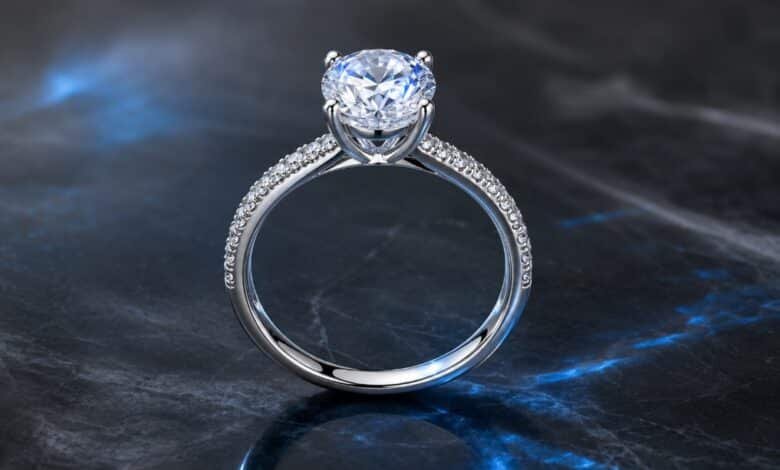
Diamond Fluorescence
Learn when fluorescence matters, when it can help, and when it deserves closer inspection.
Read fluorescence guide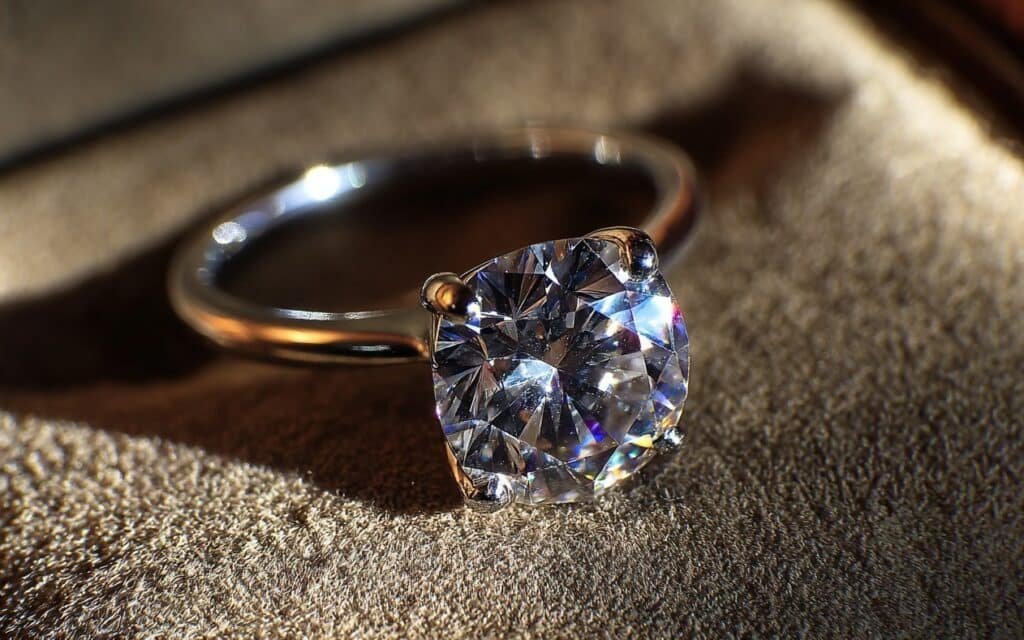
Best Diamond Shapes
Compare round, oval, emerald, cushion, pear, radiant, and other shapes by style and effect.
Compare shapesLab-grown vs natural diamond engagement rings
Lab-grown and natural diamonds can both be beautiful choices for engagement rings. The difference is not usually about whether one can sparkle and the other cannot. The difference is origin, price structure, rarity, emotional meaning, resale expectations, and what the buyer wants the ring to represent.
A natural diamond is formed by geological processes over immense time. Many buyers choose natural diamonds because they value rarity, tradition, and the feeling of a stone that came from the earth. A natural diamond can feel emotionally powerful for someone who wants the classic engagement ring story.
A lab-grown diamond is created in a controlled environment and can offer a larger or higher-graded stone for the same budget. For buyers who care most about visible size, modern technology, and budget efficiency, lab-grown diamonds can be very compelling.
The mistake is treating the choice as purely technical. It is also emotional. Some wearers will love the idea of a lab-grown diamond because it feels modern and practical. Others will always prefer natural origin. The right decision is the one that will still feel right to the person wearing the ring years later.
Buying insight: The wrong lab-grown diamond purchase usually comes from assuming bigger is automatically better. The wrong natural diamond purchase usually comes from overpaying for rarity while ignoring visible beauty. In both cases, cut, proportions, setting, and craftsmanship still matter.
Compare diamond origin and value
These guides help you understand the difference between natural origin, modern lab-grown value, visible size, and common buying assumptions.
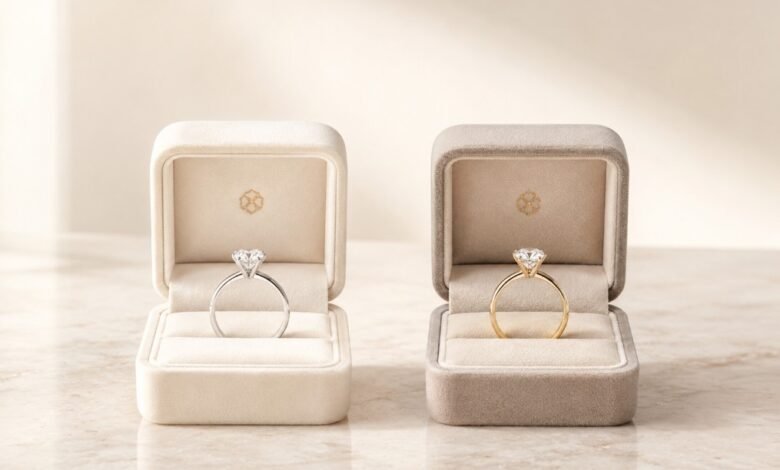
Lab-Grown vs Natural Diamond
Compare origin, price expectations, emotional meaning, and buying trade-offs.
Compare diamond types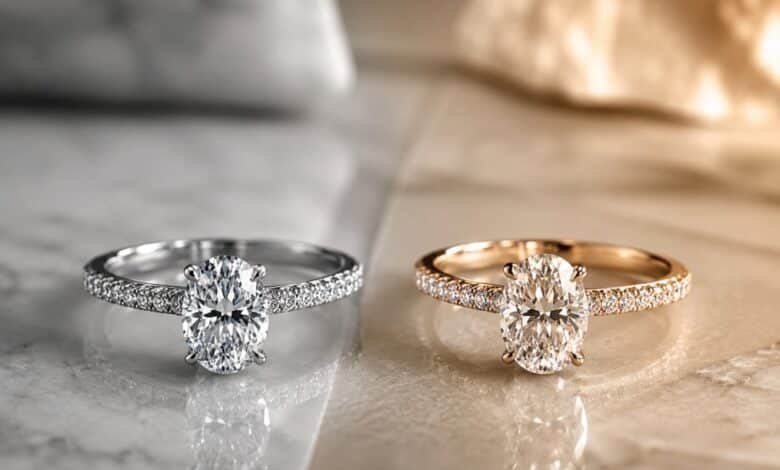
Are Lab-Grown Diamonds Worth It?
A direct look at value, beauty, expectations, and what buyers should understand first.
Check the value question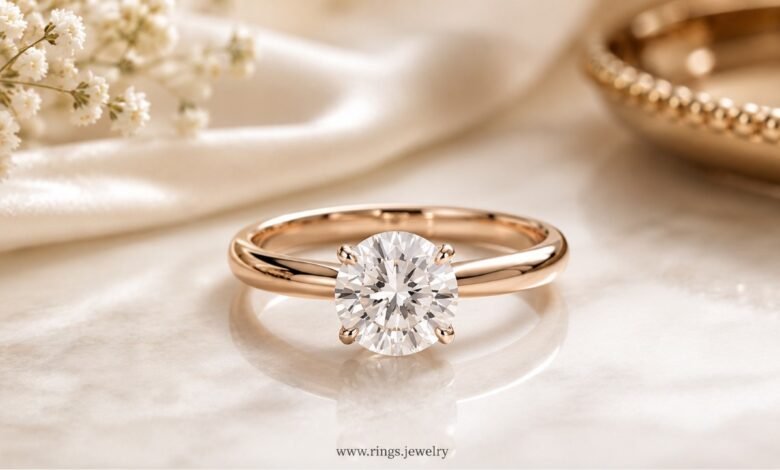
Lab-Grown Diamond Mistakes
Understand the assumptions that can make a lab-grown diamond purchase less successful.
Avoid common mistakes
Natural Diamond Engagement Rings
Explore why natural origin, rarity, and traditional symbolism still matter to many buyers.
Read natural diamond guideDiamond shapes: how the outline changes the whole ring
Diamond shape is not only a matter of taste. It affects sparkle pattern, perceived size, finger coverage, style language, color visibility, clarity visibility, and how the setting should be designed.
Round brilliant diamonds are classic because they are bright, balanced, and widely available. Oval diamonds are popular because they create length and finger coverage while still feeling soft and romantic. Emerald cuts feel clean, architectural, and quietly expensive, but they are less forgiving because their broad facets reveal clarity, color, and proportion issues more easily.
Cushion cuts feel romantic and soft. Pear shapes bring drama and grace. Marquise diamonds create strong length and presence. Radiant cuts combine a rectangular or square outline with brilliant-style sparkle. Princess cuts feel crisp and geometric. Asscher cuts are vintage, symmetrical, and precise.
Engagement ring settings: beauty, structure, and security
The setting controls how the stone is held, how high the ring sits, how much light reaches the diamond, how secure the ring feels, how easy it is to clean, and how the wedding band may fit later.
Solitaire settings
A solitaire engagement ring places the focus on one center stone. It is clean, timeless, and often the easiest style to wear with different wedding bands. Because there are fewer decorative details, the center stone’s shape, cut, and proportions become more important.
Prong settings
Prongs hold the diamond with small metal claws. They allow more of the stone to be visible and can create a bright, open look. The quality of the prongs matters: they should be even, smooth, and properly shaped, not bulky, sharp, or uneven.
Bezel settings
A bezel surrounds the stone with a rim of metal. This can create a sleek, modern look and provide excellent edge protection. Bezel engagement rings are often attractive for active wearers or anyone who dislikes catching prongs on clothing.
Halo and hidden halo settings
A halo surrounds the center stone with smaller diamonds, increasing sparkle and visual size. A hidden halo places the detail below the top view, adding side sparkle without creating the obvious outline of a traditional halo.
Three-stone and east-west settings
Three-stone engagement rings can symbolize past, present, and future while adding finger coverage and presence. East-west settings turn elongated shapes horizontally across the finger for a modern, distinctive look. In both cases, proportion and structure matter more than novelty.
Explore styles and shapes
Browse specific styles when you already know the visual direction or want to compare ring personalities.
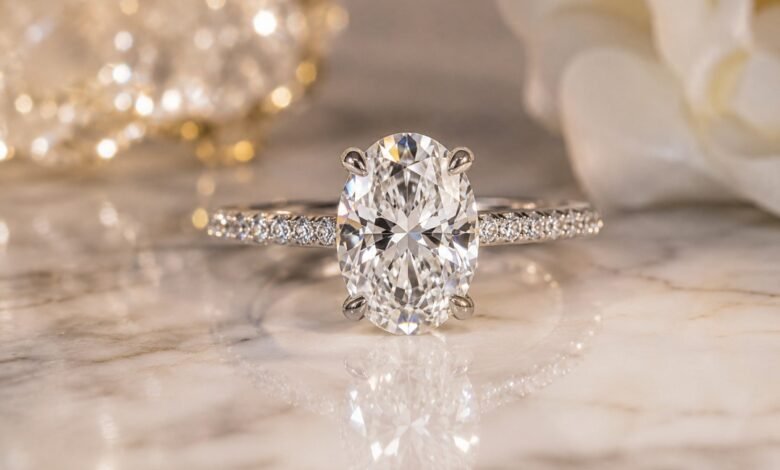
Oval Engagement Rings
Soft, elongated, flattering, and popular for buyers who want strong finger coverage.
Explore oval rings
Emerald Cut Engagement Rings
Clean, architectural, elegant, and less forgiving of weak clarity or poor proportions.
Explore emerald cuts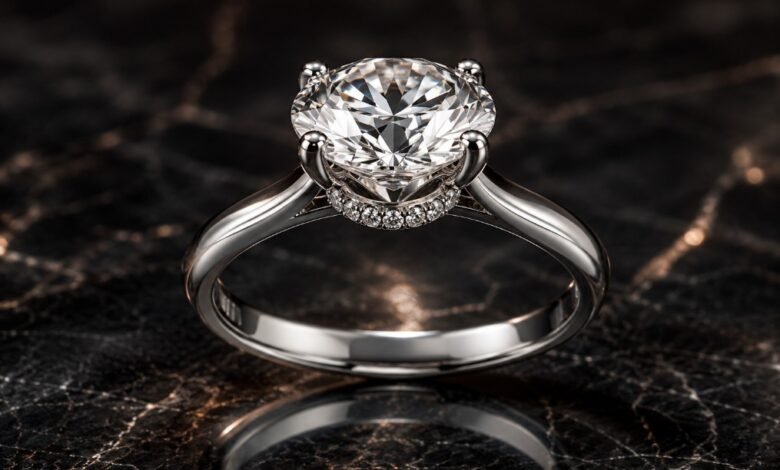
Hidden Halo Engagement Rings
Subtle side sparkle for buyers who want detail without a traditional full halo look.
See hidden halos
Three-Stone Engagement Rings
A classic design with more presence, side-stone balance, and symbolic meaning.
Explore three-stone rings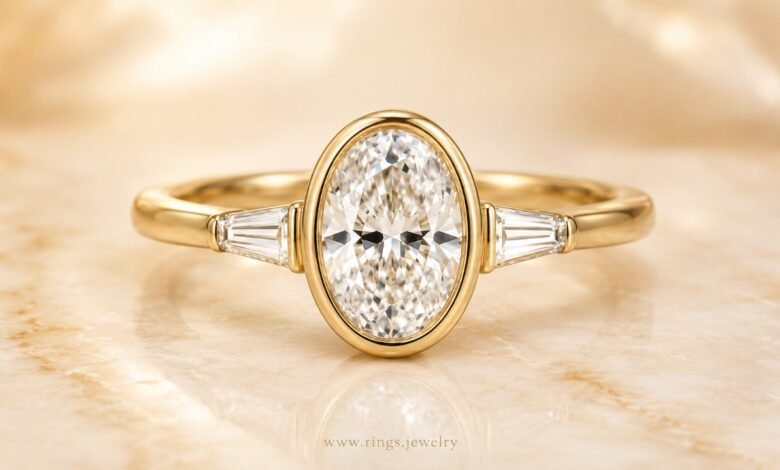
Bezel Engagement Rings
Smooth, protective, modern, and practical for people who prefer low-snag jewelry.
Explore bezel rings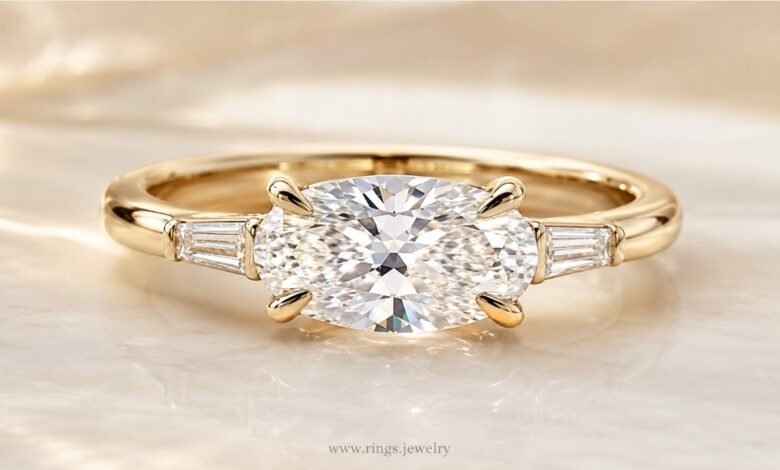
East-West Engagement Rings
A horizontal setting direction that feels modern, stylish, and quietly unexpected.
Explore east-west ringsComfort and daily wear: the part many buyers notice too late
A ring can be gorgeous and still be annoying to wear. Comfort is not a small detail; it is one of the main reasons a person either loves wearing the ring every day or quietly starts taking it off more often.
Profile height matters. A high-profile engagement ring lifts the center stone higher above the finger. This can create a dramatic look and may allow certain wedding bands to sit more neatly underneath, but it can also catch on clothing, gloves, hair, towels, and pockets. A low-profile engagement ring sits closer to the hand and often feels calmer for active wear.
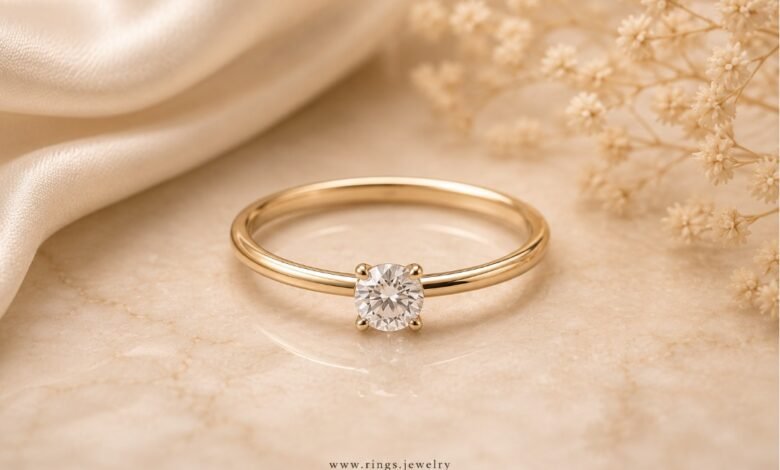
Band thickness matters too. Very thin bands are popular because they make the center stone look larger and create a delicate look. But a band that is too thin for the stone size or setting structure can be more vulnerable to bending or long-term wear. Delicate does not have to mean fragile, but it must be engineered properly.
Best for active lifestyles
Low-profile settings, bezel settings, smooth bands, secure prongs, and designs with fewer exposed edges are often easier for people who work with their hands or dislike snagging.
Best for maximum presence
Higher settings, elongated shapes, halos, hidden halos, three-stone designs, and thin-looking bands can create more visual impact, but they should still be built with proper support.
Check comfort and durability
These guides help buyers avoid beautiful rings that later feel too high, too delicate, or too impractical.
Thin Band Engagement Rings
Learn when a delicate band is elegant, when it is risky, and how to balance beauty with strength.
Read before choosing thin
Low Profile Engagement Rings
Explore practical lower-set designs for comfort, daily wear, and reduced snagging.
Explore low profile rings
12 Must-Know Tips
A practical checklist for buyers who want fewer mistakes and a better final choice.
Read buying tipsEngagement ring metals: platinum, white gold, yellow gold, and karat choice
Metal is not just the color around the diamond. It affects durability, maintenance, price, weight, skin sensitivity, stone appearance, and how the ring ages over time.
Platinum
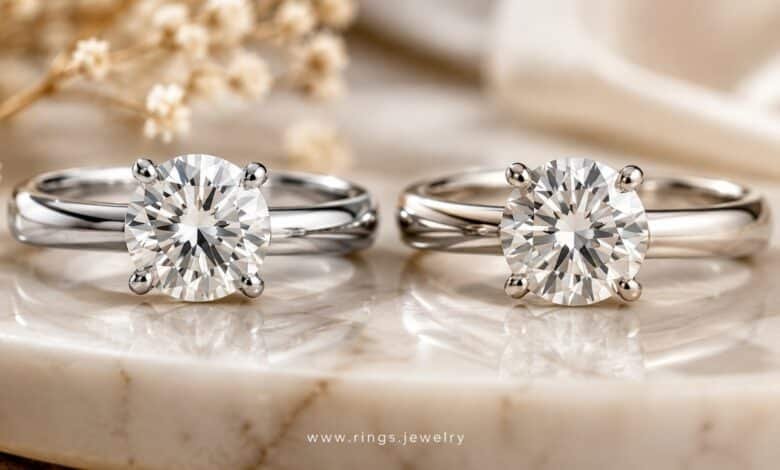
Platinum is a premium engagement ring metal known for its natural white color, density, and long-term durability. It does not need rhodium plating to look white. Over time, platinum develops a patina, which some people love because it gives the ring a soft, lived-in luxury.
White gold
White gold offers a bright white look and is often more affordable than platinum. Most white gold engagement rings are rhodium plated to create a crisp, reflective finish. This looks beautiful, but the plating can wear over time.
Yellow gold
Yellow gold brings warmth, tradition, and a luxurious tone to engagement rings. It works beautifully with vintage-inspired settings, modern solitaires, bezel designs, emerald cuts, oval diamonds, and colored gemstones.
14k vs 18k gold
14k gold contains more alloy metal and is usually more durable for daily wear. 18k gold contains more pure gold and has a richer color, but it can be softer. Neither is automatically better. The choice depends on the desired color, budget, lifestyle, and how much wear the ring will face.
Choose the right metal
Use these guides when comparing color, maintenance, price, durability, and long-term wear.
Platinum vs White Gold
Compare color, maintenance, cost, weight, and long-term wear before choosing a white metal.
Compare white metals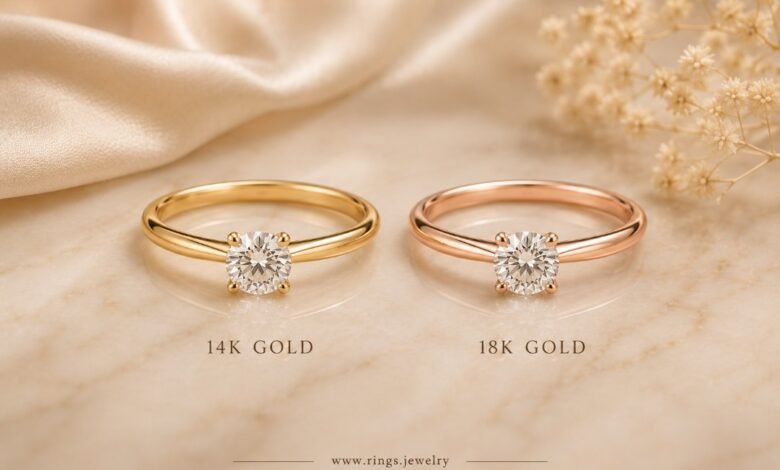
14k vs 18k Gold
Choose between durability, gold richness, price, and the kind of wear the ring will face.
Understand gold karat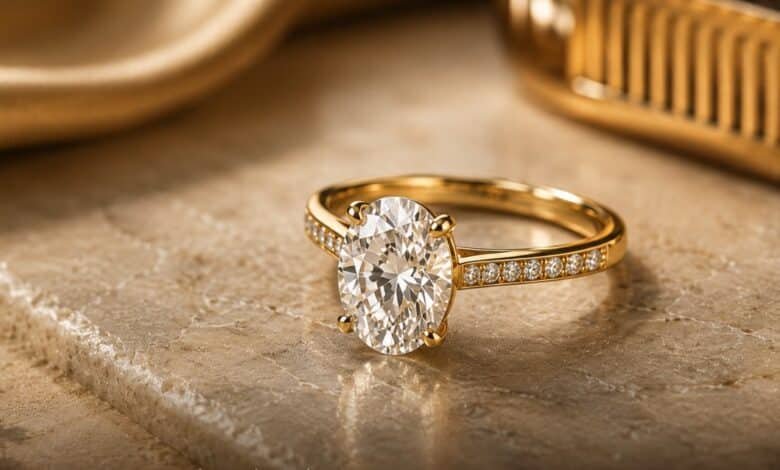
Yellow Gold Engagement Rings
See how warm gold changes the ring’s mood, diamond contrast, and overall style.
Explore yellow goldHow much should you spend on an engagement ring?
There is no universal amount every buyer should spend. A good engagement ring budget is the amount that lets you choose a beautiful, well-made ring without damaging the couple’s financial comfort.
The old salary rules are not useful enough. They do not know your income, wedding plans, savings goals, partner’s taste, city, debt, or priorities. A better strategy is to decide what the budget needs to accomplish.
If visible size matters most, a lab-grown diamond or elongated shape may help. If natural origin matters most, the buyer may choose a smaller natural diamond with better cut quality. If low maintenance matters, more budget may go toward platinum, a bezel setting, or stronger construction.
Do not spend everything on the center stone and leave no room for the setting. The setting is not packaging. It is the architecture of the ring. Weak prongs, poor finishing, a fragile band, or a badly balanced profile can make even a beautiful diamond less successful as jewelry.
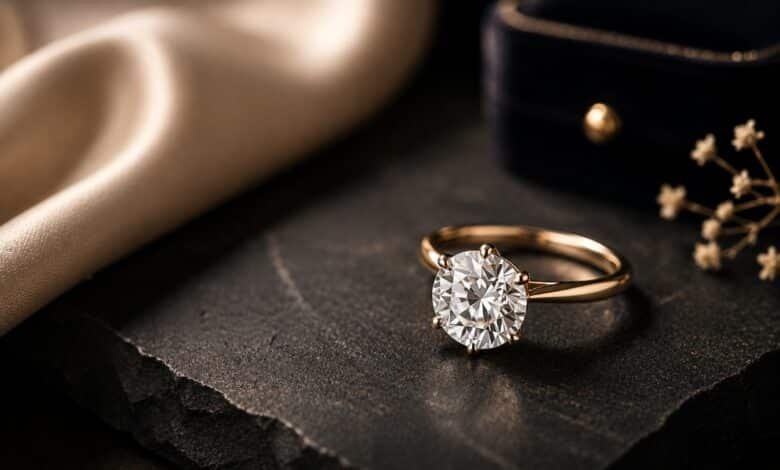
Smart budget rule: Spend where the wearer will see or feel the difference: diamond cut, shape, face-up size, secure setting, comfortable profile, durable metal, documentation, and careful finishing.
Budget and current choices
Use these before finalizing the purchase, especially if you are comparing price, value, size, and current design direction.
How Much to Spend
A realistic guide to budget, priorities, trade-offs, and what not to overpay for.
Plan the budget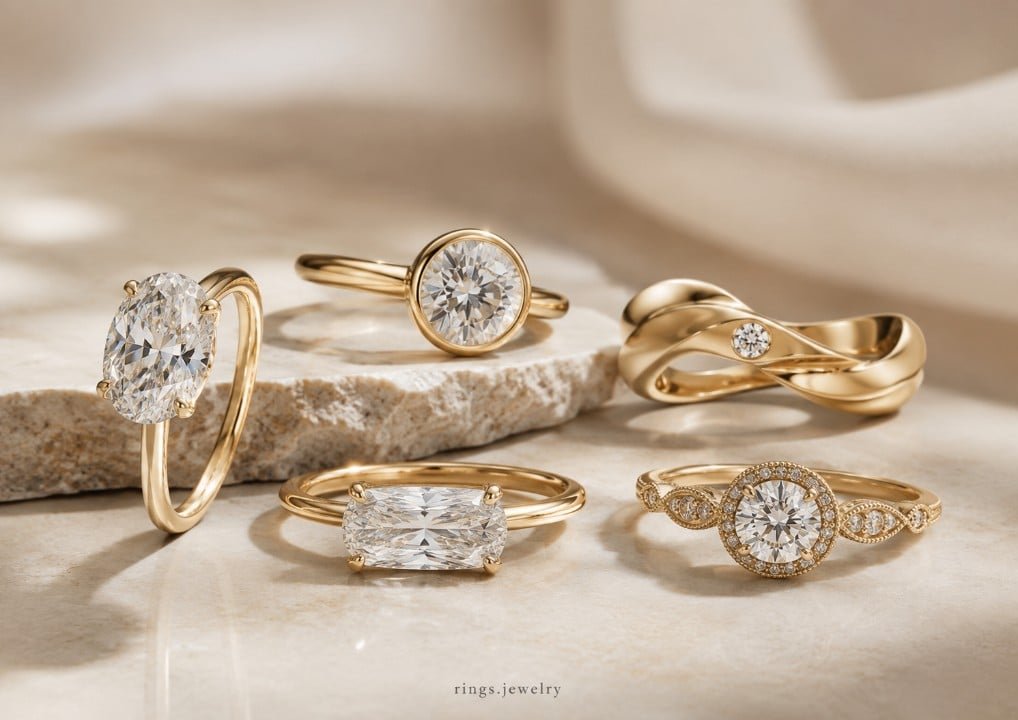
Engagement Ring Trends 2026
Trend-aware ideas for buyers who want something current without choosing a short-lived look.
See trends
Lab-Grown vs Natural Diamonds
A broader comparison for buyers deciding how origin, budget, and expectations should align.
Read comparisonDocuments, returns, warranty, and insurance: the unglamorous part that protects the ring
An engagement ring is emotional, but the purchase should still be practical. Before you treat the decision as final, understand the documents, return policy, warranty, service terms, appraisal, and insurance path.
Grading report
For a diamond engagement ring, a grading report explains the stone’s major characteristics, such as carat weight, color, clarity, measurements, and other identifying details. It is not the same as an appraisal, and it does not guarantee that the ring is the best choice for the wearer. It is a document that helps confirm what the stone is.
Appraisal
An appraisal is often used for insurance and replacement-value documentation. It should describe the ring, the stone, the setting, the metal, and the estimated value. Keep a copy of the appraisal, purchase receipt, grading report, photos, and any serial or inscription information in a safe place.
Return and exchange policy
Before buying, check the return window, exchange terms, restocking fees, resizing rules, and whether custom or engraved rings are final sale. A beautiful ring can still be the wrong size, wrong style, or wrong fit with a wedding band. Clear return terms protect you before emotion takes over.
Warranty and service terms
A warranty may cover some manufacturing defects, but it may not cover normal wear, accidental damage, lost stones, bent bands, or damage caused by another jeweler. Ask what is covered, what voids coverage, how inspections work, and whether routine service is required.
Insurance
Insurance can protect against loss, theft, or damage depending on the policy. Ask whether coverage is replacement-based or reimbursement-based, whether mysterious disappearance is covered, what deductible applies, and whether the ring is covered while traveling. Insurance is especially important for rings that would be financially painful to replace.
Custom engagement rings: when a one-of-a-kind design makes sense
A custom engagement ring can be the best choice when the buyer wants a ring that reflects a specific story, style, stone, or hand. But custom does not simply mean more complicated. The best custom rings are personal, balanced, and technically sound.
Custom design makes sense when you want to combine details that are hard to find in a standard ring: a particular diamond shape, a specific profile height, a special stone arrangement, a meaningful hidden detail, a custom engraving, or a design made to pair perfectly with a future wedding band.
Ask about sketches, CAD approvals, production timing, resizing, return limits, warranty coverage, and what happens if the finished ring does not match expectations. Custom work can be wonderful, but the process should be clear before money changes hands.
Good custom reasons
You want a specific shape, profile, metal, stone combination, heirloom redesign, hidden detail, or wedding-band fit that standard rings do not offer well.
Custom buying caution
Custom rings may have stricter return policies, longer timelines, and more approval steps. Confirm the process in writing before approving production.
Matching wedding band: plan the set before it becomes a problem
An engagement ring is usually not worn alone forever. The wedding band matters, and some engagement ring settings make pairing much easier than others.
A low basket, wide gallery, large hidden halo, or unusual setting shape can prevent a straight wedding band from sitting flush. That is not always a problem, but it should be intentional. Some wearers like a small gap. Others want a perfectly fitted set. Some rings need a curved, notched, open, or custom wedding band.
If the wearer wants an eternity band, a thick band, or a very close stacked look, check compatibility before buying the engagement ring. The side profile matters as much as the top view. A ring that looks perfect in a photo may require a custom wedding band later.
Engagement ring trends for 2026: inspiration, not strict rules
Trends can help buyers discover what feels fresh, but an engagement ring should not be chosen only because it is trending. This is jewelry meant to be worn for years, not a seasonal accessory.
For 2026, the strongest engagement ring directions are less about one single style and more about intentionality. Buyers are looking at elongated shapes, east-west settings, bezel designs, hidden halos, yellow gold, sculptural settings, mixed metals, lab-grown diamonds, vintage-inspired details, and rings that feel personal without being overly ornate.
The best way to use trends is to ask: will this still feel like the wearer in ten years? If the answer is yes, the trend may be a good direction. If the answer is only that it looks popular online right now, slow down.
How to care for an engagement ring
An engagement ring needs regular care because it is exposed to soap, lotion, dust, hair products, cooking oils, cleaning chemicals, gym equipment, clothing fibers, and everyday impact.
Clean it gently and regularly
Most diamond rings can be cleaned at home with warm water, mild dish soap, and a soft brush. The goal is to remove oils and buildup from behind the stone and around the setting. Avoid aggressive scrubbing, harsh chemicals, and mystery cleaning solutions.
Check prongs and small stones
Prongs can wear over time. Tiny pavé stones and halo stones can loosen if the ring is hit, bent, or worn roughly. A professional inspection once or twice a year can catch issues before a stone is lost.
Remove the ring during risky activities
Remove an engagement ring before heavy cleaning, lifting weights, swimming in chlorinated pools, gardening, using harsh chemicals, or doing anything that can bend the band or hit the setting. The safest habit is to keep a dedicated ring dish or travel case.
Common mistakes when choosing an engagement ring
Most engagement ring mistakes appear later, when the ring is worn, cleaned, resized, insured, paired with a wedding band, or compared in real life to what the buyer expected.
Final engagement ring buying checklist
Before you buy, judge the ring as a complete piece of jewelry. A strong engagement ring should pass the emotional test, the visual test, the practical test, and the purchase-protection test.
Next guides to read
The right engagement ring should feel beautiful now and intelligent later.
An engagement ring has to do more than sparkle in the box. It should suit the wearer’s style, survive daily life, respect the budget, come with clear purchase protection, and still feel meaningful years from now. Choose the ring as a complete piece of jewelry: stone, setting, metal, craftsmanship, documentation, care, and emotion together.
FAQ About Engagement Rings

Answer 1: $1000 can absolutely be a meaningful amount for an engagement ring, depending on your personal preferences, financial situation, and priorities. Courtship rings come in a wide range of styles, materials, and gemstones, so even with a $1000 budget, you can find a beautiful ring that captures the essence of your relationship.
With careful planning, you can choose a stunning ring within this budget by opting for alternatives to traditional diamonds, such as lab-grown diamonds, moissanite, or other gemstones like sapphires or morganite. These options provide incredible beauty and quality without the higher price tag of natural diamonds. You can also consider smaller carat sizes, simpler settings, or selecting a ring in gold or sterling silver, which can still offer timeless elegance.
Ultimately, what matters most is that the ring reflects your love and commitment. Many couples today are embracing the idea that the value of a ring isn’t measured by its price, but by the meaning it holds. It’s important to choose a ring that aligns with your personal values and relationship, rather than focusing solely on meeting a specific financial expectation. Whether you’re spending $1000 or much more, the thought and love behind the ring are what truly make it special.

Answer 2: Yes, $5,000 is more than enough for a stunning and high-quality engagement ring! With a budget of $5,000, you have a lot of flexibility to choose from a variety of styles, settings, and gemstones, ensuring you find a ring that perfectly captures your love and commitment.
At this price point, you can opt for a beautiful diamond or consider alternatives like lab-grown diamonds, which offer excellent brilliance and quality while being more budget-friendly. If you’re looking for a larger stone, lab-created diamonds allow you to get a higher carat size for your money. You might also explore unique options like sapphires, emeralds, or other colored gemstones for a personalized touch.
For $5,000, you can afford a variety of settings, from classic solitaires to intricate halo designs or vintage-inspired rings. Depending on the design, you can select precious metals such as platinum, white gold, yellow gold, or rose gold. Custom or designer rings, like those from well-known brands, can also be within reach if that’s something you’re interested in.
Remember that when choosing an engagement ring, it’s important to balance the 4 Cs—Cut, Color, Clarity, and Carat—to find the best diamond or gemstone for your budget. With a $5,000 budget, you can find a ring that is both stunning and of exceptional quality, making it a memorable symbol of your love.
Ultimately, the perfect ring isn’t just about the price—it’s about finding one that speaks to you and your partner’s style, values, and relationship. Whether it’s a simple solitaire or a more elaborate design, the most important thing is that the ring reflects your shared love and future together.

Answer 3:. Yes, $4000 is definitely enough for a beautiful and meaningful moissanite engagement-rings! With this budget, you have a wide range of options to create a ring that reflects both your love and personal style.
At the $4000 price point, you can choose a high-quality diamond or gemstone, balancing the 4 Cs—Cut, Color, Clarity, and Carat—so you get the best value for your budget. For example, prioritizing the cut (which affects how much the stone sparkles) can make a smaller diamond appear larger and more brilliant. You can also explore diamonds in slightly lower color and clarity grades that still look stunning to the naked eye but come at a lower price.
If you’re looking for an alternative to natural diamonds, consider lab-grown diamonds. They offer the same brilliance and durability as mined diamonds but at a lower cost, allowing you to potentially afford a larger stone or a more intricate setting. Other beautiful gemstones like sapphires, emeralds, or morganites can also offer a unique touch while staying within your budget.
With $4000, you can select from a variety of settings, including solitaires, halos, or vintage-inspired designs. You’ll also have the flexibility to choose from a range of metals, such as platinum, white gold, yellow gold, or rose gold. This allows you to customize the ring to match your partner’s style.
Ultimately, $4000 gives you the opportunity to invest in a high-quality, stylish ring that is sure to be a cherished symbol of your love and future together. What truly matters is finding a ring that reflects your partner’s personality and the depth of your relationship—regardless of the price tag.

Answer 4: Yes, $10,000 is a significant budget for an moissanite-engagement-rings, offering you a wide range of exceptional choices. With this amount, you can invest in a high-quality diamond or gemstone, a beautifully crafted setting, and even a custom or designer ring that reflects both luxury and personal meaning.
At this price point, you have the flexibility to focus on the 4 Cs—Cut, Color, Clarity, and Carat—ensuring you can choose a diamond that maximizes brilliance, size, and quality. A well-cut diamond with higher clarity and minimal color will offer stunning visual impact, and a larger carat size is within reach, allowing you to select a show-stopping stone that truly stands out. Alternatively, if you prefer balance, you can optimize the 4 Cs to find the best combination of size and quality that fits your personal style.
Beyond diamonds, you also have the option to explore unique engagement rings featuring colored gemstones like sapphires, emeralds, or rubies. These gemstones can add a touch of individuality and personal flair, making the ring even more special. Lab-grown diamonds are another wonderful option—offering the same brilliance and durability as natural diamonds but at a lower cost, which can allow you to get a larger or higher-quality stone while staying within your budget.
A $10,000 budget also opens the door to intricate ring designs, such as halos, pavé settings, or vintage-inspired styles, as well as premium metals like platinum or mixed metals for a striking, modern contrast. If you’re looking for something truly one-of-a-kind, this budget gives you the freedom to explore custom designs or rings from renowned designers, ensuring that the piece is a true reflection of your love story.
While $10,000 is undoubtedly a substantial investment, what truly matters is the sentiment behind the ring. It’s not just about the price—it’s about finding a ring that symbolizes your partner’s style, your relationship, and the journey you’re embarking on together. With this budget, you can create a stunning, timeless piece that will forever remind you both of your love and commitment.
female engagement rings, engagement rings sapphire, sapphire-engagement-rings, sapphire engagement rings, engagement rings pear shape, pear-shaped engagement rings, pear shaped engagement rings, emeraldcut engagement rings, engagement rings emerald cut, emerald-cut engagement rings, customizable engagement rings, emerald-engagement-rings, engagement rings for women
When choosing the perfect engagement ring, there are several important factors that couples consider to ensure the ring not only represents their love but also reflects their unique style and values. Below are the top 10 criteria that people often prioritize when selecting an engagement ring:
Budget – Finding a ring that fits within your financial comfort zone. - 100%
Diamond or Gemstone Quality – Focusing on the 4 Cs: Cut, Color, Clarity, and Carat. - 100%
Ring Style – Choosing a design that matches your or your partner’s aesthetic, whether classic, vintage, or modern. - 98%
Metal Choice – Selecting the right metal for the band, such as platinum, white gold, yellow gold, or rose gold. - 100%
Personalization – Adding personal touches like engravings or unique elements to make the ring one-of-a-kind. - 99%
Ethical Sourcing – Ensuring the ring is made with ethically sourced diamonds or materials. - 100%
Ring Size – Getting the correct fit for comfort and wearability. - 100%
Durability – Considering how well the ring will hold up to everyday wear. - 99%
Brand or Designer Preference – Choosing rings from specific brands or designers that resonate with you. - 100%
Resale and Upgrade Value – Thinking about the long-term value and whether you might want to upgrade the ring in the future. - 100%
100%
Score:
In conclusion, selecting an engagement ring is a deeply personal process that blends practicality, style, and sentiment. By considering these criteria, couples can find a ring that perfectly symbolizes their love and commitment for years to come.